By emensah m
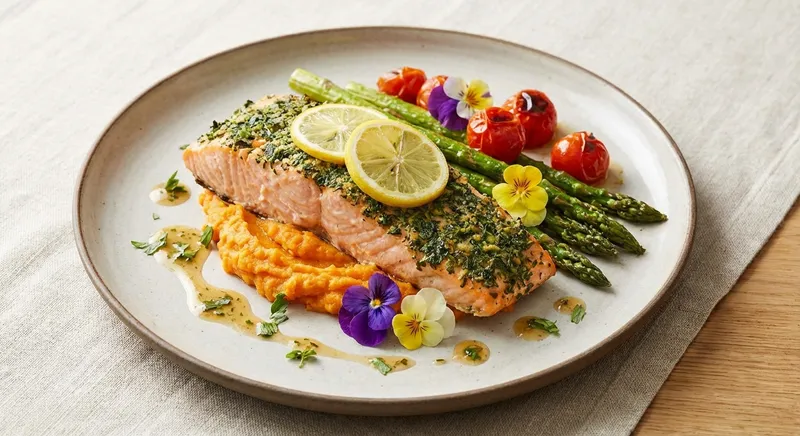
Pan-seared-then-roasted salmon fillets finished with a bright dill-yogurt sauce served alongside caramelized sweet potatoes and crisp-tender asparagus. The dish balances rich, flaky salmon and earthy roasted sweetness with a bright lemon-dill tang and a whisper of smoked paprika — restaurant polish with home-kitchen simplicity.
Preheat the oven to 220°C / 425°F (use 200°C / 400°F for fan/convection). A hot oven gives the sweet potatoes a chance to caramelize and develops a lightly crisp exterior on the salmon without overcooking the interior.
Prepare the sweet potatoes: Cut the sweet potatoes into 1.5–2 cm (about 1/2"–3/4") cubes so they roast evenly and develop golden edges. Toss the cubes in 1 tablespoon (15 ml) of the olive oil, 1 tsp kosher salt, 1/2 tsp black pepper and 1/2 tsp smoked paprika. Spread in a single layer on a rimmed baking sheet (lined with parchment if you like). Cubes of this size cook through in ~20–25 minutes and get nicely caramelized — smaller pieces will brown too quickly, bigger pieces will take longer.
Roast the sweet potatoes for 12 minutes to get them started. While they roast, trim the asparagus ends (snap or cut off the woody tips) and pat the salmon dry with paper towel. Drying the salmon ensures the skin crisps and the spices adhere.
Season the salmon: rub the fillets with the remaining 1 tablespoon (15 ml) olive oil, then sprinkle evenly with 1/2 tsp kosher salt, 1/4 tsp black pepper and the remaining 1/2 tsp smoked paprika. If your fillets are skin-on, oil and seasoning will help the skin become slightly crisp in the oven; for skinless, the oil keeps the exposed flesh glossy and flavorful.
Add asparagus and salmon to the baking sheet: After the sweet potatoes have roasted 12 minutes, give them a quick toss. Arrange the asparagus (drizzled with a pinch of salt and a drizzle of olive oil if needed) in an even band on the sheet, leaving space for the salmon fillets (skin-side down). Nestle the salmon onto the tray. Spacing is important — crowding traps steam and prevents roasting; leave some room between pieces so edges brown.
Return the tray to the oven and roast for 10–14 minutes, depending on salmon thickness. Aim for an internal temperature of 50–52°C (122–125°F) for medium-rare to medium (the temperature will rise ~2–3°C while resting). The asparagus should be bright green and just tender; the sweet potatoes should be fully tender with golden edges. Checking early prevents overcooking the salmon — fish continues to cook while resting.
Meanwhile, make the lemon-dill yogurt sauce: In a small bowl, combine the Greek yogurt, chopped dill, minced garlic, juice of half the lemon (reserve wedges), 1/4 tsp kosher salt and a few grinds of black pepper. Stir until smooth — the yogurt cools and brightens the dish, the acid from lemon cuts through the salmon's richness, and fresh dill pairs beautifully with salmon’s flavor. Taste and adjust: more lemon for brightness, more dill for herbiness.
Rest briefly and finish: When the salmon reaches the target temperature, remove the sheet from the oven. Let the fillets rest 3–4 minutes on the tray — this allows juices to redistribute and keeps the fish moist. If you like, squeeze a little of the remaining lemon over the asparagus and sweet potatoes for lift.
Plate and serve: Spoon a generous dollop of the lemon-dill yogurt on the plate, place a salmon fillet on top or alongside, and arrange a portion of sweet potatoes and asparagus. Finish with a small drizzle of olive oil, an extra scatter of chopped dill, and lemon wedges. The contrasting textures — creamy, crisp-tender, and flakey — make each bite complete.
Storage and reheating: Refrigerate leftovers in an airtight container for up to 2 days. Reheat sweet potatoes and asparagus in a 180°C / 350°F oven for 8–10 minutes to refresh their texture; warm the salmon briefly (4–6 minutes) at the same temperature to avoid drying. The yogurt sauce can be kept separate for up to 3 days.
812
Calories
48g
Protein
71g
Carbs
38g
Fat
13g
Fiber
How did this recipe turn out? Let others know!
to rate this recipe
Pan-seared-then-roasted salmon fillets finished with a bright dill-yogurt sauce served alongside caramelized sweet potatoes and crisp-tender asparagus. The dish balances rich, flaky salmon and earthy roasted sweetness with a bright lemon-dill tang and a whisper of smoked paprika — restaurant polish with home-kitchen simplicity.
Preheat the oven to 220°C / 425°F (use 200°C / 400°F for fan/convection). A hot oven gives the sweet potatoes a chance to caramelize and develops a lightly crisp exterior on the salmon without overcooking the interior.
Prepare the sweet potatoes: Cut the sweet potatoes into 1.5–2 cm (about 1/2"–3/4") cubes so they roast evenly and develop golden edges. Toss the cubes in 1 tablespoon (15 ml) of the olive oil, 1 tsp kosher salt, 1/2 tsp black pepper and 1/2 tsp smoked paprika. Spread in a single layer on a rimmed baking sheet (lined with parchment if you like). Cubes of this size cook through in ~20–25 minutes and get nicely caramelized — smaller pieces will brown too quickly, bigger pieces will take longer.
Roast the sweet potatoes for 12 minutes to get them started. While they roast, trim the asparagus ends (snap or cut off the woody tips) and pat the salmon dry with paper towel. Drying the salmon ensures the skin crisps and the spices adhere.
Season the salmon: rub the fillets with the remaining 1 tablespoon (15 ml) olive oil, then sprinkle evenly with 1/2 tsp kosher salt, 1/4 tsp black pepper and the remaining 1/2 tsp smoked paprika. If your fillets are skin-on, oil and seasoning will help the skin become slightly crisp in the oven; for skinless, the oil keeps the exposed flesh glossy and flavorful.
Add asparagus and salmon to the baking sheet: After the sweet potatoes have roasted 12 minutes, give them a quick toss. Arrange the asparagus (drizzled with a pinch of salt and a drizzle of olive oil if needed) in an even band on the sheet, leaving space for the salmon fillets (skin-side down). Nestle the salmon onto the tray. Spacing is important — crowding traps steam and prevents roasting; leave some room between pieces so edges brown.
Return the tray to the oven and roast for 10–14 minutes, depending on salmon thickness. Aim for an internal temperature of 50–52°C (122–125°F) for medium-rare to medium (the temperature will rise ~2–3°C while resting). The asparagus should be bright green and just tender; the sweet potatoes should be fully tender with golden edges. Checking early prevents overcooking the salmon — fish continues to cook while resting.
Meanwhile, make the lemon-dill yogurt sauce: In a small bowl, combine the Greek yogurt, chopped dill, minced garlic, juice of half the lemon (reserve wedges), 1/4 tsp kosher salt and a few grinds of black pepper. Stir until smooth — the yogurt cools and brightens the dish, the acid from lemon cuts through the salmon's richness, and fresh dill pairs beautifully with salmon’s flavor. Taste and adjust: more lemon for brightness, more dill for herbiness.
Rest briefly and finish: When the salmon reaches the target temperature, remove the sheet from the oven. Let the fillets rest 3–4 minutes on the tray — this allows juices to redistribute and keeps the fish moist. If you like, squeeze a little of the remaining lemon over the asparagus and sweet potatoes for lift.
Plate and serve: Spoon a generous dollop of the lemon-dill yogurt on the plate, place a salmon fillet on top or alongside, and arrange a portion of sweet potatoes and asparagus. Finish with a small drizzle of olive oil, an extra scatter of chopped dill, and lemon wedges. The contrasting textures — creamy, crisp-tender, and flakey — make each bite complete.
Storage and reheating: Refrigerate leftovers in an airtight container for up to 2 days. Reheat sweet potatoes and asparagus in a 180°C / 350°F oven for 8–10 minutes to refresh their texture; warm the salmon briefly (4–6 minutes) at the same temperature to avoid drying. The yogurt sauce can be kept separate for up to 3 days.
812
Calories
48g
Protein
71g
Carbs
38g
Fat
13g
Fiber
Your Rating:
