By emensah m
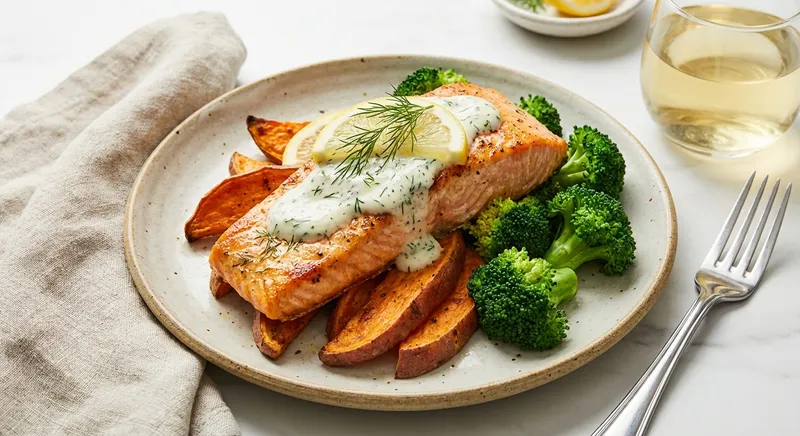
Pan-seared flavors meet bright, clean accents in this restaurant-style baked salmon plated with caramelized roasted sweet potatoes and tender-crisp broccoli. A zingy lemon-dill yogurt sauce adds freshness and silkiness, while high-heat roasting creates sweet potato edges that contrast with flaky, buttery salmon — simple ingredients elevated by technique.
Preheat and prep: Preheat your oven to 425°F (220°C). Line a rimmed baking sheet with parchment or a light slick of oil — the high oven temperature will caramelize the sweet potatoes and allow you to roast them until crisp on the edges while still finishing the salmon quickly. Meanwhile, wash the sweet potatoes and broccoli; pat the salmon dry with paper towels (dry fish browns and seasons more evenly).
Cut and oil the sweet potatoes: Cut the sweet potatoes into 3/4-inch (2 cm) cubes — uniform pieces roast evenly and develop more surface area for caramelization. Toss the cubes in 1 1/2 tbsp olive oil, a generous pinch of kosher salt and a few grinds of black pepper. Spread them in a single layer on the prepared sheet, leaving room in the center or one side for the salmon later. Use 1 1/2 tbsp oil now so the potatoes crisp without the pan getting greasy for the fish.
Start roasting the sweet potatoes: Roast on the middle rack for 12 minutes, then remove the tray and give the potatoes a quick toss or flip — this promotes even browning. Roasting at 425°F concentrates the sugars in the sweet potato, creating those sweet, browned edges that contrast with the tender interior.
Season the salmon while potatoes begin to roast: Pat the salmon again if needed and season both sides with salt and pepper. Zest half the lemon over the fillets for concentrated citrus oil, then slice the lemon and reserve for finishing. Add 1/2 tbsp olive oil (or a light brush of oil) to the salmon and gently rub it over the flesh — this helps the seasonings adhere and encourages a glossy finish when baked. Sprinkle half the chopped dill on top for herb flavor that pairs naturally with seafood.
Add salmon to the oven: After the potatoes have roasted 12 minutes and shown some color, make space on the sheet and place the salmon fillets skin-side down (if they have skin). Return the tray to the oven and roast everything for another 10–12 minutes, depending on thickness. Baking the salmon at this temperature cooks it gently but quickly so the exterior sets and the interior remains moist. For medium doneness aim for an internal temperature of 125–130°F (52–54°C); 135°F for well-done.
Steam the broccoli while salmon finishes: Place the broccoli florets in a steamer basket over a pot of simmering water, cover, and steam for 4–6 minutes until bright green and tender-crisp. Steaming preserves flavor, color, and nutrients better than boiling, and keeps the florets from becoming waterlogged. Immediately transfer to a bowl and season with a pinch of salt, a little lemon zest, and a tiny drizzle of olive oil if you like.
Make the lemon-dill yogurt sauce: While the salmon finishes, combine 2 tbsp plain Greek yogurt, the juice of half the lemon (about 1 tbsp), remaining chopped dill, minced garlic, a pinch of salt, and 1/4 tsp black pepper in a small bowl. Stir until smooth. The tang of yogurt and lemon brightens the rich fish, while dill echoes the herb notes on the salmon. The garlic should be finely minced so it disperses without overpowering.
Finish and rest: Remove the baking sheet and test the salmon for doneness — the flesh should flake easily with a fork and have a translucent center if medium. Let the salmon rest 2 minutes on the sheet; resting redistributes juices and keeps the fillet moist. If you like, finish with a squeeze of lemon and a few extra sprigs of fresh dill.
Plate and serve: On each plate arrange half the roasted sweet potatoes, a mound of steamed broccoli, and place a salmon fillet on top. Spoon a dollop (about 1 tbsp) of the lemon-dill yogurt sauce beside or over the salmon, and garnish with lemon wedges and more fresh dill. The combination of crispy-sweet potato edges, creamy citrus sauce, and flaky salmon creates a restaurant-quality balance of textures and flavors.
683
Calories
44g
Protein
46g
Carbs
38g
Fat
10g
Fiber
How did this recipe turn out? Let others know!
to rate this recipe
By emensah m
Pan-seared flavors meet bright, clean accents in this restaurant-style baked salmon plated with caramelized roasted sweet potatoes and tender-crisp broccoli. A zingy lemon-dill yogurt sauce adds freshness and silkiness, while high-heat roasting creates sweet potato edges that contrast with flaky, buttery salmon — simple ingredients elevated by technique.
Preheat and prep: Preheat your oven to 425°F (220°C). Line a rimmed baking sheet with parchment or a light slick of oil — the high oven temperature will caramelize the sweet potatoes and allow you to roast them until crisp on the edges while still finishing the salmon quickly. Meanwhile, wash the sweet potatoes and broccoli; pat the salmon dry with paper towels (dry fish browns and seasons more evenly).
Cut and oil the sweet potatoes: Cut the sweet potatoes into 3/4-inch (2 cm) cubes — uniform pieces roast evenly and develop more surface area for caramelization. Toss the cubes in 1 1/2 tbsp olive oil, a generous pinch of kosher salt and a few grinds of black pepper. Spread them in a single layer on the prepared sheet, leaving room in the center or one side for the salmon later. Use 1 1/2 tbsp oil now so the potatoes crisp without the pan getting greasy for the fish.
Start roasting the sweet potatoes: Roast on the middle rack for 12 minutes, then remove the tray and give the potatoes a quick toss or flip — this promotes even browning. Roasting at 425°F concentrates the sugars in the sweet potato, creating those sweet, browned edges that contrast with the tender interior.
Season the salmon while potatoes begin to roast: Pat the salmon again if needed and season both sides with salt and pepper. Zest half the lemon over the fillets for concentrated citrus oil, then slice the lemon and reserve for finishing. Add 1/2 tbsp olive oil (or a light brush of oil) to the salmon and gently rub it over the flesh — this helps the seasonings adhere and encourages a glossy finish when baked. Sprinkle half the chopped dill on top for herb flavor that pairs naturally with seafood.
Add salmon to the oven: After the potatoes have roasted 12 minutes and shown some color, make space on the sheet and place the salmon fillets skin-side down (if they have skin). Return the tray to the oven and roast everything for another 10–12 minutes, depending on thickness. Baking the salmon at this temperature cooks it gently but quickly so the exterior sets and the interior remains moist. For medium doneness aim for an internal temperature of 125–130°F (52–54°C); 135°F for well-done.
Steam the broccoli while salmon finishes: Place the broccoli florets in a steamer basket over a pot of simmering water, cover, and steam for 4–6 minutes until bright green and tender-crisp. Steaming preserves flavor, color, and nutrients better than boiling, and keeps the florets from becoming waterlogged. Immediately transfer to a bowl and season with a pinch of salt, a little lemon zest, and a tiny drizzle of olive oil if you like.
Make the lemon-dill yogurt sauce: While the salmon finishes, combine 2 tbsp plain Greek yogurt, the juice of half the lemon (about 1 tbsp), remaining chopped dill, minced garlic, a pinch of salt, and 1/4 tsp black pepper in a small bowl. Stir until smooth. The tang of yogurt and lemon brightens the rich fish, while dill echoes the herb notes on the salmon. The garlic should be finely minced so it disperses without overpowering.
Finish and rest: Remove the baking sheet and test the salmon for doneness — the flesh should flake easily with a fork and have a translucent center if medium. Let the salmon rest 2 minutes on the sheet; resting redistributes juices and keeps the fillet moist. If you like, finish with a squeeze of lemon and a few extra sprigs of fresh dill.
Plate and serve: On each plate arrange half the roasted sweet potatoes, a mound of steamed broccoli, and place a salmon fillet on top. Spoon a dollop (about 1 tbsp) of the lemon-dill yogurt sauce beside or over the salmon, and garnish with lemon wedges and more fresh dill. The combination of crispy-sweet potato edges, creamy citrus sauce, and flaky salmon creates a restaurant-quality balance of textures and flavors.
683
Calories
44g
Protein
46g
Carbs
38g
Fat
10g
Fiber
Your Rating:
