By emensah m
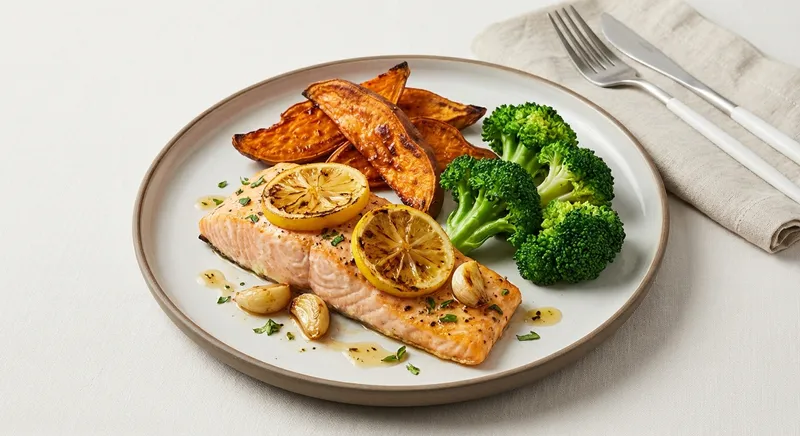
A bright, restaurant-quality weeknight plate: flaky oven-baked salmon finished with a lemon-garlic olive oil glaze, sweet potatoes roasted until caramelized and tender, and crisp-tender steamed broccoli. The contrast of silky salmon, caramel-sweet root vegetables and vibrant broccoli makes this dish satisfying, healthy and beautifully balanced.
Preheat the oven to 425°F (220°C). Preheating to a relatively high temperature helps the sweet potato pieces caramelize at the edges and develop a crunchy exterior while staying tender inside. The salmon will be added later so it doesn’t overcook.
Prepare the sweet potatoes: peel (optional) and cut into 3/4-inch (2 cm) cubes so they roast evenly. Uniform pieces ensure all cubes hit tenderness at the same time; too-large pieces take longer and risk uneven cooking.
Toss the sweet potato cubes with 1.5 tablespoons of olive oil, 3/4 teaspoon kosher salt and 1/4 teaspoon freshly ground black pepper on a rimmed baking sheet. Spread them into a single layer with space between pieces — crowding causes steaming instead of roasting, preventing browning.
Roast the sweet potatoes on the middle rack for 20 minutes, then give the pan a shake or flip the pieces and roast another 8–12 minutes until golden and caramelized at the edges and fork-tender. Roasting in stages promotes even caramelization without burning.
While the sweet potatoes begin roasting, make the lemon-garlic oil for the salmon: in a small bowl combine the remaining 2.5 tablespoons olive oil, the minced garlic, the zest of the lemon, and the juice of the lemon. Add 3/4 teaspoon kosher salt and 1/4 teaspoon black pepper and whisk to combine. The oil will carry the lemon-garlic aromatics and infuse the salmon while baking.
Pat each salmon fillet dry with paper towels — drying promotes a better crust and helps the oil adhere. Place the fillets skin-side down on a lightly oiled, lined baking sheet or in a shallow ovenproof pan. If skin is present, it helps protect the flesh and crisps up when roasted.
Brush each fillet with the lemon-garlic oil (reserve a tablespoon for finishing). Don’t drown the fish — a light coating seasons and helps conduct heat without steaming the surface. Season the top of each fillet lightly with an extra pinch of salt and pepper.
When the sweet potatoes have about 10 minutes left, place the salmon in the oven on the upper-middle rack (or slide into the oven together if there’s room). Bake salmon at 400°F (204°C) for 8–12 minutes, depending on thickness (8–9 minutes for fillets about 1 inch/2.5 cm thick; up to 12 minutes for thicker pieces). Baking at slightly lower temperature than the potatoes gives the salmon gentle, even heat so it flakes tenderly without drying.
Check salmon for doneness: use a fork to test the thickest part — it should flake easily and still be slightly translucent in the center for moistness (internal temperature 120–125°F/49–52°C for medium-rare to 130°F/54°C if you prefer fully opaque). Fish continues to cook slightly while resting.
Steam the broccoli while the salmon rests: bring 1–1.5 inches (2.5–4 cm) of water to a simmer in a medium pot fitted with a steamer basket. Add the broccoli, cover, and steam for 4–6 minutes until bright green and tender-crisp. Steaming preserves the broccoli’s color and nutrients; quick steaming prevents a mushy texture.
Finish the salmon: brush the reserved tablespoon of lemon-garlic oil over the resting fillets for bright flavor and gloss. Allow the salmon to rest 2–3 minutes; this lets juices redistribute and the surface cool slightly so it won’t flake apart when plated.
Plate: divide roasted sweet potatoes and steamed broccoli among 4 plates, place a salmon fillet on each, and spoon any pan juices or lemon oil over the fish. Optionally garnish with a thin lemon wheel or microgreens. Serve immediately.
633
Calories
36g
Protein
50g
Carbs
33g
Fat
9g
Fiber
How did this recipe turn out? Let others know!
to rate this recipe
By emensah m
A bright, restaurant-quality weeknight plate: flaky oven-baked salmon finished with a lemon-garlic olive oil glaze, sweet potatoes roasted until caramelized and tender, and crisp-tender steamed broccoli. The contrast of silky salmon, caramel-sweet root vegetables and vibrant broccoli makes this dish satisfying, healthy and beautifully balanced.
Preheat the oven to 425°F (220°C). Preheating to a relatively high temperature helps the sweet potato pieces caramelize at the edges and develop a crunchy exterior while staying tender inside. The salmon will be added later so it doesn’t overcook.
Prepare the sweet potatoes: peel (optional) and cut into 3/4-inch (2 cm) cubes so they roast evenly. Uniform pieces ensure all cubes hit tenderness at the same time; too-large pieces take longer and risk uneven cooking.
Toss the sweet potato cubes with 1.5 tablespoons of olive oil, 3/4 teaspoon kosher salt and 1/4 teaspoon freshly ground black pepper on a rimmed baking sheet. Spread them into a single layer with space between pieces — crowding causes steaming instead of roasting, preventing browning.
Roast the sweet potatoes on the middle rack for 20 minutes, then give the pan a shake or flip the pieces and roast another 8–12 minutes until golden and caramelized at the edges and fork-tender. Roasting in stages promotes even caramelization without burning.
While the sweet potatoes begin roasting, make the lemon-garlic oil for the salmon: in a small bowl combine the remaining 2.5 tablespoons olive oil, the minced garlic, the zest of the lemon, and the juice of the lemon. Add 3/4 teaspoon kosher salt and 1/4 teaspoon black pepper and whisk to combine. The oil will carry the lemon-garlic aromatics and infuse the salmon while baking.
Pat each salmon fillet dry with paper towels — drying promotes a better crust and helps the oil adhere. Place the fillets skin-side down on a lightly oiled, lined baking sheet or in a shallow ovenproof pan. If skin is present, it helps protect the flesh and crisps up when roasted.
Brush each fillet with the lemon-garlic oil (reserve a tablespoon for finishing). Don’t drown the fish — a light coating seasons and helps conduct heat without steaming the surface. Season the top of each fillet lightly with an extra pinch of salt and pepper.
When the sweet potatoes have about 10 minutes left, place the salmon in the oven on the upper-middle rack (or slide into the oven together if there’s room). Bake salmon at 400°F (204°C) for 8–12 minutes, depending on thickness (8–9 minutes for fillets about 1 inch/2.5 cm thick; up to 12 minutes for thicker pieces). Baking at slightly lower temperature than the potatoes gives the salmon gentle, even heat so it flakes tenderly without drying.
Check salmon for doneness: use a fork to test the thickest part — it should flake easily and still be slightly translucent in the center for moistness (internal temperature 120–125°F/49–52°C for medium-rare to 130°F/54°C if you prefer fully opaque). Fish continues to cook slightly while resting.
Steam the broccoli while the salmon rests: bring 1–1.5 inches (2.5–4 cm) of water to a simmer in a medium pot fitted with a steamer basket. Add the broccoli, cover, and steam for 4–6 minutes until bright green and tender-crisp. Steaming preserves the broccoli’s color and nutrients; quick steaming prevents a mushy texture.
Finish the salmon: brush the reserved tablespoon of lemon-garlic oil over the resting fillets for bright flavor and gloss. Allow the salmon to rest 2–3 minutes; this lets juices redistribute and the surface cool slightly so it won’t flake apart when plated.
Plate: divide roasted sweet potatoes and steamed broccoli among 4 plates, place a salmon fillet on each, and spoon any pan juices or lemon oil over the fish. Optionally garnish with a thin lemon wheel or microgreens. Serve immediately.
633
Calories
36g
Protein
50g
Carbs
33g
Fat
9g
Fiber
Your Rating:
