By Amber Alloway
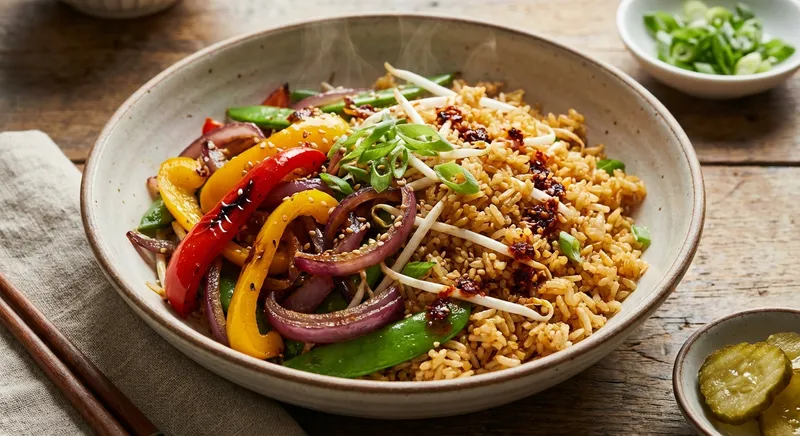
Bright, savory and texturally dynamic, this Pepper & Onion Rice Stir-Fry elevates humble rice with caramelized onion, crisp-tender bell peppers, toasted sesame and a glossy savory sauce. The rice is best when cold and separated so each grain stays distinct, while a quick, high-heat toss in the pan locks in smoky char and bright pepper flavor — a simple dish that tastes like it belongs on a modern bistro menu.
Cook the rice: Rinse 2 cups of uncooked long-grain white rice under cold water until the rinse runs almost clear to remove surface starch — this prevents gummy rice. Combine rinsed rice with 3.5 cups water in a medium saucepan, bring to a gentle boil, then reduce to a simmer, cover and cook 15–18 minutes until water is absorbed. Remove pan from heat and let steam, covered, 10 minutes. Spread the cooked rice on a rimmed tray or shallow pan to cool quickly and refrigerate for at least 2 hours (or use cold day-old rice). WHY: Cold, separated rice grains fry without clumping; hot freshly-steamed rice is too moist and makes the stir-fry mushy.
Prep the vegetables: While rice cools, core and slice the bell peppers into 1/3-inch-wide strips (about 150 g each). Peel and thinly slice the onion into half-moons. Mince 3 garlic cloves and slice the green onions on a bias for garnish. WHY: Uniform, slightly thicker slices of pepper maintain bite after a quick, hot toss; thin onion slices caramelize quickly and add sweet depth.
Mix the sauce: In a small bowl whisk together 3 tbsp low-sodium soy sauce, 1 tbsp toasted sesame oil, 1 tsp sugar, 1/4 tsp freshly ground black pepper and (optional) a splash of water if you want a looser coating. WHY: The sauce balances umami, sesame aroma and a touch of sweetness so it clings to rice and vegetables without pooling.
Heat your pan: Use a heavy skillet or wok and place it over high heat until very hot (a drop of water should sizzle and evaporate immediately). Add 2 tbsp neutral vegetable oil and swirl. WHY: A very hot pan gives instant sear to the vegetables so they develop light char and stay crisp-tender rather than steaming.
Sear the peppers and onions: Add the peppers in a single layer and let them sit without stirring for 60–90 seconds to develop color, then stir and add the onions. Cook, stirring frequently, until the onions are translucent and edges begin to brown (2–3 more minutes). WHY: Allowing the peppers to sit briefly introduces caramelized, smoky flavor; quick high-heat cooking prevents them from becoming soft and waterlogged.
Aromatics: Push the vegetables to the side of the pan, add the butter and then the minced garlic to the empty space, cooking for 15–20 seconds until fragrant. Stir garlic into the vegetables. WHY: Cooking garlic briefly in butter on the hot pan blooms its sweetness and carries flavor throughout the dish. Adding it too early will burn it and produce bitterness.
Add the rice: Increase heat to high, add the chilled rice (break up any clumps with your hands or a fork first) and toss immediately to coat with oil. Spread the rice out and let it sit 30–45 seconds before stirring — a few grains should toast lightly. WHY: Toasting rice adds nuttiness and helps separate grains so the final texture is dry and 'wok-tossed' rather than sticky.
Add the sauce: Pour the soy-sesame sauce over the rice and vegetables and toss quickly and continuously for 1–2 minutes until everything is glossy and evenly coated. Taste and adjust with up to 1/4 tsp more salt if necessary. WHY: Tossing over high heat creates a light glaze and distributes flavor evenly without releasing excess liquid that would make the rice soggy.
Finish and serve: Turn off the heat and stir in the sliced green onions and 1 tbsp toasted sesame seeds. Drizzle an extra 1/2 tsp sesame oil if you like a stronger toasted sesame aroma. Serve immediately so the rice retains a slight snap and the peppers stay bright. WHY: Finishing with aromatics and seeds adds freshness, crunch and a toasted note; removing from heat stops carryover cooking that would soften the vegetables further.
524
Calories
9g
Protein
87g
Carbs
15g
Fat
4g
Fiber
How did this recipe turn out? Let others know!
to rate this recipe
By Amber Alloway
Bright, savory and texturally dynamic, this Pepper & Onion Rice Stir-Fry elevates humble rice with caramelized onion, crisp-tender bell peppers, toasted sesame and a glossy savory sauce. The rice is best when cold and separated so each grain stays distinct, while a quick, high-heat toss in the pan locks in smoky char and bright pepper flavor — a simple dish that tastes like it belongs on a modern bistro menu.
Cook the rice: Rinse 2 cups of uncooked long-grain white rice under cold water until the rinse runs almost clear to remove surface starch — this prevents gummy rice. Combine rinsed rice with 3.5 cups water in a medium saucepan, bring to a gentle boil, then reduce to a simmer, cover and cook 15–18 minutes until water is absorbed. Remove pan from heat and let steam, covered, 10 minutes. Spread the cooked rice on a rimmed tray or shallow pan to cool quickly and refrigerate for at least 2 hours (or use cold day-old rice). WHY: Cold, separated rice grains fry without clumping; hot freshly-steamed rice is too moist and makes the stir-fry mushy.
Prep the vegetables: While rice cools, core and slice the bell peppers into 1/3-inch-wide strips (about 150 g each). Peel and thinly slice the onion into half-moons. Mince 3 garlic cloves and slice the green onions on a bias for garnish. WHY: Uniform, slightly thicker slices of pepper maintain bite after a quick, hot toss; thin onion slices caramelize quickly and add sweet depth.
Mix the sauce: In a small bowl whisk together 3 tbsp low-sodium soy sauce, 1 tbsp toasted sesame oil, 1 tsp sugar, 1/4 tsp freshly ground black pepper and (optional) a splash of water if you want a looser coating. WHY: The sauce balances umami, sesame aroma and a touch of sweetness so it clings to rice and vegetables without pooling.
Heat your pan: Use a heavy skillet or wok and place it over high heat until very hot (a drop of water should sizzle and evaporate immediately). Add 2 tbsp neutral vegetable oil and swirl. WHY: A very hot pan gives instant sear to the vegetables so they develop light char and stay crisp-tender rather than steaming.
Sear the peppers and onions: Add the peppers in a single layer and let them sit without stirring for 60–90 seconds to develop color, then stir and add the onions. Cook, stirring frequently, until the onions are translucent and edges begin to brown (2–3 more minutes). WHY: Allowing the peppers to sit briefly introduces caramelized, smoky flavor; quick high-heat cooking prevents them from becoming soft and waterlogged.
Aromatics: Push the vegetables to the side of the pan, add the butter and then the minced garlic to the empty space, cooking for 15–20 seconds until fragrant. Stir garlic into the vegetables. WHY: Cooking garlic briefly in butter on the hot pan blooms its sweetness and carries flavor throughout the dish. Adding it too early will burn it and produce bitterness.
Add the rice: Increase heat to high, add the chilled rice (break up any clumps with your hands or a fork first) and toss immediately to coat with oil. Spread the rice out and let it sit 30–45 seconds before stirring — a few grains should toast lightly. WHY: Toasting rice adds nuttiness and helps separate grains so the final texture is dry and 'wok-tossed' rather than sticky.
Add the sauce: Pour the soy-sesame sauce over the rice and vegetables and toss quickly and continuously for 1–2 minutes until everything is glossy and evenly coated. Taste and adjust with up to 1/4 tsp more salt if necessary. WHY: Tossing over high heat creates a light glaze and distributes flavor evenly without releasing excess liquid that would make the rice soggy.
Finish and serve: Turn off the heat and stir in the sliced green onions and 1 tbsp toasted sesame seeds. Drizzle an extra 1/2 tsp sesame oil if you like a stronger toasted sesame aroma. Serve immediately so the rice retains a slight snap and the peppers stay bright. WHY: Finishing with aromatics and seeds adds freshness, crunch and a toasted note; removing from heat stops carryover cooking that would soften the vegetables further.
524
Calories
9g
Protein
87g
Carbs
15g
Fat
4g
Fiber
Your Rating:
