By Amber Alloway
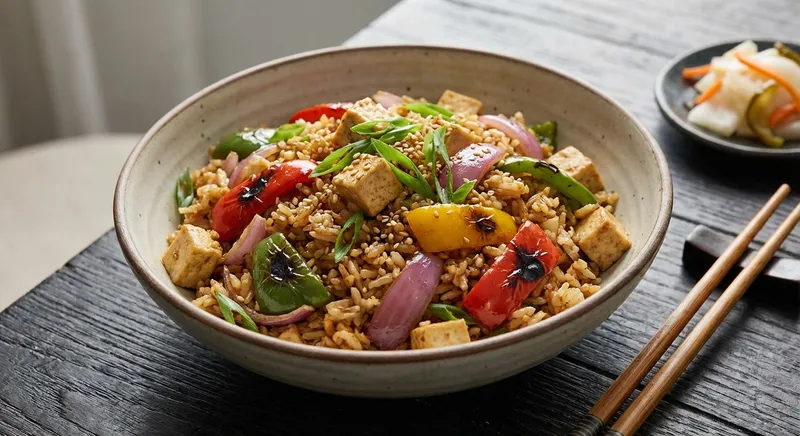
Bright strips of bell pepper and sweet caramelized onion tossed with well-separated, wok-seared rice make a satisfying, restaurant-quality fried rice that’s both simple and layered with flavor. High heat gives a slight smoky char on the vegetables and rice, while soy and toasted sesame oil provide savory depth — a comforting, colorful vegetarian fried rice that feels elevated without fuss.
Cook the rice: Rinse 1.5 cups long-grain white rice under cold water until the rinse runs mostly clear (removes surface starch so the grains stay separate). Combine rinsed rice with 3 cups water and 1/4 teaspoon salt in a medium pot, bring to a boil, reduce to a simmer, cover and cook 12–15 minutes until the water is absorbed. Turn off the heat and let rest, covered, 10 minutes. Why: rinsing removes loose starch so grains won’t clump in the wok; resting lets steam finish the cooking and firms the grains for better texture.
Cool the rice: Spread the cooked rice on a rimmed baking sheet or large plate in an even layer to release steam and cool quickly. If you have time, refrigerate uncovered for 30–60 minutes or overnight (day-old rice is ideal). Why: cooled rice dries slightly and firms up so it separates when stir-fried; moist, hot rice will steam and turn mushy instead of getting slightly toasted.
Prep the vegetables: While rice cools, thinly slice the bell pepper(s) into 1/4" strips and slice the onion into 1/4" half-moons. Mince the garlic and thinly slice the scallions (white and green parts separated if you like). Why: slicing to a uniform thickness ensures even cooking and creates attractive ribbons that caramelize quickly under high heat.
Make the flavor station: In a small bowl combine 3 tablespoons soy sauce, 1/4 teaspoon sugar (optional, to round the soy's saltiness), 1/2 teaspoon freshly ground black pepper and set nearby. Why: having sauce pre-mixed keeps the wok moving — at high heat there’s no time to measure between steps.
Heat the wok/skillet: Place a large wok or heavy large skillet over high heat until it’s very hot (a drop of water should sizzle and evaporate immediately). Add 2 tablespoons neutral oil and swirl to coat. Why: high heat gives you quick searing/caramelization (the Maillard reaction) instead of stewing the vegetables; a well-heated pan is essential for that restaurant 'wok hei' flavor.
Sear the onions and peppers: Add the sliced onion to the hot oil and let it sit 45–60 seconds without moving to develop color, then toss and let the cut edges brown 1–2 minutes more. Add bell pepper strips and continue to stir-fry 1–2 minutes until they soften but keep a little bite. Why: letting the onion sit builds caramelization and sweetness; peppers cook fast so add after the onions to preserve brightness and texture.
Add garlic and scallion whites: Push the vegetables to the side of the wok and add a splash of oil if the pan looks dry. Add minced garlic and the white parts of the scallion for 20–30 seconds until fragrant. Why: garlic browns quickly and becomes bitter if overcooked; adding it after the vegetables lets it flavor the oil without burning.
Add the rice: Increase heat to very high, add the cooled rice in handfuls, breaking up any large clumps with your fingers as you add it. Spread it out over the pan and let it sit 20–30 seconds to allow the bottom to sear, then toss. Repeat until all rice is in. Why: adding rice in batches prevents overcrowding and letting it sit creates a light toasty crust and separates the grains.
Season and toss: Pour the soy-sauce mixture evenly over the rice and toss quickly to color the grains. Taste and add up to 1/2 teaspoon more salt if needed. Drizzle 1 tablespoon toasted sesame oil and toss once more to finish. Why: soy provides umami and salt; sesame oil is a finishing oil — a little goes a long way and gives toasted, nutty aroma rather than a strong fried-flavor.
Finish and serve: Turn off the heat, stir in sliced scallion greens, and give the rice one final toss. Transfer to a warm serving platter. Why: finishing off-heat prevents the aromatics from overcooking and preserves a fresh onion bite and color.
Optional final flourish: For restaurant polish, lightly scatter a few extra thinly sliced scallions and a tiny drizzle of sesame oil or toasted sesame seeds just before serving. Why: contrast in texture and a fresh herbal brightness make the dish feel finished and layered.
392
Calories
7g
Protein
65g
Carbs
11g
Fat
2g
Fiber
How did this recipe turn out? Let others know!
to rate this recipe
By Amber Alloway
Bright strips of bell pepper and sweet caramelized onion tossed with well-separated, wok-seared rice make a satisfying, restaurant-quality fried rice that’s both simple and layered with flavor. High heat gives a slight smoky char on the vegetables and rice, while soy and toasted sesame oil provide savory depth — a comforting, colorful vegetarian fried rice that feels elevated without fuss.
Cook the rice: Rinse 1.5 cups long-grain white rice under cold water until the rinse runs mostly clear (removes surface starch so the grains stay separate). Combine rinsed rice with 3 cups water and 1/4 teaspoon salt in a medium pot, bring to a boil, reduce to a simmer, cover and cook 12–15 minutes until the water is absorbed. Turn off the heat and let rest, covered, 10 minutes. Why: rinsing removes loose starch so grains won’t clump in the wok; resting lets steam finish the cooking and firms the grains for better texture.
Cool the rice: Spread the cooked rice on a rimmed baking sheet or large plate in an even layer to release steam and cool quickly. If you have time, refrigerate uncovered for 30–60 minutes or overnight (day-old rice is ideal). Why: cooled rice dries slightly and firms up so it separates when stir-fried; moist, hot rice will steam and turn mushy instead of getting slightly toasted.
Prep the vegetables: While rice cools, thinly slice the bell pepper(s) into 1/4" strips and slice the onion into 1/4" half-moons. Mince the garlic and thinly slice the scallions (white and green parts separated if you like). Why: slicing to a uniform thickness ensures even cooking and creates attractive ribbons that caramelize quickly under high heat.
Make the flavor station: In a small bowl combine 3 tablespoons soy sauce, 1/4 teaspoon sugar (optional, to round the soy's saltiness), 1/2 teaspoon freshly ground black pepper and set nearby. Why: having sauce pre-mixed keeps the wok moving — at high heat there’s no time to measure between steps.
Heat the wok/skillet: Place a large wok or heavy large skillet over high heat until it’s very hot (a drop of water should sizzle and evaporate immediately). Add 2 tablespoons neutral oil and swirl to coat. Why: high heat gives you quick searing/caramelization (the Maillard reaction) instead of stewing the vegetables; a well-heated pan is essential for that restaurant 'wok hei' flavor.
Sear the onions and peppers: Add the sliced onion to the hot oil and let it sit 45–60 seconds without moving to develop color, then toss and let the cut edges brown 1–2 minutes more. Add bell pepper strips and continue to stir-fry 1–2 minutes until they soften but keep a little bite. Why: letting the onion sit builds caramelization and sweetness; peppers cook fast so add after the onions to preserve brightness and texture.
Add garlic and scallion whites: Push the vegetables to the side of the wok and add a splash of oil if the pan looks dry. Add minced garlic and the white parts of the scallion for 20–30 seconds until fragrant. Why: garlic browns quickly and becomes bitter if overcooked; adding it after the vegetables lets it flavor the oil without burning.
Add the rice: Increase heat to very high, add the cooled rice in handfuls, breaking up any large clumps with your fingers as you add it. Spread it out over the pan and let it sit 20–30 seconds to allow the bottom to sear, then toss. Repeat until all rice is in. Why: adding rice in batches prevents overcrowding and letting it sit creates a light toasty crust and separates the grains.
Season and toss: Pour the soy-sauce mixture evenly over the rice and toss quickly to color the grains. Taste and add up to 1/2 teaspoon more salt if needed. Drizzle 1 tablespoon toasted sesame oil and toss once more to finish. Why: soy provides umami and salt; sesame oil is a finishing oil — a little goes a long way and gives toasted, nutty aroma rather than a strong fried-flavor.
Finish and serve: Turn off the heat, stir in sliced scallion greens, and give the rice one final toss. Transfer to a warm serving platter. Why: finishing off-heat prevents the aromatics from overcooking and preserves a fresh onion bite and color.
Optional final flourish: For restaurant polish, lightly scatter a few extra thinly sliced scallions and a tiny drizzle of sesame oil or toasted sesame seeds just before serving. Why: contrast in texture and a fresh herbal brightness make the dish feel finished and layered.
392
Calories
7g
Protein
65g
Carbs
11g
Fat
2g
Fiber
Your Rating:
