By Amber Alloway
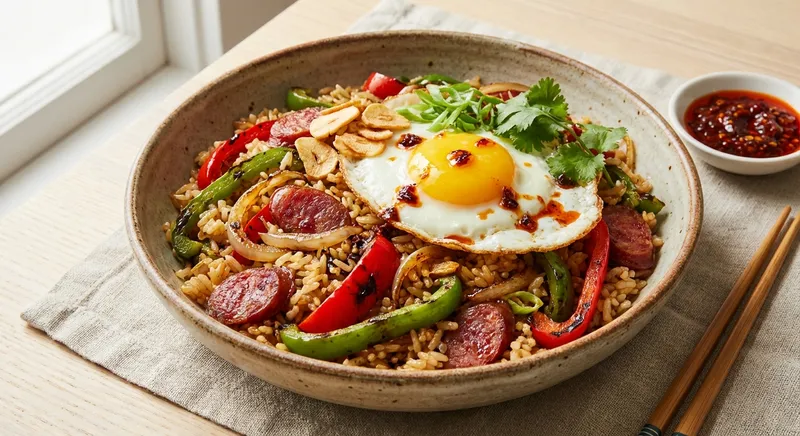
Fragrant, wok-seared fried rice studded with sweet onion and crisp bell pepper — simple ingredients transformed into a restaurant-quality side or vegetarian main. High-heat searing creates caramelized edges and toasted rice grains for contrast in texture, while a little butter at the end adds glossy richness and rounds the savory seasoning.
Cook the rice: Rinse 1 1/3 cups long-grain white rice under cold water until the water runs mostly clear (this removes excess surface starch to keep cooked grains separate). Combine the rinsed rice with 2 2/3 cups water and a pinch (1/8 tsp) salt in a medium saucepan. Bring to a simmer over medium-high heat, then reduce to low, cover, and cook for 12–14 minutes until the water is absorbed. Remove from heat and let sit, covered, 10 minutes to steam — this rest lets the grains firm up for frying. Spread the rice on a tray to cool slightly if frying immediately; ideally use rice that was cooked and chilled for at least a few hours or overnight so it dries out a bit and separates easily when tossed.
Prep the aromatics and vegetables: While the rice cooks/cools, peel and finely dice the onion (about 1/4-inch pieces) — smaller pieces caramelize faster, adding sweet depth. Core and seed the bell pepper and cut into a 1/4-inch dice to keep texture in the finished rice. Mince the garlic. If using scallions, slice the green parts thinly for garnish. Keeping everything prepped (mise en place) is important because stir-frying moves quickly.
Heat the wok or a large skillet: Set a large heavy skillet or wok over high heat until very hot (you should see a faint shimmer on the oil and the pan will be almost smoking). High heat is essential to get quick searing of the rice and vegetables rather than steaming — that sear creates the toasty, slightly-charred flavor characteristic of great fried rice.
Flash-cook the onion and pepper: Add 1 tbsp of the oil to the hot pan, then add the diced onion and a pinch (1/4 tsp) of salt. Stir-fry for 2–3 minutes until the edges turn translucent and begin to brown. Add the diced bell pepper and continue to stir-fry 2 more minutes until the pepper softens but still holds a little bite. Cooking the vegetables first allows them to develop color and concentrated flavor without overcooking the already-cooked rice later.
Add the garlic: Push the vegetables to the side of the wok, add the remaining 1 tbsp oil to the empty space and add the minced garlic. Fry for 20–30 seconds, just until fragrant — garlic browns quickly and will taste bitter if it overcooks, so keep it moving and mix into the vegetables immediately.
Break up and add the rice: Break any clumps in the cooled or day-old rice with your hands or a fork so grains are loose (this prevents steaming). Add the rice to the pan, spreading it in an even layer. Let it sit undisturbed for 30–45 seconds to develop a little crust on the bottom, then stir and toss to expose more grains to the hot surface. This combination of tossing and brief resting builds those golden, toasted bits that elevate the texture.
Season and finish: Sprinkle the remaining 1/2 tsp kosher salt and 1/2 tsp freshly ground black pepper over the rice. Stir well to distribute seasoning. Add 1 tbsp unsalted butter and let it melt while you toss the rice — the butter adds a glossy finish and rounds out the flavors. Taste and adjust seasoning: add more salt or pepper if needed.
Plate and garnish: Transfer the fried rice to a warm serving bowl or plates so it keeps its texture. Scatter sliced scallion greens on top for freshness and a light onion note. Serve immediately — fried rice is best right off the wok while still hot and slightly crisp.
343
Calories
5g
Protein
56g
Carbs
11g
Fat
2g
Fiber
How did this recipe turn out? Let others know!
to rate this recipe
By Amber Alloway
Fragrant, wok-seared fried rice studded with sweet onion and crisp bell pepper — simple ingredients transformed into a restaurant-quality side or vegetarian main. High-heat searing creates caramelized edges and toasted rice grains for contrast in texture, while a little butter at the end adds glossy richness and rounds the savory seasoning.
Cook the rice: Rinse 1 1/3 cups long-grain white rice under cold water until the water runs mostly clear (this removes excess surface starch to keep cooked grains separate). Combine the rinsed rice with 2 2/3 cups water and a pinch (1/8 tsp) salt in a medium saucepan. Bring to a simmer over medium-high heat, then reduce to low, cover, and cook for 12–14 minutes until the water is absorbed. Remove from heat and let sit, covered, 10 minutes to steam — this rest lets the grains firm up for frying. Spread the rice on a tray to cool slightly if frying immediately; ideally use rice that was cooked and chilled for at least a few hours or overnight so it dries out a bit and separates easily when tossed.
Prep the aromatics and vegetables: While the rice cooks/cools, peel and finely dice the onion (about 1/4-inch pieces) — smaller pieces caramelize faster, adding sweet depth. Core and seed the bell pepper and cut into a 1/4-inch dice to keep texture in the finished rice. Mince the garlic. If using scallions, slice the green parts thinly for garnish. Keeping everything prepped (mise en place) is important because stir-frying moves quickly.
Heat the wok or a large skillet: Set a large heavy skillet or wok over high heat until very hot (you should see a faint shimmer on the oil and the pan will be almost smoking). High heat is essential to get quick searing of the rice and vegetables rather than steaming — that sear creates the toasty, slightly-charred flavor characteristic of great fried rice.
Flash-cook the onion and pepper: Add 1 tbsp of the oil to the hot pan, then add the diced onion and a pinch (1/4 tsp) of salt. Stir-fry for 2–3 minutes until the edges turn translucent and begin to brown. Add the diced bell pepper and continue to stir-fry 2 more minutes until the pepper softens but still holds a little bite. Cooking the vegetables first allows them to develop color and concentrated flavor without overcooking the already-cooked rice later.
Add the garlic: Push the vegetables to the side of the wok, add the remaining 1 tbsp oil to the empty space and add the minced garlic. Fry for 20–30 seconds, just until fragrant — garlic browns quickly and will taste bitter if it overcooks, so keep it moving and mix into the vegetables immediately.
Break up and add the rice: Break any clumps in the cooled or day-old rice with your hands or a fork so grains are loose (this prevents steaming). Add the rice to the pan, spreading it in an even layer. Let it sit undisturbed for 30–45 seconds to develop a little crust on the bottom, then stir and toss to expose more grains to the hot surface. This combination of tossing and brief resting builds those golden, toasted bits that elevate the texture.
Season and finish: Sprinkle the remaining 1/2 tsp kosher salt and 1/2 tsp freshly ground black pepper over the rice. Stir well to distribute seasoning. Add 1 tbsp unsalted butter and let it melt while you toss the rice — the butter adds a glossy finish and rounds out the flavors. Taste and adjust seasoning: add more salt or pepper if needed.
Plate and garnish: Transfer the fried rice to a warm serving bowl or plates so it keeps its texture. Scatter sliced scallion greens on top for freshness and a light onion note. Serve immediately — fried rice is best right off the wok while still hot and slightly crisp.
343
Calories
5g
Protein
56g
Carbs
11g
Fat
2g
Fiber
Your Rating:
