By emensah m
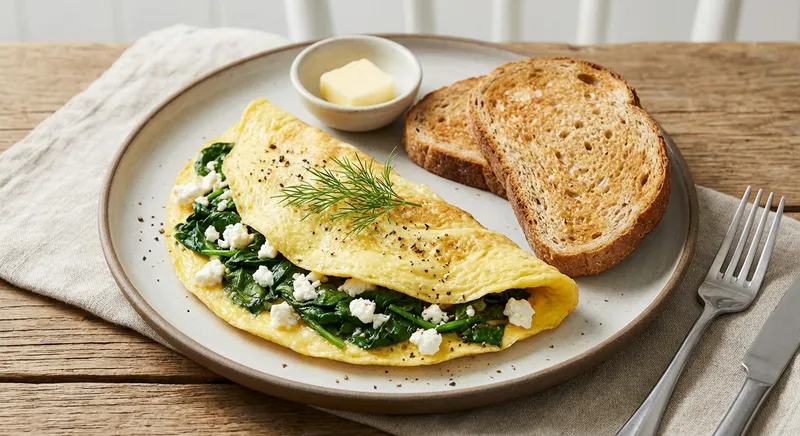
A bright, Mediterranean-inspired breakfast: tender eggs folded around wilted baby spinach and tangy crumbled feta, served with crisp whole wheat toast. The dish balances creamy, salty feta and the fresh green lift of spinach, finished with olive oil to give a silky mouthfeel—simple ingredients elevated to a restaurant-quality morning plate.
Prep everything first: crack the eggs into a medium bowl, season with a pinch of salt and a few grinds of pepper, and beat until the whites and yolks are fully combined and slightly frothy. Why: beating introduces tiny air bubbles for a creamier, more tender omelette and helps it cook evenly.
Measure the feta and set it aside on a small plate; tear or roughly chop any large spinach stems and loosely pile the leaves on a board. Why: having mise en place keeps the quick egg cooking smooth and prevents overcooking while you search for ingredients.
Heat a nonstick or well-seasoned 8" (20 cm) skillet over medium heat for 1 minute, then add 1/2 tablespoon of the olive oil and swirl to coat. Why: preheating ensures even heat distribution; oil at this stage prevents the spinach from sticking and helps bloom the flavor.
Add the spinach to the pan and cook, stirring, for 30–60 seconds until just wilted. Season with a light pinch of salt. Why: quickly wilting the leaves concentrates their flavor and releases a little moisture so they fold into the eggs without making them watery. Cooking only briefly preserves the bright green color and fresh taste.
Transfer the wilted spinach to a plate and wipe any excess moisture from the pan with a paper towel. Lower the heat to medium-low and add the remaining 1/2 tablespoon of olive oil. Why: removing excess moisture prevents the eggs from steaming (which creates rubbery curds) and lowering the heat gives you better control so the eggs set gently and stay tender.
Pour the beaten eggs into the pan and let them sit, undisturbed, for 15–20 seconds to set at the edges. Then, using a silicone spatula, gently stir the eggs from the edges toward the center, tilting the pan as needed so uncooked egg runs to the edges. Continue for about 45 seconds until the eggs are mostly set but still glossy on top. Why: the initial rest builds the base while gentle stirring and tilting produce small curds and an evenly set, creamy texture instead of a dry slab.
Spread the wilted spinach evenly over one half of the omelette and sprinkle the crumbled feta across the same half. If you like, add an extra crack of black pepper. Why: placing fillings on one side makes folding easy and keeps the filling warm without overcooking the eggs; feta adds tang and a creamy, salty contrast to the mild eggs and spinach.
Use the spatula to fold the empty half of the omelette over the filled half, forming a neat half-moon. Let it cook another 20–30 seconds to warm the filling through and allow the feta to soften slightly—avoid prolonged cooking to keep the eggs tender. Why: a brief finish melds flavors and warms the feta without drying the omelette.
While the omelette finishes, toast the whole wheat bread until golden and crisp. Spread lightly with butter if desired. Why: a hot, crisp toast provides a contrasting texture and acts as a vehicle to scoop the omelette; butter adds richness that complements the salty feta.
Slide the omelette onto a warm plate, cut in half if serving family-style, and serve immediately with the toast. Finish with an extra drizzle of olive oil or a few flakes of flaky sea salt if you like. Why: eggs continue to cook as they rest; serving immediately ensures the best texture—tender, silky eggs with warm, melty feta and fresh spinach.
337
Calories
20g
Protein
14g
Carbs
22g
Fat
2g
Fiber
How did this recipe turn out? Let others know!
to rate this recipe
By emensah m
A bright, Mediterranean-inspired breakfast: tender eggs folded around wilted baby spinach and tangy crumbled feta, served with crisp whole wheat toast. The dish balances creamy, salty feta and the fresh green lift of spinach, finished with olive oil to give a silky mouthfeel—simple ingredients elevated to a restaurant-quality morning plate.
Prep everything first: crack the eggs into a medium bowl, season with a pinch of salt and a few grinds of pepper, and beat until the whites and yolks are fully combined and slightly frothy. Why: beating introduces tiny air bubbles for a creamier, more tender omelette and helps it cook evenly.
Measure the feta and set it aside on a small plate; tear or roughly chop any large spinach stems and loosely pile the leaves on a board. Why: having mise en place keeps the quick egg cooking smooth and prevents overcooking while you search for ingredients.
Heat a nonstick or well-seasoned 8" (20 cm) skillet over medium heat for 1 minute, then add 1/2 tablespoon of the olive oil and swirl to coat. Why: preheating ensures even heat distribution; oil at this stage prevents the spinach from sticking and helps bloom the flavor.
Add the spinach to the pan and cook, stirring, for 30–60 seconds until just wilted. Season with a light pinch of salt. Why: quickly wilting the leaves concentrates their flavor and releases a little moisture so they fold into the eggs without making them watery. Cooking only briefly preserves the bright green color and fresh taste.
Transfer the wilted spinach to a plate and wipe any excess moisture from the pan with a paper towel. Lower the heat to medium-low and add the remaining 1/2 tablespoon of olive oil. Why: removing excess moisture prevents the eggs from steaming (which creates rubbery curds) and lowering the heat gives you better control so the eggs set gently and stay tender.
Pour the beaten eggs into the pan and let them sit, undisturbed, for 15–20 seconds to set at the edges. Then, using a silicone spatula, gently stir the eggs from the edges toward the center, tilting the pan as needed so uncooked egg runs to the edges. Continue for about 45 seconds until the eggs are mostly set but still glossy on top. Why: the initial rest builds the base while gentle stirring and tilting produce small curds and an evenly set, creamy texture instead of a dry slab.
Spread the wilted spinach evenly over one half of the omelette and sprinkle the crumbled feta across the same half. If you like, add an extra crack of black pepper. Why: placing fillings on one side makes folding easy and keeps the filling warm without overcooking the eggs; feta adds tang and a creamy, salty contrast to the mild eggs and spinach.
Use the spatula to fold the empty half of the omelette over the filled half, forming a neat half-moon. Let it cook another 20–30 seconds to warm the filling through and allow the feta to soften slightly—avoid prolonged cooking to keep the eggs tender. Why: a brief finish melds flavors and warms the feta without drying the omelette.
While the omelette finishes, toast the whole wheat bread until golden and crisp. Spread lightly with butter if desired. Why: a hot, crisp toast provides a contrasting texture and acts as a vehicle to scoop the omelette; butter adds richness that complements the salty feta.
Slide the omelette onto a warm plate, cut in half if serving family-style, and serve immediately with the toast. Finish with an extra drizzle of olive oil or a few flakes of flaky sea salt if you like. Why: eggs continue to cook as they rest; serving immediately ensures the best texture—tender, silky eggs with warm, melty feta and fresh spinach.
337
Calories
20g
Protein
14g
Carbs
22g
Fat
2g
Fiber
Your Rating:
