By emensah m
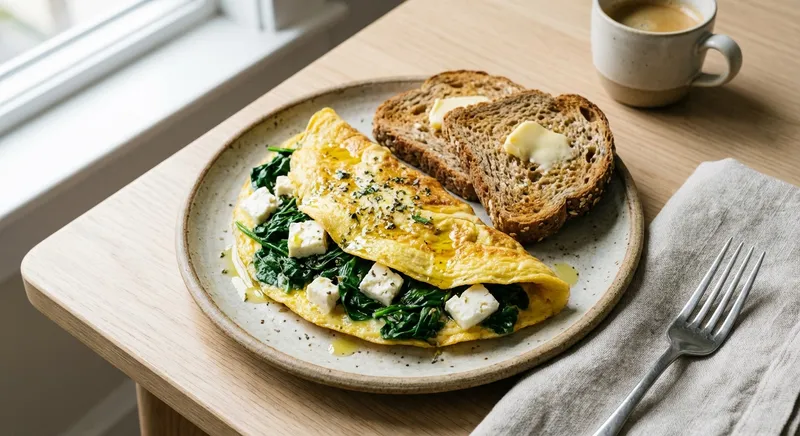
A bright, Mediterranean-inspired breakfast: a silky two-egg omelette folded around tender wilted spinach and salty, creamy feta, served with warm whole-grain toast. The contrast of creamy eggs, briny feta, and nutty toast makes this simple dish feel elevated and restaurant-ready.
Prep the ingredients: Crack the 2 eggs into a small bowl, season with a pinch of salt and a good grind of black pepper. Crumble 1 oz feta and set aside. If the spinach is not already wilted, wash and dry 1 packed cup of baby spinach and roughly chop. Toast the bread (using a toaster or under a broiler) so it’s ready when the omelette finishes. Preparing everything in advance ensures the omelette finishes quickly and at the right texture.
Whisk the eggs until just combined: use a fork or small whisk to beat the eggs for 15–20 seconds until the whites and yolks are uniform but not frothy. You want some air incorporated for a light texture, but over-whisking makes the eggs dry when cooked.
Heat the pan gently: set a 8–10 inch nonstick or well-seasoned skillet over medium-low heat and add 1 tsp olive oil (or butter). Warm the oil until it shimmers (or the butter melts and foams). Cooking eggs at medium-low gives you tender, custardy curds and prevents browning/overcooking.
Sauté the spinach briefly: add the spinach to the warm pan and toss for 30–45 seconds until wilted and bright green. Season lightly with a pinch of salt to help draw out moisture and concentrate flavor. Removing excess water from the spinach prevents a watery omelette.
Move the spinach to one side: push the wilted spinach to the edge of the pan or transfer to a small plate. Keeping the greens to the side prevents them from overcooking while you set the eggs.
Pour in the eggs and let them settle: give the whisked eggs one last gentle stir and pour into the pan, tilting the pan to spread them evenly. Let the eggs sit undisturbed for 10–15 seconds to begin setting at the edges—this initial contact creates a thin set layer that gives structure.
Gently push and tilt to form curds: with a silicone spatula, gently push the cooked edges toward the center while tilting the pan so uncooked eggs flow underneath. Do this for 30–45 seconds to create even, tender curds—this technique avoids tough, rubbery eggs and produces a creamy interior.
Add the spinach and feta: when the eggs are mostly set but still slightly soft on top (slightly glossy, not runny), scatter the wilted spinach and crumble the feta over one half of the omelette. The residual heat will warm the filling without overcooking the eggs; adding cheese late keeps it creamy rather than melted into a single mass.
Fold and finish: use the spatula to fold the empty half over the filling, forming a neat half-moon. Let the omelette cook 15–30 more seconds to finish setting—this melts the feta slightly and sets the center while preserving a tender texture. Avoid overcooking; eggs continue to cook off the heat.
Plate and toast: slide the omelette onto a plate and season with a final pinch of flaky sea salt and black pepper if desired. Serve immediately with the warm whole-grain toast on the side. If you like, rub the toast with a light smear of softened butter or a drizzle of olive oil.
346
Calories
21g
Protein
15g
Carbs
22g
Fat
3g
Fiber
How did this recipe turn out? Let others know!
to rate this recipe
A bright, Mediterranean-inspired breakfast: a silky two-egg omelette folded around tender wilted spinach and salty, creamy feta, served with warm whole-grain toast. The contrast of creamy eggs, briny feta, and nutty toast makes this simple dish feel elevated and restaurant-ready.
Prep the ingredients: Crack the 2 eggs into a small bowl, season with a pinch of salt and a good grind of black pepper. Crumble 1 oz feta and set aside. If the spinach is not already wilted, wash and dry 1 packed cup of baby spinach and roughly chop. Toast the bread (using a toaster or under a broiler) so it’s ready when the omelette finishes. Preparing everything in advance ensures the omelette finishes quickly and at the right texture.
Whisk the eggs until just combined: use a fork or small whisk to beat the eggs for 15–20 seconds until the whites and yolks are uniform but not frothy. You want some air incorporated for a light texture, but over-whisking makes the eggs dry when cooked.
Heat the pan gently: set a 8–10 inch nonstick or well-seasoned skillet over medium-low heat and add 1 tsp olive oil (or butter). Warm the oil until it shimmers (or the butter melts and foams). Cooking eggs at medium-low gives you tender, custardy curds and prevents browning/overcooking.
Sauté the spinach briefly: add the spinach to the warm pan and toss for 30–45 seconds until wilted and bright green. Season lightly with a pinch of salt to help draw out moisture and concentrate flavor. Removing excess water from the spinach prevents a watery omelette.
Move the spinach to one side: push the wilted spinach to the edge of the pan or transfer to a small plate. Keeping the greens to the side prevents them from overcooking while you set the eggs.
Pour in the eggs and let them settle: give the whisked eggs one last gentle stir and pour into the pan, tilting the pan to spread them evenly. Let the eggs sit undisturbed for 10–15 seconds to begin setting at the edges—this initial contact creates a thin set layer that gives structure.
Gently push and tilt to form curds: with a silicone spatula, gently push the cooked edges toward the center while tilting the pan so uncooked eggs flow underneath. Do this for 30–45 seconds to create even, tender curds—this technique avoids tough, rubbery eggs and produces a creamy interior.
Add the spinach and feta: when the eggs are mostly set but still slightly soft on top (slightly glossy, not runny), scatter the wilted spinach and crumble the feta over one half of the omelette. The residual heat will warm the filling without overcooking the eggs; adding cheese late keeps it creamy rather than melted into a single mass.
Fold and finish: use the spatula to fold the empty half over the filling, forming a neat half-moon. Let the omelette cook 15–30 more seconds to finish setting—this melts the feta slightly and sets the center while preserving a tender texture. Avoid overcooking; eggs continue to cook off the heat.
Plate and toast: slide the omelette onto a plate and season with a final pinch of flaky sea salt and black pepper if desired. Serve immediately with the warm whole-grain toast on the side. If you like, rub the toast with a light smear of softened butter or a drizzle of olive oil.
346
Calories
21g
Protein
15g
Carbs
22g
Fat
3g
Fiber
Your Rating:
