By Andrew Acosta
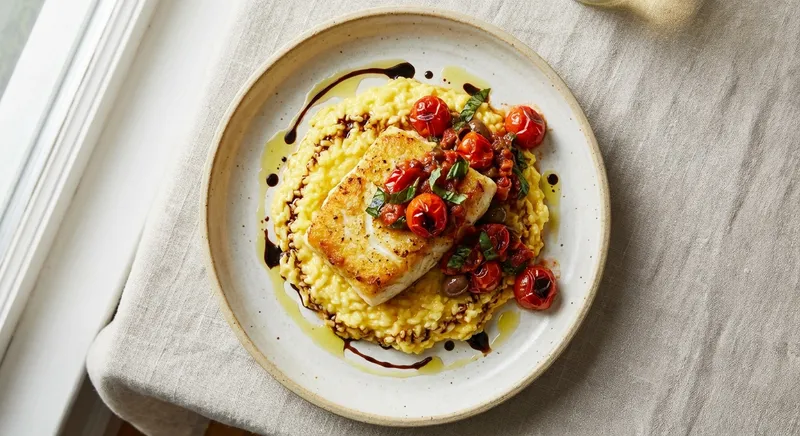
Silky saffron risotto studded with blistered winter cherry tomatoes and bright basil, crowned with a perfectly pan-seared cod fillet. The saffron's golden aroma lifts the creamy Arborio rice while the quick cherry tomato–basil ragù adds freshness and gentle acidity — together they create a restaurant-quality balance of richness, sweetness and herbaceous brightness.
Prep and warm the saffron stock — put the 200 ml stock in a small saucepan and set over low heat until just warm (do not boil). Add the 1/4 tsp lightly crushed saffron threads and let steep while you prep (10–15 minutes). Warming and steeping saffron in hot stock blooms its flavor and color; cold liquid won’t extract the aromatic oils as well.
Dry and season the cod — pat the cod very dry with paper towel (moisture prevents a good sear). Season both sides with a pinch of salt and a few grinds of black pepper. If skin-on, score the skin lightly (1–2 shallow slashes). Drying and scoring ensure the skin crisps uniformly and the fish sears instead of steaming.
Divide the shallot — use roughly two-thirds of the finely chopped shallot for the risotto base and reserve one-third for the tomato ragù. This keeps both components aromatic without needing an extra shallot.
Begin the risotto base — in a medium saucepan set over medium heat add 1 teaspoon of the olive oil and half of the butter (from the 1 tbsp; you can reserve the rest for finishing). Add the two-thirds portion of the chopped shallot and sweat gently for 1–2 minutes until translucent and fragrant. Sweating on gentle heat extracts sweetness without browning — browned shallot will push the risotto flavor toward caramel rather than delicate saffron.
Toast the Arborio — add the 80 g Arborio rice to the shallot and stir constantly for 1–2 minutes until the edges of the grains look translucent but the center is still opaque. Toasting coats the grains in fat and helps them hold texture while releasing starch slowly for a creamier risotto.
Begin adding saffron stock — ladle about 60–80 ml of the warm saffron-infused stock into the rice (enough to just cover the grains), reduce heat to medium-low, and stir gently and regularly until almost absorbed. Continue adding the stock in 50–60 ml increments, stirring and letting each addition absorb before adding more. Stirring releases starch from the rice which creates the traditional creamy risotto texture; using warm stock keeps cooking steady and avoids temperature shock.
Monitor doneness — after about 14–16 minutes of gradual additions and stirring the rice should be al dente (creamy but with a slight bite). You may run short of the 200 ml of stock; if you do, add a little hot water (kept at a simmer) in small increments until the rice is tender. Arborio to liquid ratio here is slightly tight — expect a firmer, very saffron-forward risotto if you use only the 200 ml stock.
Time the fish — when the risotto is in its final 3–4 minutes of cooking, heat a 25–28 cm (10–11 in) heavy skillet over medium-high until hot. Add the remaining olive oil (reserve 1 tsp from earlier used) and swirl to coat. A very hot pan is essential to get an immediate sear that locks moisture into the cod and crisps the exterior.
Sear the cod — place the cod in the hot pan, skin-side down if applicable. Press gently with a spatula for the first 20–30 seconds to keep the skin flat. Cook skin-side down undisturbed for 3–4 minutes until the skin is deeply golden and crisp and the fish is cooked about two-thirds of the way through. Flip and cook the flesh side 1–2 minutes more until the fish is opaque and flakes easily. Why: high heat creates Maillard color and texture; gentle finishing prevents drying the fillet.
Rest the cod — transfer the fish to a plate and loosely tent with foil for 2 minutes. Resting lets the juices redistribute so the fillet stays moist.
Make the winter cherry tomato–basil ragù — in the same hot pan used for the fish (there will be flavorful fond), add the reserved one-third of the shallot and the quartered 80 g cherry tomatoes. Add a small pinch of salt and the pinch of red pepper flakes. Sear the tomatoes over medium-high heat for 2–3 minutes without stirring too much so they blister and begin to collapse; then toss them gently to warm through. Using the fish pan carries over browned bits (fond) that add savory depth to the ragù with no extra seasoning required.
Finish the risotto (mantecatura) — when rice is al dente and luxuriously saucy, remove from heat. Stir in the remaining butter and half the sliced basil leaves; adjust seasoning with salt and pepper, and add a splash of the warm saffron stock or hot water if the risotto feels too tight. The final stirring and butter (mantecatura) emulsifies the rice starch with fat for a glossy, silk-like finish.
Finish the ragù and check seasoning — add a small tear or two of butter or a teaspoon of reserved olive oil to the blistered tomatoes, stir in the rest of the basil, taste and adjust salt, pepper and red pepper flakes. The quick bright ragù should be slightly saucy but not watery — it’s meant to contrast the creamy risotto.
Plate and garnish — spoon a nest of saffron risotto onto warm plates (risotto should spread slightly but hold shape). Place the rested cod fillet on top or slightly off-center. Spoon the blistered cherry tomato–basil ragù alongside and over the fish as desired. Finish with a few extra basil ribbons and a light grind of black pepper. Serve immediately. Why: serving hot and fresh preserves texture contrasts — silky rice, crisp skin, bright tomatoes.
343
Calories
18g
Protein
37g
Carbs
14g
Fat
1g
Fiber
How did this recipe turn out? Let others know!
to rate this recipe
By Andrew Acosta
Silky saffron risotto studded with blistered winter cherry tomatoes and bright basil, crowned with a perfectly pan-seared cod fillet. The saffron's golden aroma lifts the creamy Arborio rice while the quick cherry tomato–basil ragù adds freshness and gentle acidity — together they create a restaurant-quality balance of richness, sweetness and herbaceous brightness.
Prep and warm the saffron stock — put the 200 ml stock in a small saucepan and set over low heat until just warm (do not boil). Add the 1/4 tsp lightly crushed saffron threads and let steep while you prep (10–15 minutes). Warming and steeping saffron in hot stock blooms its flavor and color; cold liquid won’t extract the aromatic oils as well.
Dry and season the cod — pat the cod very dry with paper towel (moisture prevents a good sear). Season both sides with a pinch of salt and a few grinds of black pepper. If skin-on, score the skin lightly (1–2 shallow slashes). Drying and scoring ensure the skin crisps uniformly and the fish sears instead of steaming.
Divide the shallot — use roughly two-thirds of the finely chopped shallot for the risotto base and reserve one-third for the tomato ragù. This keeps both components aromatic without needing an extra shallot.
Begin the risotto base — in a medium saucepan set over medium heat add 1 teaspoon of the olive oil and half of the butter (from the 1 tbsp; you can reserve the rest for finishing). Add the two-thirds portion of the chopped shallot and sweat gently for 1–2 minutes until translucent and fragrant. Sweating on gentle heat extracts sweetness without browning — browned shallot will push the risotto flavor toward caramel rather than delicate saffron.
Toast the Arborio — add the 80 g Arborio rice to the shallot and stir constantly for 1–2 minutes until the edges of the grains look translucent but the center is still opaque. Toasting coats the grains in fat and helps them hold texture while releasing starch slowly for a creamier risotto.
Begin adding saffron stock — ladle about 60–80 ml of the warm saffron-infused stock into the rice (enough to just cover the grains), reduce heat to medium-low, and stir gently and regularly until almost absorbed. Continue adding the stock in 50–60 ml increments, stirring and letting each addition absorb before adding more. Stirring releases starch from the rice which creates the traditional creamy risotto texture; using warm stock keeps cooking steady and avoids temperature shock.
Monitor doneness — after about 14–16 minutes of gradual additions and stirring the rice should be al dente (creamy but with a slight bite). You may run short of the 200 ml of stock; if you do, add a little hot water (kept at a simmer) in small increments until the rice is tender. Arborio to liquid ratio here is slightly tight — expect a firmer, very saffron-forward risotto if you use only the 200 ml stock.
Time the fish — when the risotto is in its final 3–4 minutes of cooking, heat a 25–28 cm (10–11 in) heavy skillet over medium-high until hot. Add the remaining olive oil (reserve 1 tsp from earlier used) and swirl to coat. A very hot pan is essential to get an immediate sear that locks moisture into the cod and crisps the exterior.
Sear the cod — place the cod in the hot pan, skin-side down if applicable. Press gently with a spatula for the first 20–30 seconds to keep the skin flat. Cook skin-side down undisturbed for 3–4 minutes until the skin is deeply golden and crisp and the fish is cooked about two-thirds of the way through. Flip and cook the flesh side 1–2 minutes more until the fish is opaque and flakes easily. Why: high heat creates Maillard color and texture; gentle finishing prevents drying the fillet.
Rest the cod — transfer the fish to a plate and loosely tent with foil for 2 minutes. Resting lets the juices redistribute so the fillet stays moist.
Make the winter cherry tomato–basil ragù — in the same hot pan used for the fish (there will be flavorful fond), add the reserved one-third of the shallot and the quartered 80 g cherry tomatoes. Add a small pinch of salt and the pinch of red pepper flakes. Sear the tomatoes over medium-high heat for 2–3 minutes without stirring too much so they blister and begin to collapse; then toss them gently to warm through. Using the fish pan carries over browned bits (fond) that add savory depth to the ragù with no extra seasoning required.
Finish the risotto (mantecatura) — when rice is al dente and luxuriously saucy, remove from heat. Stir in the remaining butter and half the sliced basil leaves; adjust seasoning with salt and pepper, and add a splash of the warm saffron stock or hot water if the risotto feels too tight. The final stirring and butter (mantecatura) emulsifies the rice starch with fat for a glossy, silk-like finish.
Finish the ragù and check seasoning — add a small tear or two of butter or a teaspoon of reserved olive oil to the blistered tomatoes, stir in the rest of the basil, taste and adjust salt, pepper and red pepper flakes. The quick bright ragù should be slightly saucy but not watery — it’s meant to contrast the creamy risotto.
Plate and garnish — spoon a nest of saffron risotto onto warm plates (risotto should spread slightly but hold shape). Place the rested cod fillet on top or slightly off-center. Spoon the blistered cherry tomato–basil ragù alongside and over the fish as desired. Finish with a few extra basil ribbons and a light grind of black pepper. Serve immediately. Why: serving hot and fresh preserves texture contrasts — silky rice, crisp skin, bright tomatoes.
343
Calories
18g
Protein
37g
Carbs
14g
Fat
1g
Fiber
Your Rating:
