By Chef
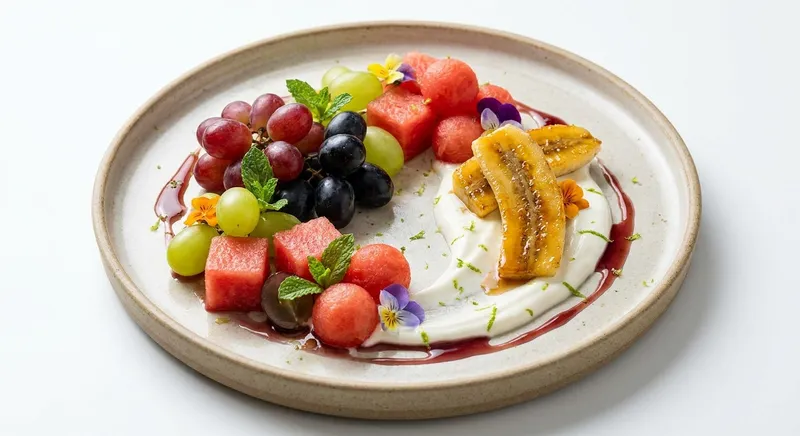
A bright, restaurant-style summer fruit course that layers textures and concentrated fruit flavors: jewel-toned grapes reduced into a glossy grape gastrique, crisp-sweet watermelon carpaccio, warm caramelized bananas for caramel and Maillard notes, and a cooling honey-lime Greek yogurt. The result is refreshing, sophisticated, and surprisingly savory-sweet — perfect as a plated dessert or a light, showy starter.
Prepare and chill components: Rinse all grapes and pat dry with paper towels (excess water dilutes flavor and prevents proper caramelization). Peel the bananas and set aside. Place a shallow bowl or baking sheet in the refrigerator for plating later — cold plates keep the fruit bright and the yogurt from melting quickly.
Macerate half the grapes: Reserve about 1/2 cup (75 g) of mixed grapes (evenly from each color) whole for garnish. Chop the remaining grapes roughly and put them in a small saucepan with 2 tablespoons granulated sugar and 2 tablespoons red wine vinegar. Macerating with sugar pulls juices from the fruit and the vinegar balances sweetness and will help the reduction turn into a glossy, tangy gastrique rather than pure jam.
Make the grape gastrique: Bring the saucepan to a simmer over medium heat, then lower to medium-low and gently simmer, stirring occasionally, until the grapes soften and the mixture reduces to a sticky, syrupy glaze — about 8–10 minutes. The gentle simmer concentrates flavor and evaporates water while the acid keeps the color bright; remove from heat and strain through a fine sieve into a bowl, pressing gently to extract juices. You should end with about 3–4 tablespoons of glossy gastrique. Set aside to cool slightly.
Prepare the honey-lime yogurt: In a medium bowl whisk together the Greek yogurt, 2 tablespoons honey, 1 tablespoon lime juice, 1/2 teaspoon vanilla, and a pinch of salt. Taste and adjust: the lime brightens and thins the yogurt slightly, balancing the sweetness and giving a clean tang that lifts the fruit.
Dress the watermelon: Put the diced watermelon in a bowl, add 1 teaspoon olive oil and a pinch of salt, and toss gently. A light oil helps the watermelon take on a micro-sear if you choose to quickly grill or sauté it (see step 6); the salt draws out and amplifies the natural sweetness.
Optional: Quick sear for depth (recommended): Heat a large nonstick skillet or grill pan over medium-high heat until hot. Add the remaining olive oil and sear the watermelon in a single layer for 20–30 seconds per side until you see light caramelization. This Maillard-like reaction concentrates the watermelon’s flavor and adds smoky-sweet complexity. Work in batches to avoid steaming. Transfer to a plate to cool briefly.
Caramelize the bananas: Heat a heavy skillet over medium heat and melt the butter. When the butter foams, sprinkle 1 tablespoon granulated sugar over the melted butter and let it dissolve for 20 seconds — this allows the sugar to begin caramelizing evenly. Add banana halves (cut lengthwise) and sear 1–2 minutes per side until golden-brown and caramel notes appear. Caramelizing the bananas adds richness and a warm counterpoint to the chilled fruit; avoid overcooking or they’ll become mushy.
Assemble on chilled plates: Arrange 3–4 slices or a small nest (about 3/4 cup) of the watermelon in the center of each plate as a base (the cool fruit keeps the dish refreshing). Scatter a generous spoonful of whole reserve grapes and some of the seared watermelon around the base to create color contrast.
Layer the bananas and sauces: Place a caramelized banana half on each plate. Drizzle about 1 tablespoon of honey-lime yogurt across each portion in a ribbon or small pools — the cool, creamy yogurt tempers the sweetness and adds tang. Spoon 1 tablespoon of the grape gastrique over and around the fruit; the concentrated grape syrup provides depth and a glossy finish.
Finish and garnish: Scatter the remaining fresh grapes and finely chopped mint over the plate and zest a little lime on top for perfume. A final tiny pinch of flaky sea salt over the caramelized bananas heightens sweetness and balances flavors — the contrast makes tastes pop.
Serve immediately: Serve within 10 minutes of assembly so the yogurt stays cool and the banana retains some caramelized texture. If making ahead, keep components separately chilled and combine at the last minute to preserve textures and colors.
Storage notes: Leftover grape gastrique keeps airtight in the refrigerator up to 5 days and is excellent on ice cream or cheese boards. Caramelized bananas are best eaten the day they are made; watermelon should be kept chilled and used within 24 hours for best texture.
374
Calories
5g
Protein
63g
Carbs
13g
Fat
3g
Fiber
How did this recipe turn out? Let others know!
to rate this recipe
By Chef
A bright, restaurant-style summer fruit course that layers textures and concentrated fruit flavors: jewel-toned grapes reduced into a glossy grape gastrique, crisp-sweet watermelon carpaccio, warm caramelized bananas for caramel and Maillard notes, and a cooling honey-lime Greek yogurt. The result is refreshing, sophisticated, and surprisingly savory-sweet — perfect as a plated dessert or a light, showy starter.
Prepare and chill components: Rinse all grapes and pat dry with paper towels (excess water dilutes flavor and prevents proper caramelization). Peel the bananas and set aside. Place a shallow bowl or baking sheet in the refrigerator for plating later — cold plates keep the fruit bright and the yogurt from melting quickly.
Macerate half the grapes: Reserve about 1/2 cup (75 g) of mixed grapes (evenly from each color) whole for garnish. Chop the remaining grapes roughly and put them in a small saucepan with 2 tablespoons granulated sugar and 2 tablespoons red wine vinegar. Macerating with sugar pulls juices from the fruit and the vinegar balances sweetness and will help the reduction turn into a glossy, tangy gastrique rather than pure jam.
Make the grape gastrique: Bring the saucepan to a simmer over medium heat, then lower to medium-low and gently simmer, stirring occasionally, until the grapes soften and the mixture reduces to a sticky, syrupy glaze — about 8–10 minutes. The gentle simmer concentrates flavor and evaporates water while the acid keeps the color bright; remove from heat and strain through a fine sieve into a bowl, pressing gently to extract juices. You should end with about 3–4 tablespoons of glossy gastrique. Set aside to cool slightly.
Prepare the honey-lime yogurt: In a medium bowl whisk together the Greek yogurt, 2 tablespoons honey, 1 tablespoon lime juice, 1/2 teaspoon vanilla, and a pinch of salt. Taste and adjust: the lime brightens and thins the yogurt slightly, balancing the sweetness and giving a clean tang that lifts the fruit.
Dress the watermelon: Put the diced watermelon in a bowl, add 1 teaspoon olive oil and a pinch of salt, and toss gently. A light oil helps the watermelon take on a micro-sear if you choose to quickly grill or sauté it (see step 6); the salt draws out and amplifies the natural sweetness.
Optional: Quick sear for depth (recommended): Heat a large nonstick skillet or grill pan over medium-high heat until hot. Add the remaining olive oil and sear the watermelon in a single layer for 20–30 seconds per side until you see light caramelization. This Maillard-like reaction concentrates the watermelon’s flavor and adds smoky-sweet complexity. Work in batches to avoid steaming. Transfer to a plate to cool briefly.
Caramelize the bananas: Heat a heavy skillet over medium heat and melt the butter. When the butter foams, sprinkle 1 tablespoon granulated sugar over the melted butter and let it dissolve for 20 seconds — this allows the sugar to begin caramelizing evenly. Add banana halves (cut lengthwise) and sear 1–2 minutes per side until golden-brown and caramel notes appear. Caramelizing the bananas adds richness and a warm counterpoint to the chilled fruit; avoid overcooking or they’ll become mushy.
Assemble on chilled plates: Arrange 3–4 slices or a small nest (about 3/4 cup) of the watermelon in the center of each plate as a base (the cool fruit keeps the dish refreshing). Scatter a generous spoonful of whole reserve grapes and some of the seared watermelon around the base to create color contrast.
Layer the bananas and sauces: Place a caramelized banana half on each plate. Drizzle about 1 tablespoon of honey-lime yogurt across each portion in a ribbon or small pools — the cool, creamy yogurt tempers the sweetness and adds tang. Spoon 1 tablespoon of the grape gastrique over and around the fruit; the concentrated grape syrup provides depth and a glossy finish.
Finish and garnish: Scatter the remaining fresh grapes and finely chopped mint over the plate and zest a little lime on top for perfume. A final tiny pinch of flaky sea salt over the caramelized bananas heightens sweetness and balances flavors — the contrast makes tastes pop.
Serve immediately: Serve within 10 minutes of assembly so the yogurt stays cool and the banana retains some caramelized texture. If making ahead, keep components separately chilled and combine at the last minute to preserve textures and colors.
Storage notes: Leftover grape gastrique keeps airtight in the refrigerator up to 5 days and is excellent on ice cream or cheese boards. Caramelized bananas are best eaten the day they are made; watermelon should be kept chilled and used within 24 hours for best texture.
374
Calories
5g
Protein
63g
Carbs
13g
Fat
3g
Fiber
Your Rating:
