By Kathryn Scott
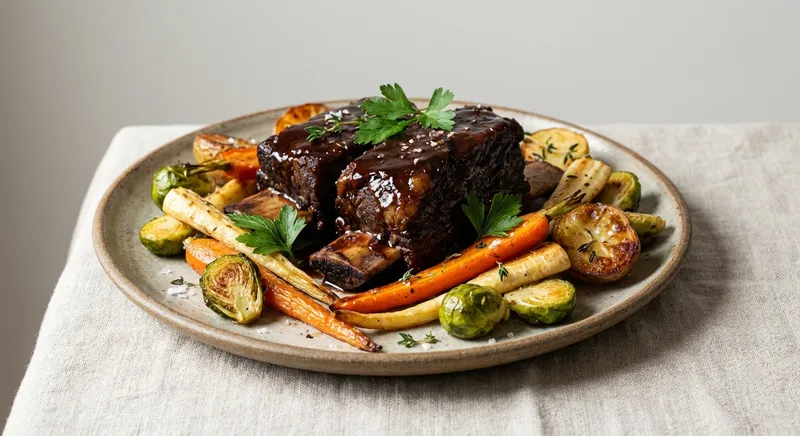
Slow-braised beef short ribs glazed with sweet-tart balsamic and a deep onion-tomato base, served beside honeyed roasted carrots, parsnips and baby potatoes. The long, gentle braise melts connective tissue into a silky sauce while roasting caramelizes the roots—together creating a rich, comfort-food dinner that feels elevated and restaurant-ready.
Preheat and prep: Preheat your oven to 170°C (335°F) for braising. Also preheat a second oven rack (or a separate oven) to 200°C (400°F) for roasting the root vegetables later. Pat the short ribs dry with paper towels and season all over with salt and pepper. Drying the meat removes surface moisture so you get a strong, even sear (the Maillard reaction) which gives the final sauce deep, savory flavor.
Lightly dust the ribs with flour (optional): Toss the ribs in a shallow plate with 1 tbsp flour (shake off excess). The flour helps brown and gives the braising liquid a little more body when it reduces—don’t over-flour, just a light coating.
Sear the ribs: Heat 1½ tbsp olive oil in a heavy, oven-safe Dutch oven over medium-high heat until shimmering. Add ribs in a single layer (work in batches if needed) and sear 3–4 minutes per side until deeply browned—don’t move them constantly; leave them to develop a crust. Searing locks flavor into the meat and produces fond (browned bits) that are critical for the braise sauce.
Remove ribs and sweat aromatics: Transfer seared ribs to a plate. Reduce heat to medium, add remaining 1½ tbsp olive oil, then add the chopped onion and sauté 4–6 minutes until softened and beginning to caramelize—this adds natural sweetness to balance the balsamic. Add smashed garlic for the final 30 seconds to wake up its flavor without burning.
Build the braise base: Stir in the tomato paste and cook 1–2 minutes, stirring constantly to cook out the raw tomato notes and deepen flavor—this ‘browning’ of the paste (the Maillard of tomatoes) amplifies savory depth. Add the balsamic vinegar and scrape the bottom of the pot with a wooden spoon to deglaze and lift the fond; the vinegar will reduce and concentrate its sweet-tart notes.
Add liquid and aromatics: Pour in the beef stock and bring to a simmer, scraping up any remaining fond. Return the short ribs to the pot (nestle them meat-side up), add the rosemary sprigs and bay leaves, and season lightly with salt and black pepper. The meat should be partially submerged but not completely covered—this encourages even temperature and flavor concentration.
Braise low and slow: Cover the Dutch oven with a tight-fitting lid and transfer to the preheated oven. Braise at 170°C (335°F) for 2½ to 3 hours, or until the ribs are fall-apart tender (a fork should slide in with little resistance). Low, steady heat slowly converts collagen to gelatin for a silky mouthfeel—rushing this step yields tough meat.
Roast the vegetables: While the ribs braise for the last 40–45 minutes, toss the mixed carrots, parsnips and baby potatoes in a bowl with a pinch of salt, pepper and a drizzle of olive oil (about 1 tbsp). Spread them in a single layer on a rimmed baking sheet and roast at 200°C (400°F) for 35–45 minutes, turning once until edges are caramelized and centers are tender. High dry heat caramelizes natural sugars for color and flavor contrast to the rich braise.
Finish the sauce: When the ribs are tender, carefully transfer them to a warm dish and tent with foil. Place the Dutch oven over medium heat on the stovetop, skim off excess fat from the surface if desired, and simmer the braising liquid until it reduces and slightly thickens—about 6–10 minutes. Reduction concentrates flavor. For a glossy finish, swirl in the butter off the heat to mount the sauce; check seasoning and add salt and pepper if needed.
Plate and serve: Spoon some sauce on each plate, set a short rib on top, and pile the roasted root vegetables on the side. Garnish with a small sprig of rosemary or a pinch of finishing salt. The acidity from the balsamic cuts through the richness, while the roasted veg provide sweet, earthy balance—serve with mashed potatoes or crusty bread to mop up the sauce if you like.
Make-ahead and reheating: This braise benefits from resting—if time allows refrigerate the ribs and sauce overnight. The next day skim hardened fat, reheat gently in a low oven or on the stovetop, and finish with butter. Slow-cooked flavors deepen with time, and reheating gently preserves texture.
1041
Calories
47g
Protein
33g
Carbs
76g
Fat
6g
Fiber
How did this recipe turn out? Let others know!
to rate this recipe
By Kathryn Scott
Slow-braised beef short ribs glazed with sweet-tart balsamic and a deep onion-tomato base, served beside honeyed roasted carrots, parsnips and baby potatoes. The long, gentle braise melts connective tissue into a silky sauce while roasting caramelizes the roots—together creating a rich, comfort-food dinner that feels elevated and restaurant-ready.
Preheat and prep: Preheat your oven to 170°C (335°F) for braising. Also preheat a second oven rack (or a separate oven) to 200°C (400°F) for roasting the root vegetables later. Pat the short ribs dry with paper towels and season all over with salt and pepper. Drying the meat removes surface moisture so you get a strong, even sear (the Maillard reaction) which gives the final sauce deep, savory flavor.
Lightly dust the ribs with flour (optional): Toss the ribs in a shallow plate with 1 tbsp flour (shake off excess). The flour helps brown and gives the braising liquid a little more body when it reduces—don’t over-flour, just a light coating.
Sear the ribs: Heat 1½ tbsp olive oil in a heavy, oven-safe Dutch oven over medium-high heat until shimmering. Add ribs in a single layer (work in batches if needed) and sear 3–4 minutes per side until deeply browned—don’t move them constantly; leave them to develop a crust. Searing locks flavor into the meat and produces fond (browned bits) that are critical for the braise sauce.
Remove ribs and sweat aromatics: Transfer seared ribs to a plate. Reduce heat to medium, add remaining 1½ tbsp olive oil, then add the chopped onion and sauté 4–6 minutes until softened and beginning to caramelize—this adds natural sweetness to balance the balsamic. Add smashed garlic for the final 30 seconds to wake up its flavor without burning.
Build the braise base: Stir in the tomato paste and cook 1–2 minutes, stirring constantly to cook out the raw tomato notes and deepen flavor—this ‘browning’ of the paste (the Maillard of tomatoes) amplifies savory depth. Add the balsamic vinegar and scrape the bottom of the pot with a wooden spoon to deglaze and lift the fond; the vinegar will reduce and concentrate its sweet-tart notes.
Add liquid and aromatics: Pour in the beef stock and bring to a simmer, scraping up any remaining fond. Return the short ribs to the pot (nestle them meat-side up), add the rosemary sprigs and bay leaves, and season lightly with salt and black pepper. The meat should be partially submerged but not completely covered—this encourages even temperature and flavor concentration.
Braise low and slow: Cover the Dutch oven with a tight-fitting lid and transfer to the preheated oven. Braise at 170°C (335°F) for 2½ to 3 hours, or until the ribs are fall-apart tender (a fork should slide in with little resistance). Low, steady heat slowly converts collagen to gelatin for a silky mouthfeel—rushing this step yields tough meat.
Roast the vegetables: While the ribs braise for the last 40–45 minutes, toss the mixed carrots, parsnips and baby potatoes in a bowl with a pinch of salt, pepper and a drizzle of olive oil (about 1 tbsp). Spread them in a single layer on a rimmed baking sheet and roast at 200°C (400°F) for 35–45 minutes, turning once until edges are caramelized and centers are tender. High dry heat caramelizes natural sugars for color and flavor contrast to the rich braise.
Finish the sauce: When the ribs are tender, carefully transfer them to a warm dish and tent with foil. Place the Dutch oven over medium heat on the stovetop, skim off excess fat from the surface if desired, and simmer the braising liquid until it reduces and slightly thickens—about 6–10 minutes. Reduction concentrates flavor. For a glossy finish, swirl in the butter off the heat to mount the sauce; check seasoning and add salt and pepper if needed.
Plate and serve: Spoon some sauce on each plate, set a short rib on top, and pile the roasted root vegetables on the side. Garnish with a small sprig of rosemary or a pinch of finishing salt. The acidity from the balsamic cuts through the richness, while the roasted veg provide sweet, earthy balance—serve with mashed potatoes or crusty bread to mop up the sauce if you like.
Make-ahead and reheating: This braise benefits from resting—if time allows refrigerate the ribs and sauce overnight. The next day skim hardened fat, reheat gently in a low oven or on the stovetop, and finish with butter. Slow-cooked flavors deepen with time, and reheating gently preserves texture.
1041
Calories
47g
Protein
33g
Carbs
76g
Fat
6g
Fiber
Your Rating:
