By Amanda Miller
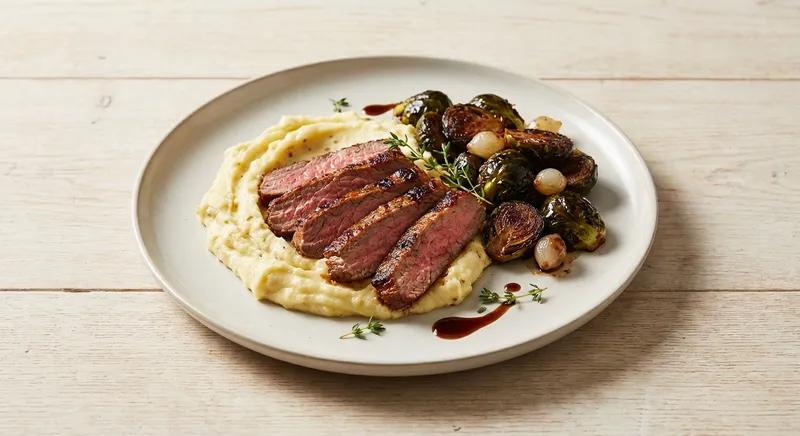
A modern French–inspired plate: deeply caramelized, thinly sliced flank steak served over a silky celeriac–potato mash brightened with tangy Dijon, and paired with quick-braised Brussels sprouts finished with glossy balsamic and thyme. Rich, meaty flavors, creamy textured mash and punchy, slightly sweet sprouts make this feel restaurant-level while remaining achievable at home.
Bring a large pot of salted water to a simmer. Add the cubed potatoes and celeriac so they come up just under a boil; simmer until both are tender when pierced with a knife—about 15–18 minutes. Starting these first gives the mash time to drain and steam-dry (for a fluffier texture) while you prepare the steak and sprouts.
While the roots simmer, season the steaks generously on both sides with sea salt and freshly cracked black pepper. Let them rest at room temperature for 10–15 minutes. Allowing the meat to warm slightly brings it closer to room temperature, which promotes an even sear and more consistent doneness.
Trim and halve the Brussels sprouts; mince the optional garlic. In a wide skillet (cast-iron preferred), warm 1 tablespoon of the olive oil over medium-high heat. Add the cut-side of the sprouts down first, without crowding, to get contact with the pan—this creates browning (maillard reaction) that adds savory depth. Cook 3–4 minutes until nicely caramelized.
Flip the sprouts, add the minced garlic (if using) and 1 tablespoon of water or a splash of stock, then reduce heat to medium. Cover the pan and let them braise for 4–5 minutes so the centers become tender while the cut-sides stay browned. The brief braise gently steams the sprouts so they’re cooked through without losing their charred flavor.
Uncover the sprouts, pour in the balsamic vinegar and 1 teaspoon of chopped thyme, increase heat to medium-high and cook, stirring, for 1–2 minutes until the balsamic reduces to a glossy glaze that coats the sprouts. Season to taste with salt and pepper and transfer to a warm plate; keep warm. The reduction concentrates sweetness and acidity to balance the dish.
Pat the steaks dry with paper towels—dry surface = better sear. Heat a large heavy skillet (preferably cast iron) over high heat until just smoking. Add 1–2 tablespoons of olive oil and swirl to coat. Place the steaks in the pan and resist the urge to move them for 2–3 minutes (for thin steaks), allowing a brown crust to form; the crust is flavor. Flip and cook another 2–3 minutes for medium-rare (target internal temp ~130–135°F / 54–57°C). Adjust time slightly for very thin or thicker cuts.
For extra flavor, during the last minute of cooking add a knob (10–15 g) of butter and a sprig of thyme to the pan and tilt the skillet to spoon the melted butter over the steak (basting). Basting adds glossy finish and enriches the crust. Transfer steak to a cutting board and rest loosely tented for 6–8 minutes—resting lets juices redistribute so the steak remains juicy when sliced.
While steak rests, drain the potatoes and celeriac thoroughly and return to the warm pot over low heat for 1 minute to steam-dry—this removes excess water so the mash isn't gluey. Mash with a potato masher or ricer for the silkiest texture.
Stir in the Dijon mustard and the butter into the hot mashed roots. Add 1–2 tablespoons of warm milk or reserved cooking water if needed to loosen (optional — pantry staple). Taste and season with salt and pepper. Dijon adds bright acidity and savory punch to cut through the richness of steak.
Thinly slice the rested flank steak against the grain (this shortens muscle fibers and makes each bite tender). Arrange a generous spoonful of mustard celeriac–potato mash on each plate, fan steak slices over the mash, and spoon the glazed Brussels sprouts alongside. Scatter remaining chopped thyme and an extra drizzle (½ tsp) of olive oil if desired for gloss.
Serve immediately. Recommend a light red wine (Pinot Noir) or a crisp, herbaceous white (Sauvignon Blanc) to complement the dish’s mix of richness and brightness.
666
Calories
48g
Protein
33g
Carbs
39g
Fat
7g
Fiber
How did this recipe turn out? Let others know!
to rate this recipe
By Amanda Miller
A modern French–inspired plate: deeply caramelized, thinly sliced flank steak served over a silky celeriac–potato mash brightened with tangy Dijon, and paired with quick-braised Brussels sprouts finished with glossy balsamic and thyme. Rich, meaty flavors, creamy textured mash and punchy, slightly sweet sprouts make this feel restaurant-level while remaining achievable at home.
Bring a large pot of salted water to a simmer. Add the cubed potatoes and celeriac so they come up just under a boil; simmer until both are tender when pierced with a knife—about 15–18 minutes. Starting these first gives the mash time to drain and steam-dry (for a fluffier texture) while you prepare the steak and sprouts.
While the roots simmer, season the steaks generously on both sides with sea salt and freshly cracked black pepper. Let them rest at room temperature for 10–15 minutes. Allowing the meat to warm slightly brings it closer to room temperature, which promotes an even sear and more consistent doneness.
Trim and halve the Brussels sprouts; mince the optional garlic. In a wide skillet (cast-iron preferred), warm 1 tablespoon of the olive oil over medium-high heat. Add the cut-side of the sprouts down first, without crowding, to get contact with the pan—this creates browning (maillard reaction) that adds savory depth. Cook 3–4 minutes until nicely caramelized.
Flip the sprouts, add the minced garlic (if using) and 1 tablespoon of water or a splash of stock, then reduce heat to medium. Cover the pan and let them braise for 4–5 minutes so the centers become tender while the cut-sides stay browned. The brief braise gently steams the sprouts so they’re cooked through without losing their charred flavor.
Uncover the sprouts, pour in the balsamic vinegar and 1 teaspoon of chopped thyme, increase heat to medium-high and cook, stirring, for 1–2 minutes until the balsamic reduces to a glossy glaze that coats the sprouts. Season to taste with salt and pepper and transfer to a warm plate; keep warm. The reduction concentrates sweetness and acidity to balance the dish.
Pat the steaks dry with paper towels—dry surface = better sear. Heat a large heavy skillet (preferably cast iron) over high heat until just smoking. Add 1–2 tablespoons of olive oil and swirl to coat. Place the steaks in the pan and resist the urge to move them for 2–3 minutes (for thin steaks), allowing a brown crust to form; the crust is flavor. Flip and cook another 2–3 minutes for medium-rare (target internal temp ~130–135°F / 54–57°C). Adjust time slightly for very thin or thicker cuts.
For extra flavor, during the last minute of cooking add a knob (10–15 g) of butter and a sprig of thyme to the pan and tilt the skillet to spoon the melted butter over the steak (basting). Basting adds glossy finish and enriches the crust. Transfer steak to a cutting board and rest loosely tented for 6–8 minutes—resting lets juices redistribute so the steak remains juicy when sliced.
While steak rests, drain the potatoes and celeriac thoroughly and return to the warm pot over low heat for 1 minute to steam-dry—this removes excess water so the mash isn't gluey. Mash with a potato masher or ricer for the silkiest texture.
Stir in the Dijon mustard and the butter into the hot mashed roots. Add 1–2 tablespoons of warm milk or reserved cooking water if needed to loosen (optional — pantry staple). Taste and season with salt and pepper. Dijon adds bright acidity and savory punch to cut through the richness of steak.
Thinly slice the rested flank steak against the grain (this shortens muscle fibers and makes each bite tender). Arrange a generous spoonful of mustard celeriac–potato mash on each plate, fan steak slices over the mash, and spoon the glazed Brussels sprouts alongside. Scatter remaining chopped thyme and an extra drizzle (½ tsp) of olive oil if desired for gloss.
Serve immediately. Recommend a light red wine (Pinot Noir) or a crisp, herbaceous white (Sauvignon Blanc) to complement the dish’s mix of richness and brightness.
666
Calories
48g
Protein
33g
Carbs
39g
Fat
7g
Fiber
Your Rating:
