By Kayla
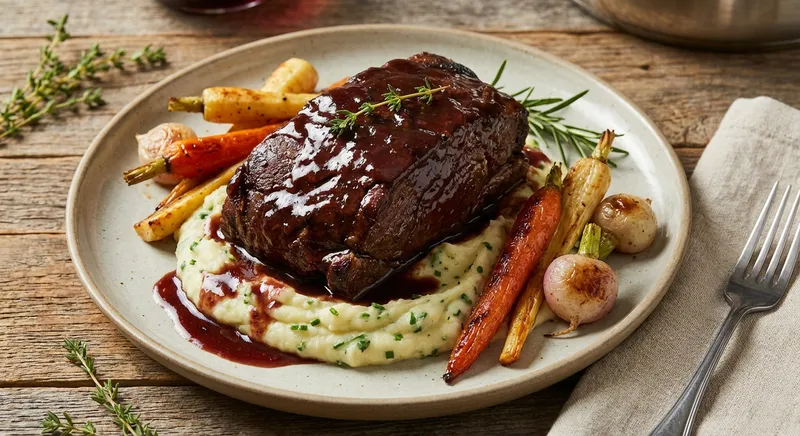
A French-inspired, restaurant-quality braise: deeply caramelized beef rump slow-tenderized in dry red wine and beef stock until meltingly soft, served with a creamy herb mash and crisp-roasted winter root vegetables. Bright herb butter and a glossy red-wine jus finish the plate — rich, savory and balanced by roasted sweetness and fresh parsley.
Prepare and season the beef. Cut the 1 kg rump into 6–8 large cubes (about 120–160 g each) so they fit easily in your pressure cooker. Pat dry with paper towels and season generously with salt and black pepper. Drying the surface ensures better browning (Maillard reaction) which builds flavor for the sauce.
Preheat and sear. Set your pressure cooker (stovetop or electric with a sear/sauté mode) to high heat and add 20 ml olive oil. When shimmering, sear the beef in batches (do not crowd) for 2–3 minutes per side until deeply browned — you want concentrated caramelized flavor, not cooked-through meat. Transfer browned pieces to a plate and leave the fond (browned bits) in the pot.
Aromatics and deglaze. Reduce heat to medium and add the remaining 20 ml olive oil if the pot is dry. Add the chopped onion and sauté 4–5 minutes until softened and starting to color; add the crushed garlic and cook 30–45 seconds to bloom the garlic’s aromatics without burning it. Scrape the fond loose with a wooden spoon and pour in the 480 ml red wine to deglaze — simmer 3–4 minutes to reduce slightly and to 'clean' those browned bits into the sauce (this concentrates flavor and removes raw-alcohol edge).
Add vegetables, herbs and liquid. Return the seared beef to the pot. Add carrots, parsnips, turnip, the tied herbs (or minced if you prefer), 2 bay leaves and 600 ml beef stock. The liquid should come about two-thirds up the meat — braising partially submerges the meat so the top stays intact while the submerged parts become meltingly tender.
Season and lock. Taste the braising liquid and add a modest pinch of salt and pepper — remember flavors concentrate during reduction. Secure the lid and bring the pressure cooker to high pressure. For a 1 kg rump cut into large chunks set the cooker for 40–45 minutes at high pressure (this time tenderizes connective tissue while keeping the meat intact).
Roast the winter roots while the meat cooks. Toss the prepared potatoes roots (carrots/parsnips/turnip used in the braise are already cooking; if you prefer extra-crisp roots, reserve a few for roasting) — or toss an additional tray of root pieces — with a little olive oil, salt and pepper. Roast at 220°C / 425°F for 20–30 minutes until deeply caramelized around the edges. Roasting concentrates sugars and adds textural contrast to the tender braised veg.
Pressure release and rest. When the cooker’s timer finishes, perform a 10-minute natural release to let the meat fibers relax and juices redistribute; then safely release remaining pressure. Remove the beef and set on a tray to rest for 10 minutes — resting makes the pieces juicier and easier to slice.
Make the red-wine jus. While the meat rests, strain the braising liquid into a saucepan, pressing the solids lightly to extract flavor. Skim off excess fat (leave a tablespoon for richness). Simmer the strained liquid on medium-high to reduce by roughly one-third until it coats the back of a spoon — this concentrates flavor and builds body. Taste and adjust seasoning. To finish, whisk in 15–20 g cold butter (mounting) off the heat for a glossy, slightly thick sauce.
Prepare the herb mash. Meanwhile, place the 1 kg potatoes in cold, salted water; bring to a simmer and cook until very tender (12–18 minutes depending on size). Drain well — allowing potatoes to steam-dry for 1–2 minutes improves texture. Return to the hot pot, add 80 g butter and 120 ml whole milk, and mash to a smooth but slightly textured consistency. Season with salt, freshly ground pepper, and fold in most of the chopped parsley (reserve a little for garnish). The warm butter and milk create a silky mouthfeel while the parsley brightens the mash.
Finish the vegetables. If you roasted extra roots, toss them with a small knob (10 g) butter and a pinch of salt right after they come out of the oven so they glaze and shine. For the braised root vegetables remaining in the pot, you can briefly reduce the strained braising liquid over high heat and toss the roots back in to coat — this gives them a savory lacquer without losing tenderness.
Slice and plate. Slice the rested beef across the grain into generous portions. Place a scoop of herb mash on each plate, arrange slices of braised beef beside it, and pile the roasted/braised winter roots alongside. Spoon the warm red-wine jus over the beef and scatter the remaining chopped parsley over the dish for freshness and color.
Final seasoning and serve. Give each plate a finishing grind of black pepper and a final pinch of flaky sea salt if available. Serve immediately while everything is warm — the contrast of glossy sauce, soft mash and sweet roasted roots is at its best hot.
1227
Calories
76g
Protein
76g
Carbs
58g
Fat
13g
Fiber
How did this recipe turn out? Let others know!
to rate this recipe
By Kayla
A French-inspired, restaurant-quality braise: deeply caramelized beef rump slow-tenderized in dry red wine and beef stock until meltingly soft, served with a creamy herb mash and crisp-roasted winter root vegetables. Bright herb butter and a glossy red-wine jus finish the plate — rich, savory and balanced by roasted sweetness and fresh parsley.
Prepare and season the beef. Cut the 1 kg rump into 6–8 large cubes (about 120–160 g each) so they fit easily in your pressure cooker. Pat dry with paper towels and season generously with salt and black pepper. Drying the surface ensures better browning (Maillard reaction) which builds flavor for the sauce.
Preheat and sear. Set your pressure cooker (stovetop or electric with a sear/sauté mode) to high heat and add 20 ml olive oil. When shimmering, sear the beef in batches (do not crowd) for 2–3 minutes per side until deeply browned — you want concentrated caramelized flavor, not cooked-through meat. Transfer browned pieces to a plate and leave the fond (browned bits) in the pot.
Aromatics and deglaze. Reduce heat to medium and add the remaining 20 ml olive oil if the pot is dry. Add the chopped onion and sauté 4–5 minutes until softened and starting to color; add the crushed garlic and cook 30–45 seconds to bloom the garlic’s aromatics without burning it. Scrape the fond loose with a wooden spoon and pour in the 480 ml red wine to deglaze — simmer 3–4 minutes to reduce slightly and to 'clean' those browned bits into the sauce (this concentrates flavor and removes raw-alcohol edge).
Add vegetables, herbs and liquid. Return the seared beef to the pot. Add carrots, parsnips, turnip, the tied herbs (or minced if you prefer), 2 bay leaves and 600 ml beef stock. The liquid should come about two-thirds up the meat — braising partially submerges the meat so the top stays intact while the submerged parts become meltingly tender.
Season and lock. Taste the braising liquid and add a modest pinch of salt and pepper — remember flavors concentrate during reduction. Secure the lid and bring the pressure cooker to high pressure. For a 1 kg rump cut into large chunks set the cooker for 40–45 minutes at high pressure (this time tenderizes connective tissue while keeping the meat intact).
Roast the winter roots while the meat cooks. Toss the prepared potatoes roots (carrots/parsnips/turnip used in the braise are already cooking; if you prefer extra-crisp roots, reserve a few for roasting) — or toss an additional tray of root pieces — with a little olive oil, salt and pepper. Roast at 220°C / 425°F for 20–30 minutes until deeply caramelized around the edges. Roasting concentrates sugars and adds textural contrast to the tender braised veg.
Pressure release and rest. When the cooker’s timer finishes, perform a 10-minute natural release to let the meat fibers relax and juices redistribute; then safely release remaining pressure. Remove the beef and set on a tray to rest for 10 minutes — resting makes the pieces juicier and easier to slice.
Make the red-wine jus. While the meat rests, strain the braising liquid into a saucepan, pressing the solids lightly to extract flavor. Skim off excess fat (leave a tablespoon for richness). Simmer the strained liquid on medium-high to reduce by roughly one-third until it coats the back of a spoon — this concentrates flavor and builds body. Taste and adjust seasoning. To finish, whisk in 15–20 g cold butter (mounting) off the heat for a glossy, slightly thick sauce.
Prepare the herb mash. Meanwhile, place the 1 kg potatoes in cold, salted water; bring to a simmer and cook until very tender (12–18 minutes depending on size). Drain well — allowing potatoes to steam-dry for 1–2 minutes improves texture. Return to the hot pot, add 80 g butter and 120 ml whole milk, and mash to a smooth but slightly textured consistency. Season with salt, freshly ground pepper, and fold in most of the chopped parsley (reserve a little for garnish). The warm butter and milk create a silky mouthfeel while the parsley brightens the mash.
Finish the vegetables. If you roasted extra roots, toss them with a small knob (10 g) butter and a pinch of salt right after they come out of the oven so they glaze and shine. For the braised root vegetables remaining in the pot, you can briefly reduce the strained braising liquid over high heat and toss the roots back in to coat — this gives them a savory lacquer without losing tenderness.
Slice and plate. Slice the rested beef across the grain into generous portions. Place a scoop of herb mash on each plate, arrange slices of braised beef beside it, and pile the roasted/braised winter roots alongside. Spoon the warm red-wine jus over the beef and scatter the remaining chopped parsley over the dish for freshness and color.
Final seasoning and serve. Give each plate a finishing grind of black pepper and a final pinch of flaky sea salt if available. Serve immediately while everything is warm — the contrast of glossy sauce, soft mash and sweet roasted roots is at its best hot.
1227
Calories
76g
Protein
76g
Carbs
58g
Fat
13g
Fiber
Your Rating:
