By emensah m
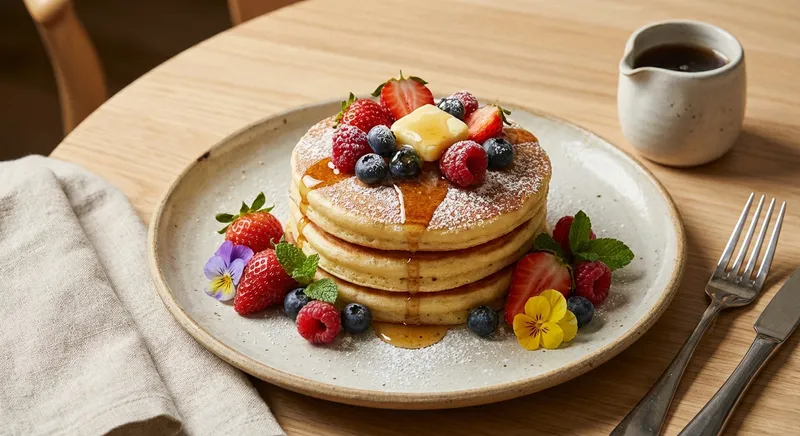
Tender, golden, cloud-like pancakes with a crisp edge and a pillowy interior — brightened by tangy homemade buttermilk and browned butter for depth. These pancakes balance sweet and savory notes, producing a restaurant-quality stack that’s light, flavorful, and perfect for weekend brunch.
Make quick buttermilk: pour 2 tablespoons lemon juice or vinegar into a measuring cup, then add whole milk to measure 2 cups total. Stir and let sit 5 minutes. This acid thickens and tangs the milk, creating buttermilk that reacts with baking soda to give lift and a tender crumb.
Whisk dry ingredients: in a large bowl combine 2 cups (240 g) all-purpose flour, 2 tablespoons (25 g) granulated sugar, 2 teaspoons baking powder, 1/2 teaspoon baking soda, and 1 teaspoon fine sea salt. Whisking evenly distributes the leaveners and salt so every pancake rises uniformly — avoid overmixing wet ingredients into the dry without this step.
Temper wet ingredients: in a separate bowl whisk together the 2 cups prepared buttermilk, 2 large eggs, 4 tablespoons (56.8 g) melted unsalted butter (allow it to cool slightly so it doesn't cook the eggs), and 1 teaspoon vanilla if using. Whisking creates an emulsion that helps a consistent, tender batter.
Combine but don't overmix: pour the wet ingredients into the dry and fold with a spatula until just combined — a few small streaks of flour are fine. Overmixing develops gluten in the flour which makes pancakes tough; a slightly lumpy batter yields tender pancakes.
Rest the batter 10 minutes at room temperature. Resting hydrates the flour, allowing the leaveners to start working and air bubbles to form; it yields lighter texture and better browning.
Heat the pan: set a heavy skillet or nonstick pan over medium heat and let it come to temperature for 3–4 minutes. Test by flicking a few drops of water — they should dance and evaporate. Properly preheated pan prevents sticking and produces an evenly browned exterior.
Oil the pan lightly: brush or wipe 1 tablespoon neutral oil (or a little butter) over the surface. Too much fat causes uneven browning; too little and pancakes will stick. Maintain medium heat — if the pan smokes, lower the heat slightly.
Cook pancakes: for each pancake pour about 1/4 cup batter onto the pan. Cook until bubbles form on the surface and the edges look set (about 2–2½ minutes). Flip once and cook 1–1½ more minutes until golden and cooked through. Bubbles and set edges indicate the interior has steamed and is ready to turn without tearing.
Keep warm: if making a large batch, transfer cooked pancakes to a wire rack set over a baking sheet in a 200°F (95°C) oven to stay warm and maintain texture — stacking on a plate traps steam and softens the exterior.
Serve immediately with butter, real maple syrup, and fresh fruit, or your favorite toppings. A squeeze of lemon over berries enhances brightness and balances the richness.
455
Calories
13g
Protein
58g
Carbs
19g
Fat
2g
Fiber
How did this recipe turn out? Let others know!
to rate this recipe
By emensah m
Tender, golden, cloud-like pancakes with a crisp edge and a pillowy interior — brightened by tangy homemade buttermilk and browned butter for depth. These pancakes balance sweet and savory notes, producing a restaurant-quality stack that’s light, flavorful, and perfect for weekend brunch.
Make quick buttermilk: pour 2 tablespoons lemon juice or vinegar into a measuring cup, then add whole milk to measure 2 cups total. Stir and let sit 5 minutes. This acid thickens and tangs the milk, creating buttermilk that reacts with baking soda to give lift and a tender crumb.
Whisk dry ingredients: in a large bowl combine 2 cups (240 g) all-purpose flour, 2 tablespoons (25 g) granulated sugar, 2 teaspoons baking powder, 1/2 teaspoon baking soda, and 1 teaspoon fine sea salt. Whisking evenly distributes the leaveners and salt so every pancake rises uniformly — avoid overmixing wet ingredients into the dry without this step.
Temper wet ingredients: in a separate bowl whisk together the 2 cups prepared buttermilk, 2 large eggs, 4 tablespoons (56.8 g) melted unsalted butter (allow it to cool slightly so it doesn't cook the eggs), and 1 teaspoon vanilla if using. Whisking creates an emulsion that helps a consistent, tender batter.
Combine but don't overmix: pour the wet ingredients into the dry and fold with a spatula until just combined — a few small streaks of flour are fine. Overmixing develops gluten in the flour which makes pancakes tough; a slightly lumpy batter yields tender pancakes.
Rest the batter 10 minutes at room temperature. Resting hydrates the flour, allowing the leaveners to start working and air bubbles to form; it yields lighter texture and better browning.
Heat the pan: set a heavy skillet or nonstick pan over medium heat and let it come to temperature for 3–4 minutes. Test by flicking a few drops of water — they should dance and evaporate. Properly preheated pan prevents sticking and produces an evenly browned exterior.
Oil the pan lightly: brush or wipe 1 tablespoon neutral oil (or a little butter) over the surface. Too much fat causes uneven browning; too little and pancakes will stick. Maintain medium heat — if the pan smokes, lower the heat slightly.
Cook pancakes: for each pancake pour about 1/4 cup batter onto the pan. Cook until bubbles form on the surface and the edges look set (about 2–2½ minutes). Flip once and cook 1–1½ more minutes until golden and cooked through. Bubbles and set edges indicate the interior has steamed and is ready to turn without tearing.
Keep warm: if making a large batch, transfer cooked pancakes to a wire rack set over a baking sheet in a 200°F (95°C) oven to stay warm and maintain texture — stacking on a plate traps steam and softens the exterior.
Serve immediately with butter, real maple syrup, and fresh fruit, or your favorite toppings. A squeeze of lemon over berries enhances brightness and balances the richness.
455
Calories
13g
Protein
58g
Carbs
19g
Fat
2g
Fiber
Your Rating:
