By 2K Care Services
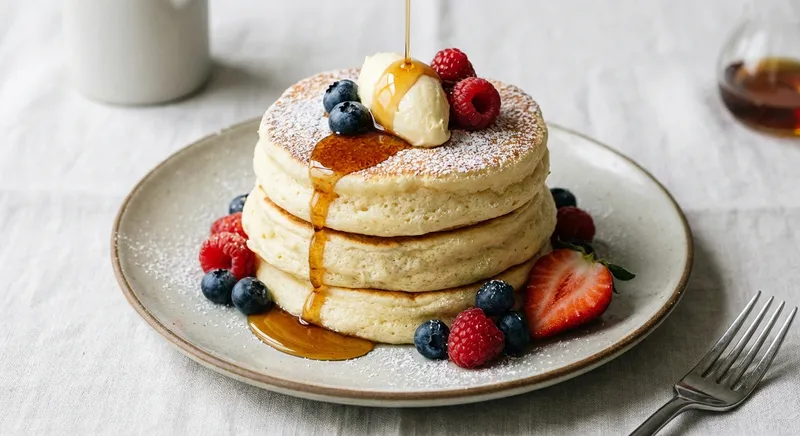
Tall, cloud-like pancakes with a golden-brown exterior and a tender, custardy crumb. Tangy buttermilk and whipped egg whites create superior lift and an ultra-light texture, while melted butter adds richness. Serve stacked with maple syrup, fresh berries, and a pat of butter for a restaurant-quality breakfast at home.
Measure the dry ingredients precisely: In a large bowl, whisk together the flour, sugar, baking powder, baking soda, and salt. Sifting or whisking aerates the flour and evenly distributes the leavening so the rise is uniform — this helps give an even, fluffy crumb.
Separate the eggs: Crack each egg and place the yolks in a medium mixing bowl and the whites in a clean, dry bowl (metal or glass is best). Keeping whites and bowls completely free of fat is essential so the whites whip to full volume.
Make the wet mixture: To the yolks, add the buttermilk, melted butter (cooled slightly), and vanilla. Whisk until combined. The acid in buttermilk reacts with baking soda to create lift, and the fat from butter keeps the pancakes tender and flavorful.
Combine wet and dry: Pour the yolk-butter-buttermilk mixture into the dry ingredients and stir gently until just combined. The batter should be slightly lumpy — stopping early prevents developing too much gluten, which would make pancakes tough. Overmixing is the most common mistake.
Whip the egg whites: Using a hand mixer or stand mixer with the whisk attachment, beat the egg whites on medium-high until soft peaks form (when you lift the whisk, the peaks should hold briefly then fold back). Whipped whites trap air that becomes steam in the pan and gives remarkable lift and lightness.
Fold whites into batter: Gently fold about one-quarter of the whipped whites into the batter to loosen it, then fold in the remaining whites in 2 additions. Use a rubber spatula and fold with a motion that keeps air in the mixture — you want to combine without deflating the whipped whites.
Rest the batter briefly: Let the combined batter rest 5–10 minutes at room temperature. This allows the leaveners to start reacting and the flour to hydrate, improving texture and consistency when cooking.
Preheat the griddle or skillet: Heat a heavy nonstick skillet or cast-iron pan over medium (about 350°F / 175°C if using an infrared thermometer) for 3–5 minutes. A properly preheated pan ensures a golden exterior without burning while the interior cooks through.
Test and adjust temperature: Brush the pan lightly with butter or oil; pour a 1-tablespoon test dollop of batter — it should sizzle softly and spread slowly. If it browns too quickly, lower the heat; if it barely browns after 90 seconds, increase heat slightly. Temperature control is key to even color and doneness.
Cook the pancakes: For each pancake, scoop 1/4 cup batter onto the griddle (for 8 pancakes) and cook until bubbles form across the surface and the edges look set, about 2–3 minutes. Flip once and cook until the second side is golden and the internal temperature reads about 205°F / 96°C or springs back lightly, another 1–2 minutes. Flipping only once preserves the lift.
Keep pancakes warm: Transfer finished pancakes to a rack set over a baking sheet in a 200°F (95°C) oven while you finish the batch. A rack prevents steaming the bottoms and keeps the texture crisp.
Serve immediately: Stack 2–3 pancakes per person, add butter, pure maple syrup, or toppings of your choice. Fresh berries or a squeeze of lemon and a dusting of powdered sugar make a pretty, restaurant-style finish.
430
Calories
13g
Protein
59g
Carbs
16g
Fat
2g
Fiber
How did this recipe turn out? Let others know!
to rate this recipe
By 2K Care Services
Tall, cloud-like pancakes with a golden-brown exterior and a tender, custardy crumb. Tangy buttermilk and whipped egg whites create superior lift and an ultra-light texture, while melted butter adds richness. Serve stacked with maple syrup, fresh berries, and a pat of butter for a restaurant-quality breakfast at home.
Measure the dry ingredients precisely: In a large bowl, whisk together the flour, sugar, baking powder, baking soda, and salt. Sifting or whisking aerates the flour and evenly distributes the leavening so the rise is uniform — this helps give an even, fluffy crumb.
Separate the eggs: Crack each egg and place the yolks in a medium mixing bowl and the whites in a clean, dry bowl (metal or glass is best). Keeping whites and bowls completely free of fat is essential so the whites whip to full volume.
Make the wet mixture: To the yolks, add the buttermilk, melted butter (cooled slightly), and vanilla. Whisk until combined. The acid in buttermilk reacts with baking soda to create lift, and the fat from butter keeps the pancakes tender and flavorful.
Combine wet and dry: Pour the yolk-butter-buttermilk mixture into the dry ingredients and stir gently until just combined. The batter should be slightly lumpy — stopping early prevents developing too much gluten, which would make pancakes tough. Overmixing is the most common mistake.
Whip the egg whites: Using a hand mixer or stand mixer with the whisk attachment, beat the egg whites on medium-high until soft peaks form (when you lift the whisk, the peaks should hold briefly then fold back). Whipped whites trap air that becomes steam in the pan and gives remarkable lift and lightness.
Fold whites into batter: Gently fold about one-quarter of the whipped whites into the batter to loosen it, then fold in the remaining whites in 2 additions. Use a rubber spatula and fold with a motion that keeps air in the mixture — you want to combine without deflating the whipped whites.
Rest the batter briefly: Let the combined batter rest 5–10 minutes at room temperature. This allows the leaveners to start reacting and the flour to hydrate, improving texture and consistency when cooking.
Preheat the griddle or skillet: Heat a heavy nonstick skillet or cast-iron pan over medium (about 350°F / 175°C if using an infrared thermometer) for 3–5 minutes. A properly preheated pan ensures a golden exterior without burning while the interior cooks through.
Test and adjust temperature: Brush the pan lightly with butter or oil; pour a 1-tablespoon test dollop of batter — it should sizzle softly and spread slowly. If it browns too quickly, lower the heat; if it barely browns after 90 seconds, increase heat slightly. Temperature control is key to even color and doneness.
Cook the pancakes: For each pancake, scoop 1/4 cup batter onto the griddle (for 8 pancakes) and cook until bubbles form across the surface and the edges look set, about 2–3 minutes. Flip once and cook until the second side is golden and the internal temperature reads about 205°F / 96°C or springs back lightly, another 1–2 minutes. Flipping only once preserves the lift.
Keep pancakes warm: Transfer finished pancakes to a rack set over a baking sheet in a 200°F (95°C) oven while you finish the batch. A rack prevents steaming the bottoms and keeps the texture crisp.
Serve immediately: Stack 2–3 pancakes per person, add butter, pure maple syrup, or toppings of your choice. Fresh berries or a squeeze of lemon and a dusting of powdered sugar make a pretty, restaurant-style finish.
430
Calories
13g
Protein
59g
Carbs
16g
Fat
2g
Fiber
Your Rating:
