By emensah m
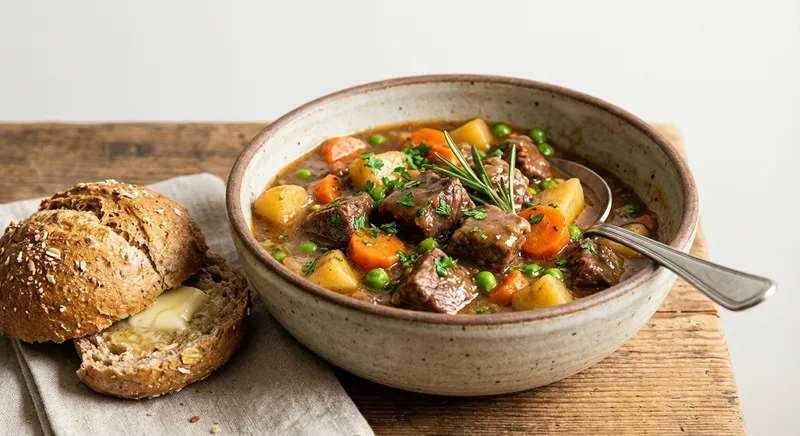
A slow-simmered, restaurant-style beef stew brimming with tender chunks of lean beef, melt-in-your-mouth potatoes, sweet carrots and aromatic celery and onion. Tomato paste and a long, gentle simmer build deep, umami-rich flavor while a splash of Worcestershire and a bay leaf add savory complexity — finished with a toasted whole-grain roll to soak up every glossy drop.
Pat the beef dry with paper towels and season with 1 teaspoon of the salt and half the pepper. Dry meat browns; moisture on the surface steam-cooks and prevents a good crust. Seasoning early helps flavor through the meat.
Lightly dredge the beef pieces in the flour, shaking off excess. The thin flour coating helps promote a deep brown crust and will thicken the stew slightly as it cooks.
In a heavy-bottomed Dutch oven or wide pot, heat 1 tablespoon olive oil over medium-high heat until shimmering. Sear the beef in batches—do not crowd the pan—about 2–3 minutes per side until a deep brown crust forms. Browning creates Maillard flavor compounds that are the backbone of a great stew; working in batches keeps the pan hot so the meat browns instead of steaming.
Remove seared beef to a plate and reduce heat to medium. Add the remaining 1 tablespoon olive oil and the butter. When the butter foams, add the chopped onion and a pinch of salt; cook, stirring occasionally, until translucent and beginning to brown, about 6–8 minutes. The butter and oil combination gives a rounder flavor and higher smoke point for the vegetables.
Add the minced garlic and cook 30–45 seconds, just until fragrant—don’t let it burn. Then stir in the tomato paste and cook for 1–2 minutes, scraping up any browned bits from the bottom of the pot. Cooking the tomato paste mellows its acidity and deepens the stew’s color and umami.
Return all the seared beef and any accumulated juices to the pot. Sprinkle the remaining 1/2 teaspoon salt, the remaining pepper, and the dried thyme over the meat. Pour in the beef broth to cover the meat by about an inch (add up to 1 cup water if needed). Add the Worcestershire sauce and bay leaf. Bring to a gentle simmer, then reduce heat to maintain a low, steady simmer (tiny bubbles). A low simmer extracts collagen from the connective tissue and yields tender meat without shredding it.
Partially cover the pot and simmer gently for 50–60 minutes, stirring once or twice. Check for tenderness—meat should be tender but not falling apart. Slow, steady heat breaks down connective tissue into gelatin that gives the stew a silky mouthfeel.
Add the carrots, celery and potatoes to the pot, stir to submerge, and adjust seasoning. Return to a gentle simmer, cover, and cook another 35–45 minutes, until the vegetables are tender when pierced with a knife and the sauce has reduced slightly and become glossy. Adding vegetables later prevents them from overcooking and becoming mealy.
Taste and adjust seasoning with salt and pepper. If you prefer a thicker stew, remove 1/2 cup of cooking liquid, whisk it with 1 teaspoon cornstarch (or more flour), then stir back into the pot and cook 3–4 minutes until thickened. Reduction concentrates flavor; cornstarch/four gives controlled thickening without long simmering.
Remove and discard the bay leaf. Stir in chopped parsley for brightness. Let the stew rest for 10 minutes off the heat before serving—this lets the flavors relax and the sauce settle so it coats the meat and vegetables better.
While the stew rests, split the whole-grain rolls and warm them in a 375°F (190°C) oven for 6–8 minutes or toast cut-side down in a skillet with a little butter until golden. Serve one roll per person with the stew, allowing guests to mop up the sauce.
896
Calories
59g
Protein
82g
Carbs
36g
Fat
12g
Fiber
How did this recipe turn out? Let others know!
to rate this recipe
A slow-simmered, restaurant-style beef stew brimming with tender chunks of lean beef, melt-in-your-mouth potatoes, sweet carrots and aromatic celery and onion. Tomato paste and a long, gentle simmer build deep, umami-rich flavor while a splash of Worcestershire and a bay leaf add savory complexity — finished with a toasted whole-grain roll to soak up every glossy drop.
Pat the beef dry with paper towels and season with 1 teaspoon of the salt and half the pepper. Dry meat browns; moisture on the surface steam-cooks and prevents a good crust. Seasoning early helps flavor through the meat.
Lightly dredge the beef pieces in the flour, shaking off excess. The thin flour coating helps promote a deep brown crust and will thicken the stew slightly as it cooks.
In a heavy-bottomed Dutch oven or wide pot, heat 1 tablespoon olive oil over medium-high heat until shimmering. Sear the beef in batches—do not crowd the pan—about 2–3 minutes per side until a deep brown crust forms. Browning creates Maillard flavor compounds that are the backbone of a great stew; working in batches keeps the pan hot so the meat browns instead of steaming.
Remove seared beef to a plate and reduce heat to medium. Add the remaining 1 tablespoon olive oil and the butter. When the butter foams, add the chopped onion and a pinch of salt; cook, stirring occasionally, until translucent and beginning to brown, about 6–8 minutes. The butter and oil combination gives a rounder flavor and higher smoke point for the vegetables.
Add the minced garlic and cook 30–45 seconds, just until fragrant—don’t let it burn. Then stir in the tomato paste and cook for 1–2 minutes, scraping up any browned bits from the bottom of the pot. Cooking the tomato paste mellows its acidity and deepens the stew’s color and umami.
Return all the seared beef and any accumulated juices to the pot. Sprinkle the remaining 1/2 teaspoon salt, the remaining pepper, and the dried thyme over the meat. Pour in the beef broth to cover the meat by about an inch (add up to 1 cup water if needed). Add the Worcestershire sauce and bay leaf. Bring to a gentle simmer, then reduce heat to maintain a low, steady simmer (tiny bubbles). A low simmer extracts collagen from the connective tissue and yields tender meat without shredding it.
Partially cover the pot and simmer gently for 50–60 minutes, stirring once or twice. Check for tenderness—meat should be tender but not falling apart. Slow, steady heat breaks down connective tissue into gelatin that gives the stew a silky mouthfeel.
Add the carrots, celery and potatoes to the pot, stir to submerge, and adjust seasoning. Return to a gentle simmer, cover, and cook another 35–45 minutes, until the vegetables are tender when pierced with a knife and the sauce has reduced slightly and become glossy. Adding vegetables later prevents them from overcooking and becoming mealy.
Taste and adjust seasoning with salt and pepper. If you prefer a thicker stew, remove 1/2 cup of cooking liquid, whisk it with 1 teaspoon cornstarch (or more flour), then stir back into the pot and cook 3–4 minutes until thickened. Reduction concentrates flavor; cornstarch/four gives controlled thickening without long simmering.
Remove and discard the bay leaf. Stir in chopped parsley for brightness. Let the stew rest for 10 minutes off the heat before serving—this lets the flavors relax and the sauce settle so it coats the meat and vegetables better.
While the stew rests, split the whole-grain rolls and warm them in a 375°F (190°C) oven for 6–8 minutes or toast cut-side down in a skillet with a little butter until golden. Serve one roll per person with the stew, allowing guests to mop up the sauce.
896
Calories
59g
Protein
82g
Carbs
36g
Fat
12g
Fiber
Your Rating:
