By j
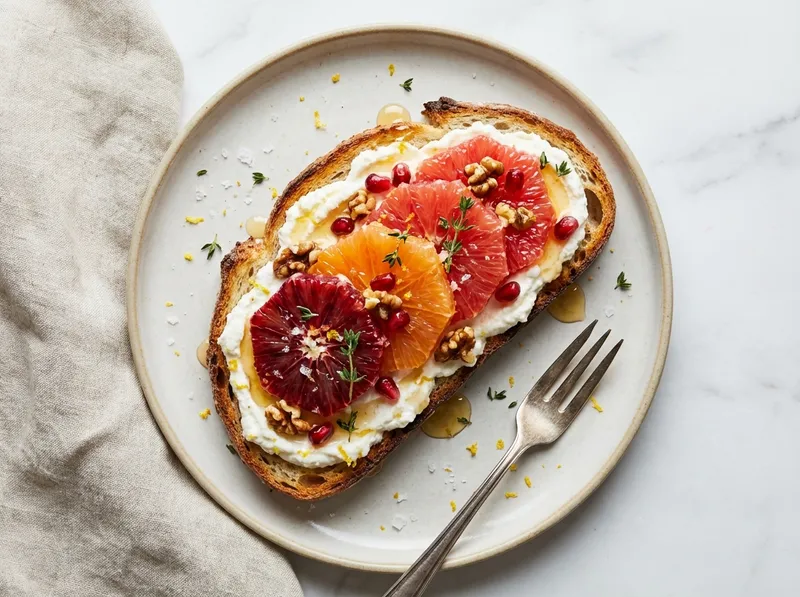
Bright, creamy and texturally elegant — this Winter Citrus Ricotta Toast layers pillowy whole-milk ricotta over a crispy slice of sourdough, topped with jewel-like pomegranate arils, sweet-tart orange supremes, crunchy toasted walnuts, a drizzle of honey and a scatter of fresh thyme. The contrast of warm toasted bread and cool ricotta, with citrus acidity and nutty crunch, makes this a refined brunch or appetizer that feels distinctly seasonal and restaurant-ready.
Supreme the orange (if not already done): Using a sharp knife, cut away both ends of the orange so it can sit flat. Remove the peel and pith by cutting from top to bottom following the curve of the fruit, then cut between membranes to release segments (supremes). Do this over a small bowl to catch any juice. Why: Supreming removes bitter pith and membrane so the segments sit cleanly on the ricotta and provide pure bright citrus flavor without chewy bits.
Toast and chop the walnuts (if not already toasted): Warm a small dry skillet over medium heat, add the walnuts and toast, stirring constantly, 1–2 minutes until fragrant and slightly darker (do not burn). Transfer to a plate to cool, then chop roughly. Why: Toasting walnut oils intensifies their nutty aroma and adds crunch; letting them cool stops carryover cooking and preserves texture.
Toast the sourdough: Heat a small skillet over medium-low. Add 1 tsp unsalted butter and let it melt and foam; swirl to coat the pan. Add the sourdough slice and press lightly, toasting 1½–2 minutes per side until edges are golden and the center is crisp but still slightly yielding. Alternatively, broil or use a toaster oven. Why: Toasting in butter gives a golden, slightly savory crust that contrasts the soft ricotta; medium-low heat ensures the bread crisps through without burning the exterior.
Warm the ricotta (optional step for silkiness): Put the ricotta in a small bowl and stir briefly to loosen. If you prefer the ricotta slightly warm (it melds better with the bread), let it sit at room temperature for 5–10 minutes or microwave for 8–10 seconds. Why: Loosening the ricotta makes it easier to spread into a smooth blanket; a touch of warmth melds flavors and creates a pleasing mouthfeel against hot bread.
Assemble the toast: Spread the ricotta evenly over the warm sourdough (about 3 tbsp). Arrange the orange supremes across the ricotta, then scatter the pomegranate arils and chopped toasted walnuts. Drizzle the honey in a thin, even line over the top. Why: Layering in this order keeps the citrus and pomegranate from making the bread soggy and lets the honey act as a glaze to tie the sweet and tart elements together.
Finish and season: Finish with a small flake of sea salt over the ricotta and honey, a few snips of fresh thyme leaves, and a light crack of black pepper. Serve immediately. Why: The flakey salt brightens the flavors and balances the honey; thyme adds aromatic, savory complexity to prevent the dish from feeling too sweet.
Optional — make it a composed plate: Spoon any reserved orange juice from supreming over the assembled toast for extra brightness, or serve with a lemon wedge. Why: A little extra acid can lift the flavors and make the toast more dynamic, especially if the orange is very sweet.
397
Calories
12g
Protein
51g
Carbs
17g
Fat
4g
Fiber
How did this recipe turn out? Let others know!
to rate this recipe
By j
Bright, creamy and texturally elegant — this Winter Citrus Ricotta Toast layers pillowy whole-milk ricotta over a crispy slice of sourdough, topped with jewel-like pomegranate arils, sweet-tart orange supremes, crunchy toasted walnuts, a drizzle of honey and a scatter of fresh thyme. The contrast of warm toasted bread and cool ricotta, with citrus acidity and nutty crunch, makes this a refined brunch or appetizer that feels distinctly seasonal and restaurant-ready.
Supreme the orange (if not already done): Using a sharp knife, cut away both ends of the orange so it can sit flat. Remove the peel and pith by cutting from top to bottom following the curve of the fruit, then cut between membranes to release segments (supremes). Do this over a small bowl to catch any juice. Why: Supreming removes bitter pith and membrane so the segments sit cleanly on the ricotta and provide pure bright citrus flavor without chewy bits.
Toast and chop the walnuts (if not already toasted): Warm a small dry skillet over medium heat, add the walnuts and toast, stirring constantly, 1–2 minutes until fragrant and slightly darker (do not burn). Transfer to a plate to cool, then chop roughly. Why: Toasting walnut oils intensifies their nutty aroma and adds crunch; letting them cool stops carryover cooking and preserves texture.
Toast the sourdough: Heat a small skillet over medium-low. Add 1 tsp unsalted butter and let it melt and foam; swirl to coat the pan. Add the sourdough slice and press lightly, toasting 1½–2 minutes per side until edges are golden and the center is crisp but still slightly yielding. Alternatively, broil or use a toaster oven. Why: Toasting in butter gives a golden, slightly savory crust that contrasts the soft ricotta; medium-low heat ensures the bread crisps through without burning the exterior.
Warm the ricotta (optional step for silkiness): Put the ricotta in a small bowl and stir briefly to loosen. If you prefer the ricotta slightly warm (it melds better with the bread), let it sit at room temperature for 5–10 minutes or microwave for 8–10 seconds. Why: Loosening the ricotta makes it easier to spread into a smooth blanket; a touch of warmth melds flavors and creates a pleasing mouthfeel against hot bread.
Assemble the toast: Spread the ricotta evenly over the warm sourdough (about 3 tbsp). Arrange the orange supremes across the ricotta, then scatter the pomegranate arils and chopped toasted walnuts. Drizzle the honey in a thin, even line over the top. Why: Layering in this order keeps the citrus and pomegranate from making the bread soggy and lets the honey act as a glaze to tie the sweet and tart elements together.
Finish and season: Finish with a small flake of sea salt over the ricotta and honey, a few snips of fresh thyme leaves, and a light crack of black pepper. Serve immediately. Why: The flakey salt brightens the flavors and balances the honey; thyme adds aromatic, savory complexity to prevent the dish from feeling too sweet.
Optional — make it a composed plate: Spoon any reserved orange juice from supreming over the assembled toast for extra brightness, or serve with a lemon wedge. Why: A little extra acid can lift the flavors and make the toast more dynamic, especially if the orange is very sweet.
397
Calories
12g
Protein
51g
Carbs
17g
Fat
4g
Fiber
Your Rating:
