By Kayla
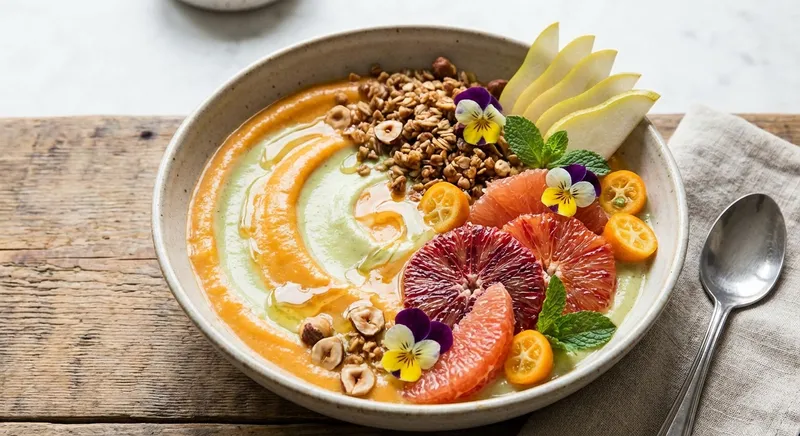
A bright, velvety breakfast bowl that pairs silken tofu’s silky creaminess with the brisk sweetness of winter pear and navel orange, finished with a crunchy toasted buckwheat and hazelnut granola. The contrast of smooth, citrus-laced tofu, soft poached pear pieces, and caramelized buckwheat granola with flaky sea salt creates a sophisticated balance of textures and flavors—clean, refreshing, and deeply satisfying.
Preheat and prep: place a medium skillet over medium heat and line a small sheet tray or plate with parchment to cool the granola. Wash the pears and oranges. Zest nothing—this recipe relies on the fruit juices and segments for brightness. Pre-measure ingredients. Why: having everything measured and a cooling surface ready prevents the caramelized buckwheat from burning and allows immediate transfer to cool and crisp.
Toast the buckwheat groats dry: add the 80 g buckwheat to the dry skillet and spread into a single layer. Toast over medium heat, stirring or shaking every 20–30 seconds, until the groats become fragrant and a few pop (about 4–6 minutes). They should darken slightly — not burn. Why: dry toasting removes raw, grassy notes from the groats and develops nuttier flavor and a firmer crunch. Work quickly and keep them moving to avoid bitterness.
Caramelize and coat: lower the heat to medium-low. Add the 14 g (1 tbsp) butter to the pan to melt, then add 15 ml (1 tbsp) honey and 1/4 tsp ground cinnamon. Stir to combine, then toss in the toasted buckwheat and 40 g chopped hazelnuts. Using a wooden spoon, coat the groats and nuts in the butter-honey mixture for 1–2 minutes until glossy. Transfer immediately to the parchment-lined tray and spread thinly to cool and crisp. Why: coating while the buckwheat is hot seals the sweet glaze and lets it harden as it cools, creating clusters. Working quickly prevents the sugar from burning and keeps a clean caramelized flavor.
Toast the flaked coconut (optional): in the same dry skillet, over medium heat, toast 10 g flaked coconut for 1–2 minutes until just golden. Watch carefully; coconut browns quickly. Why: toasting adds depth and a coconutty aroma that contrasts the citrus and adds visual texture to the bowl.
Segment and juice the oranges: using a small chef’s knife, slice off the top and bottom of each orange, then remove the skin and pith with downward strokes. Over a bowl, cut between the membranes and release segments (supremes). Collect any remaining juice by squeezing the membrane shells and reserve about 120–150 ml of orange juice total. Why: supremes give elegant, tender citrus pieces without the bitter membrane; the fresh juice brightens the tofu base.
Prepare the pears: reserve one pear for garnish by dicing it into small cubes (about 1 cm). For the other pear, core and chop into large chunks to go into the blender. If your pears are very firm, briefly poach them: simmer pear chunks in 60 ml orange juice with a teaspoon of honey for 3–4 minutes until tender. Why: poaching mellows astringent tannins in underripe pears and brings a soft, silky texture that pairs perfectly with the tofu.
Bloom the chia: combine 20 g chia seeds with 30–40 ml reserved orange juice (about 2–3 tbsp) and a pinch of cinnamon in a small bowl. Stir and let sit 5–10 minutes until gelatinous. Why: blooming chia ahead prevents gritty seeds in the bowl and adds thickness and body to the tofu blend.
Make the tofu-citrus-pear base: in a blender add 300 g silken tofu, the chopped poached pear pieces (or raw if ripe), 2 tablespoons (≈30 ml) of reserved orange juice, 15 ml (1 tbsp) honey, 1/4 tsp ground cinnamon, and the bloomed chia (including any excess liquid). Blend on high until completely smooth and aerated (about 30–45 seconds). Taste and adjust: add a touch more orange juice if you want brighter acidity or 1/2 tsp honey if you prefer sweeter. Why: blending aerates the silken tofu into a mousse-like texture that is luxuriously smooth; the citrus balances the tofu’s gentle earthiness while the chia adds structure.
Assemble the bowls: divide the tofu-pear-citrus mixture evenly between two shallow bowls. Spoon a generous handful of the cooled buckwheat-hazelnut granola on one side, scatter reserved orange segments and the diced raw pear on top, then sprinkle the toasted flaked coconut and remaining chia if desired. Finish with a small pinch of flaky sea salt on the granola to lift flavor, and tuck a few mint leaves for freshness. Why: layering the crunchy granola against the smooth tofu and juicy citrus creates contrast in texture and temperature that makes every spoonful interesting.
Serve immediately: the granola will stay crisp for several hours but is best the first 30–60 minutes. If storing, keep granola in an airtight container and assemble bowls just before serving. Why: the contrast between hot (warmed granola if served fresh) and cool (tofu base) or crunchy vs. silky gives the bowl its signature appeal—waiting too long will soften the granola and lose the texture contrast.
654
Calories
19g
Protein
90g
Carbs
28g
Fat
17g
Fiber
How did this recipe turn out? Let others know!
to rate this recipe
By Kayla
A bright, velvety breakfast bowl that pairs silken tofu’s silky creaminess with the brisk sweetness of winter pear and navel orange, finished with a crunchy toasted buckwheat and hazelnut granola. The contrast of smooth, citrus-laced tofu, soft poached pear pieces, and caramelized buckwheat granola with flaky sea salt creates a sophisticated balance of textures and flavors—clean, refreshing, and deeply satisfying.
Preheat and prep: place a medium skillet over medium heat and line a small sheet tray or plate with parchment to cool the granola. Wash the pears and oranges. Zest nothing—this recipe relies on the fruit juices and segments for brightness. Pre-measure ingredients. Why: having everything measured and a cooling surface ready prevents the caramelized buckwheat from burning and allows immediate transfer to cool and crisp.
Toast the buckwheat groats dry: add the 80 g buckwheat to the dry skillet and spread into a single layer. Toast over medium heat, stirring or shaking every 20–30 seconds, until the groats become fragrant and a few pop (about 4–6 minutes). They should darken slightly — not burn. Why: dry toasting removes raw, grassy notes from the groats and develops nuttier flavor and a firmer crunch. Work quickly and keep them moving to avoid bitterness.
Caramelize and coat: lower the heat to medium-low. Add the 14 g (1 tbsp) butter to the pan to melt, then add 15 ml (1 tbsp) honey and 1/4 tsp ground cinnamon. Stir to combine, then toss in the toasted buckwheat and 40 g chopped hazelnuts. Using a wooden spoon, coat the groats and nuts in the butter-honey mixture for 1–2 minutes until glossy. Transfer immediately to the parchment-lined tray and spread thinly to cool and crisp. Why: coating while the buckwheat is hot seals the sweet glaze and lets it harden as it cools, creating clusters. Working quickly prevents the sugar from burning and keeps a clean caramelized flavor.
Toast the flaked coconut (optional): in the same dry skillet, over medium heat, toast 10 g flaked coconut for 1–2 minutes until just golden. Watch carefully; coconut browns quickly. Why: toasting adds depth and a coconutty aroma that contrasts the citrus and adds visual texture to the bowl.
Segment and juice the oranges: using a small chef’s knife, slice off the top and bottom of each orange, then remove the skin and pith with downward strokes. Over a bowl, cut between the membranes and release segments (supremes). Collect any remaining juice by squeezing the membrane shells and reserve about 120–150 ml of orange juice total. Why: supremes give elegant, tender citrus pieces without the bitter membrane; the fresh juice brightens the tofu base.
Prepare the pears: reserve one pear for garnish by dicing it into small cubes (about 1 cm). For the other pear, core and chop into large chunks to go into the blender. If your pears are very firm, briefly poach them: simmer pear chunks in 60 ml orange juice with a teaspoon of honey for 3–4 minutes until tender. Why: poaching mellows astringent tannins in underripe pears and brings a soft, silky texture that pairs perfectly with the tofu.
Bloom the chia: combine 20 g chia seeds with 30–40 ml reserved orange juice (about 2–3 tbsp) and a pinch of cinnamon in a small bowl. Stir and let sit 5–10 minutes until gelatinous. Why: blooming chia ahead prevents gritty seeds in the bowl and adds thickness and body to the tofu blend.
Make the tofu-citrus-pear base: in a blender add 300 g silken tofu, the chopped poached pear pieces (or raw if ripe), 2 tablespoons (≈30 ml) of reserved orange juice, 15 ml (1 tbsp) honey, 1/4 tsp ground cinnamon, and the bloomed chia (including any excess liquid). Blend on high until completely smooth and aerated (about 30–45 seconds). Taste and adjust: add a touch more orange juice if you want brighter acidity or 1/2 tsp honey if you prefer sweeter. Why: blending aerates the silken tofu into a mousse-like texture that is luxuriously smooth; the citrus balances the tofu’s gentle earthiness while the chia adds structure.
Assemble the bowls: divide the tofu-pear-citrus mixture evenly between two shallow bowls. Spoon a generous handful of the cooled buckwheat-hazelnut granola on one side, scatter reserved orange segments and the diced raw pear on top, then sprinkle the toasted flaked coconut and remaining chia if desired. Finish with a small pinch of flaky sea salt on the granola to lift flavor, and tuck a few mint leaves for freshness. Why: layering the crunchy granola against the smooth tofu and juicy citrus creates contrast in texture and temperature that makes every spoonful interesting.
Serve immediately: the granola will stay crisp for several hours but is best the first 30–60 minutes. If storing, keep granola in an airtight container and assemble bowls just before serving. Why: the contrast between hot (warmed granola if served fresh) and cool (tofu base) or crunchy vs. silky gives the bowl its signature appeal—waiting too long will soften the granola and lose the texture contrast.
654
Calories
19g
Protein
90g
Carbs
28g
Fat
17g
Fiber
Your Rating:
