By j
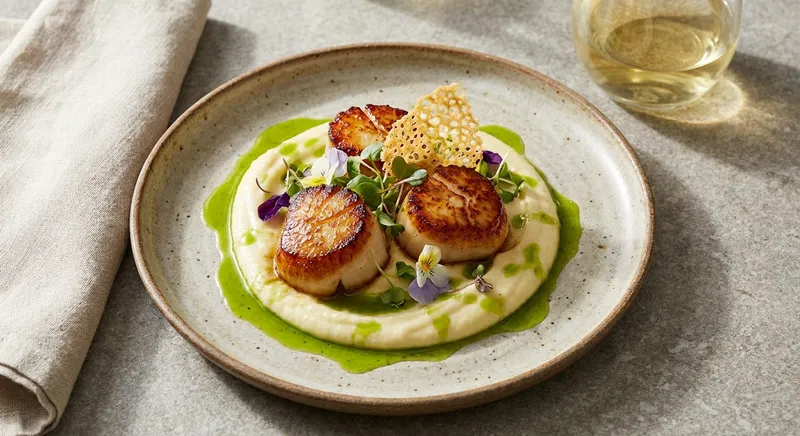
Sweet, caramelized scallops sit atop a silky cauliflower–potato purée and are finished with a bright lemon–chive oil. The contrast of the golden crust, luxuriously smooth purée and an acidic, herb-scented oil makes every bite balanced and restaurant-worthy.
Prep the scallops: Remove the small side-muscle from each scallop if present (it can be chewy). Pat the scallops very dry with paper towels—this is critical because surface moisture prevents a good sear. Season both sides lightly with salt and a little pepper. Let sit at room temperature for 8–10 minutes while you prepare the vegetables so they cook evenly.
Cook the potato and cauliflower together: Put the diced potato and cauliflower florets in a medium saucepan and cover with cold water by about 1 inch. Add a generous pinch of salt and bring to a simmer over medium heat. Simmer until both are very tender when pierced with a knife (about 10–12 minutes). Starting them in cold water and bringing to a gentle simmer ensures even cooking for the potato and prevents the cauliflower from turning mushy before the potato is done.
Reserve some cooking liquid and drain: Before draining, scoop out and reserve about 3–4 tablespoons of the cooking water—the starchy liquid is a secret weapon to loosen the purée without adding extra fat or dairy. Drain the vegetables well.
Make the purée: Return the hot drained potato and cauliflower to the warm pan off the heat. Add 1 tablespoon of butter, a pinch of salt and several grinds of black pepper. Mash with a potato masher or use an immersion blender for a silkier texture—mash/blend just until smooth. If it feels too thick or grainy, add the reserved hot cooking liquid 1 tablespoon at a time to reach a spoonable, velvety consistency. Taste and adjust seasoning. Mashing while hot helps the butter emulsify and creates a glossy, rich purée without needing cream.
Make the lemon–chive oil: Finely chop the chives and combine them with the lemon zest and the olive oil in a small bowl. Warm the oil very gently (you can do this in a small skillet over the lowest heat for 30–45 seconds or microwave 10 seconds) to help release the lemon and chive aromas into the oil—do not let it smoke or get hot enough to fry the chives, or they'll turn bitter. Keep this oil at room temperature.
Heat your pan for searing: Choose a heavy skillet (preferably stainless steel or cast iron) and heat it over medium-high until very hot and shimmering. A properly hot pan is essential for a golden Maillard crust; if it's too cool, the scallops will steam and not develop color.
Sear the scallops: Add about 1/2 tablespoon of the olive oil (reserve the rest for the lemon–chive oil) to the hot pan and swirl to coat. Gently place scallops in the pan with space between them—do not overcrowd. Sear without moving for 1 1/2–2 minutes, until you see a deep golden-brown crust form. Flip and sear the other side for 30–45 seconds. In the last 15–20 seconds, add a small knob of butter (if you like) and tilt the pan to spoon the foaming butter over the scallops to finish—this adds glossy flavor and helps finish cooking. Scallops cook very quickly; overcooking makes them rubbery. They should be just opaque in the center.
Rest briefly: Transfer the scallops to a plate and let them rest 1 minute—this lets residual carryover cooking finish and the surface relax so juices redistribute.
Plate: Spoon a generous quenelle or smear of the warm cauliflower–potato purée in the center of a warmed plate. Arrange the seared scallops on top. Drizzle the lemon–chive oil around and over the scallops (a little goes a long way). Finish with extra chopped chives, a light sprinkle of flaky sea salt, freshly ground black pepper and a small pinch of additional lemon zest if you like. Serve immediately.
Final checks and serving note: Taste one scallop and the purée together to ensure seasoning balance—if it needs lift, a squeeze of fresh lemon over the scallops brightens the dish. Serve hot; scallops are best enjoyed the moment they’re seared.
470
Calories
30g
Protein
31g
Carbs
26g
Fat
5g
Fiber
How did this recipe turn out? Let others know!
to rate this recipe
By j
Sweet, caramelized scallops sit atop a silky cauliflower–potato purée and are finished with a bright lemon–chive oil. The contrast of the golden crust, luxuriously smooth purée and an acidic, herb-scented oil makes every bite balanced and restaurant-worthy.
Prep the scallops: Remove the small side-muscle from each scallop if present (it can be chewy). Pat the scallops very dry with paper towels—this is critical because surface moisture prevents a good sear. Season both sides lightly with salt and a little pepper. Let sit at room temperature for 8–10 minutes while you prepare the vegetables so they cook evenly.
Cook the potato and cauliflower together: Put the diced potato and cauliflower florets in a medium saucepan and cover with cold water by about 1 inch. Add a generous pinch of salt and bring to a simmer over medium heat. Simmer until both are very tender when pierced with a knife (about 10–12 minutes). Starting them in cold water and bringing to a gentle simmer ensures even cooking for the potato and prevents the cauliflower from turning mushy before the potato is done.
Reserve some cooking liquid and drain: Before draining, scoop out and reserve about 3–4 tablespoons of the cooking water—the starchy liquid is a secret weapon to loosen the purée without adding extra fat or dairy. Drain the vegetables well.
Make the purée: Return the hot drained potato and cauliflower to the warm pan off the heat. Add 1 tablespoon of butter, a pinch of salt and several grinds of black pepper. Mash with a potato masher or use an immersion blender for a silkier texture—mash/blend just until smooth. If it feels too thick or grainy, add the reserved hot cooking liquid 1 tablespoon at a time to reach a spoonable, velvety consistency. Taste and adjust seasoning. Mashing while hot helps the butter emulsify and creates a glossy, rich purée without needing cream.
Make the lemon–chive oil: Finely chop the chives and combine them with the lemon zest and the olive oil in a small bowl. Warm the oil very gently (you can do this in a small skillet over the lowest heat for 30–45 seconds or microwave 10 seconds) to help release the lemon and chive aromas into the oil—do not let it smoke or get hot enough to fry the chives, or they'll turn bitter. Keep this oil at room temperature.
Heat your pan for searing: Choose a heavy skillet (preferably stainless steel or cast iron) and heat it over medium-high until very hot and shimmering. A properly hot pan is essential for a golden Maillard crust; if it's too cool, the scallops will steam and not develop color.
Sear the scallops: Add about 1/2 tablespoon of the olive oil (reserve the rest for the lemon–chive oil) to the hot pan and swirl to coat. Gently place scallops in the pan with space between them—do not overcrowd. Sear without moving for 1 1/2–2 minutes, until you see a deep golden-brown crust form. Flip and sear the other side for 30–45 seconds. In the last 15–20 seconds, add a small knob of butter (if you like) and tilt the pan to spoon the foaming butter over the scallops to finish—this adds glossy flavor and helps finish cooking. Scallops cook very quickly; overcooking makes them rubbery. They should be just opaque in the center.
Rest briefly: Transfer the scallops to a plate and let them rest 1 minute—this lets residual carryover cooking finish and the surface relax so juices redistribute.
Plate: Spoon a generous quenelle or smear of the warm cauliflower–potato purée in the center of a warmed plate. Arrange the seared scallops on top. Drizzle the lemon–chive oil around and over the scallops (a little goes a long way). Finish with extra chopped chives, a light sprinkle of flaky sea salt, freshly ground black pepper and a small pinch of additional lemon zest if you like. Serve immediately.
Final checks and serving note: Taste one scallop and the purée together to ensure seasoning balance—if it needs lift, a squeeze of fresh lemon over the scallops brightens the dish. Serve hot; scallops are best enjoyed the moment they’re seared.
470
Calories
30g
Protein
31g
Carbs
26g
Fat
5g
Fiber
Your Rating:
