By Recipe AI
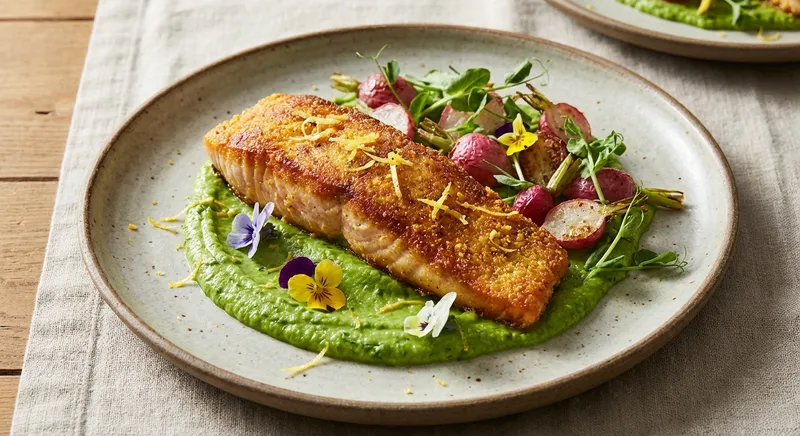
Crisp, golden cornmeal crust on tender, buttery steelhead trout meets a bright, velvety herbed pea purée and honeyed roasted radishes. The dish balances crunchy texture, luscious fish, and a garden-fresh pop from parsley, chives and lemon — a refined, spring-forward main that feels restaurant-ready but is simple enough for home cooks.
Bring peas to a simmer: Put the peas (if frozen, no need to thaw) into a small saucepan with just enough water to cover (about 1/4–1/3 cup) and a pinch of salt. Bring to a gentle simmer—this warms them through without losing bright color. Simmer 3–4 minutes until tender but not falling apart (the goal is to preserve a fresh green flavor for the purée). Why: Gentle simmering preserves sweetness and color; overcooking makes a dull, mealy purée.
Roast the radishes: While peas simmer, preheat the oven to 220°C / 425°F. Toss halved radishes with 4 tsp olive oil, a generous pinch of salt and a few turns of black pepper on a rimmed baking sheet, cut side down. Roast 12–15 minutes until the cut faces are caramelized and the radishes are tender. Why: High heat develops caramelized edges and concentrates the radishes’ natural sweetness — roasted radishes become mellow and almost potato-like in texture.
Make the herbed pea purée: Drain the peas, reserving about 2 tbsp of the cooking water. Transfer peas to a blender or food processor, add 4 tbsp unsalted butter (hot pan-ready butter will give a silkier emulsion — see tip below), the chopped parsley and chives (reserve a teaspoon of chives for garnish), 1/4 teaspoon salt, 1–2 tsp lemon juice (about the 1/4 lemon per person total; adjust to taste), and 1–2 tbsp of the reserved cooking water. Purée until very smooth, adding a tablespoon more liquid if needed to reach a spoonable, silky consistency. Taste and adjust salt and acid. Why: Adding butter and a little starchy cooking water creates a glossy emulsion and gives the purée a luxurious mouthfeel; acid brightens and balances the sweetness of the peas.
Pat and season the trout: Pat trout fillets dry with paper towels (especially the skin — dry skin crisps far better). Season both sides lightly with salt and black pepper. Spread the fine yellow cornmeal on a plate and press the flesh side (not the skin side) into the cornmeal to coat. Shake off excess. Why: Dry skin and a thin cornmeal coating produce a crisp, golden crust without overpowering the delicate fish. Coating only the flesh keeps the skin-to-pan contact direct for maximum crispness.
Preheat the pan for searing: Heat a large nonstick or well-seasoned stainless-steel skillet over medium-high heat until shimmering. Add 1 tbsp neutral oil and swirl to coat. Test readiness by dropping one small cornmeal grain—if it sizzles immediately, the pan is ready. Why: A properly preheated pan ensures immediate crust formation on contact; if the pan is too cool the fish will stick and the crust will absorb oil instead of crisping.
Sear the trout, skin-side down first: Carefully lay fillets skin-side down into the hot pan (flesh side should have the cornmeal). Gently press each fillet with a spatula for 10–15 seconds to keep full skin contact as it browns. Cook skin-side down for 3–4 minutes (depending on thickness) until the skin is deeply golden and releases easily. Flip and cook 1–2 minutes on the flesh side just until the fish reaches medium (opaque through about 3/4 of the fillet) — steelhead is best at medium to medium-well for texture and flavor. Why: Skin-side searing crisps and protects the fish; finishing briefly on the flesh side prevents drying while ensuring the cornmeal crust is toasted but not burnt.
Finish and rest briefly: Remove fillets to a warm plate and rest 2 minutes. While the trout rests, stir the pea purée again and reheat gently if needed (a hot spoonful of reserved cooking water can loosen it). Why: Resting lets carryover heat finish cooking the fish and preserves juiciness; it also allows the crust to set so it stays crisp when plated.
Plate: Spoon a generous smear of herbed pea purée down the center of each plate. Arrange a roasted radish cluster to one side, then top the purée with the cornmeal-crusted trout (skin up for crisp presentation). Scatter halved roasted radishes around the plate, finish with a squeeze of lemon wedge, a small knob of butter or a drizzle of good olive oil if desired, and a sprinkle of the reserved chopped herbs and freshly ground black pepper. Why: Building the plate with the purée as an anchor creates contrast in texture and makes the dish feel composed and restaurant-quality.
Final seasoning: Right before serving, taste and add a final pinch of flaky salt to the fish and a few drops of lemon on the radishes and purée to lift all flavors. Serve immediately. Why: A final seasoning brightens and balances everything; flaky salt on top of the crust gives a delightful crunch and flavor pop.
592
Calories
40g
Protein
36g
Carbs
32g
Fat
9g
Fiber
How did this recipe turn out? Let others know!
to rate this recipe
By Recipe AI
Crisp, golden cornmeal crust on tender, buttery steelhead trout meets a bright, velvety herbed pea purée and honeyed roasted radishes. The dish balances crunchy texture, luscious fish, and a garden-fresh pop from parsley, chives and lemon — a refined, spring-forward main that feels restaurant-ready but is simple enough for home cooks.
Bring peas to a simmer: Put the peas (if frozen, no need to thaw) into a small saucepan with just enough water to cover (about 1/4–1/3 cup) and a pinch of salt. Bring to a gentle simmer—this warms them through without losing bright color. Simmer 3–4 minutes until tender but not falling apart (the goal is to preserve a fresh green flavor for the purée). Why: Gentle simmering preserves sweetness and color; overcooking makes a dull, mealy purée.
Roast the radishes: While peas simmer, preheat the oven to 220°C / 425°F. Toss halved radishes with 4 tsp olive oil, a generous pinch of salt and a few turns of black pepper on a rimmed baking sheet, cut side down. Roast 12–15 minutes until the cut faces are caramelized and the radishes are tender. Why: High heat develops caramelized edges and concentrates the radishes’ natural sweetness — roasted radishes become mellow and almost potato-like in texture.
Make the herbed pea purée: Drain the peas, reserving about 2 tbsp of the cooking water. Transfer peas to a blender or food processor, add 4 tbsp unsalted butter (hot pan-ready butter will give a silkier emulsion — see tip below), the chopped parsley and chives (reserve a teaspoon of chives for garnish), 1/4 teaspoon salt, 1–2 tsp lemon juice (about the 1/4 lemon per person total; adjust to taste), and 1–2 tbsp of the reserved cooking water. Purée until very smooth, adding a tablespoon more liquid if needed to reach a spoonable, silky consistency. Taste and adjust salt and acid. Why: Adding butter and a little starchy cooking water creates a glossy emulsion and gives the purée a luxurious mouthfeel; acid brightens and balances the sweetness of the peas.
Pat and season the trout: Pat trout fillets dry with paper towels (especially the skin — dry skin crisps far better). Season both sides lightly with salt and black pepper. Spread the fine yellow cornmeal on a plate and press the flesh side (not the skin side) into the cornmeal to coat. Shake off excess. Why: Dry skin and a thin cornmeal coating produce a crisp, golden crust without overpowering the delicate fish. Coating only the flesh keeps the skin-to-pan contact direct for maximum crispness.
Preheat the pan for searing: Heat a large nonstick or well-seasoned stainless-steel skillet over medium-high heat until shimmering. Add 1 tbsp neutral oil and swirl to coat. Test readiness by dropping one small cornmeal grain—if it sizzles immediately, the pan is ready. Why: A properly preheated pan ensures immediate crust formation on contact; if the pan is too cool the fish will stick and the crust will absorb oil instead of crisping.
Sear the trout, skin-side down first: Carefully lay fillets skin-side down into the hot pan (flesh side should have the cornmeal). Gently press each fillet with a spatula for 10–15 seconds to keep full skin contact as it browns. Cook skin-side down for 3–4 minutes (depending on thickness) until the skin is deeply golden and releases easily. Flip and cook 1–2 minutes on the flesh side just until the fish reaches medium (opaque through about 3/4 of the fillet) — steelhead is best at medium to medium-well for texture and flavor. Why: Skin-side searing crisps and protects the fish; finishing briefly on the flesh side prevents drying while ensuring the cornmeal crust is toasted but not burnt.
Finish and rest briefly: Remove fillets to a warm plate and rest 2 minutes. While the trout rests, stir the pea purée again and reheat gently if needed (a hot spoonful of reserved cooking water can loosen it). Why: Resting lets carryover heat finish cooking the fish and preserves juiciness; it also allows the crust to set so it stays crisp when plated.
Plate: Spoon a generous smear of herbed pea purée down the center of each plate. Arrange a roasted radish cluster to one side, then top the purée with the cornmeal-crusted trout (skin up for crisp presentation). Scatter halved roasted radishes around the plate, finish with a squeeze of lemon wedge, a small knob of butter or a drizzle of good olive oil if desired, and a sprinkle of the reserved chopped herbs and freshly ground black pepper. Why: Building the plate with the purée as an anchor creates contrast in texture and makes the dish feel composed and restaurant-quality.
Final seasoning: Right before serving, taste and add a final pinch of flaky salt to the fish and a few drops of lemon on the radishes and purée to lift all flavors. Serve immediately. Why: A final seasoning brightens and balances everything; flaky salt on top of the crust gives a delightful crunch and flavor pop.
592
Calories
40g
Protein
36g
Carbs
32g
Fat
9g
Fiber
Your Rating:
