By Ebenezer Dwamena
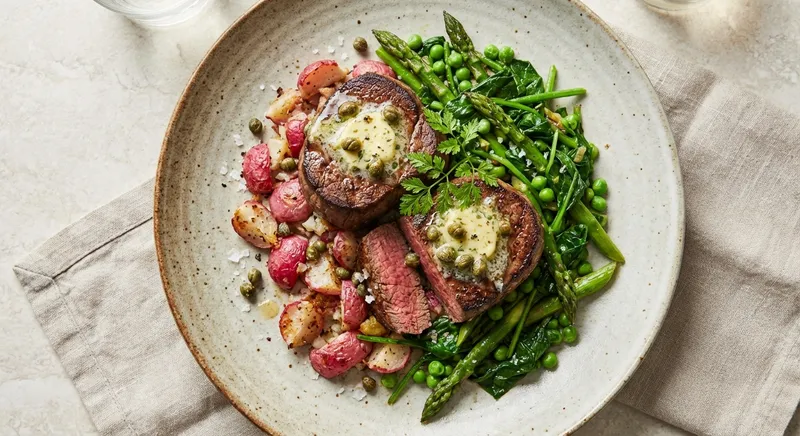
Tender, perfectly seared beef medallions are finished with a glossy, tangy mustard–caper butter that balances rich, savory meat with bright briny notes. Roasted radishes are smashed until just tender—giving a crisp-edged, potato-like bite—while quick-sautéed Swiss chard (or baby kale) scented with garlic and lemon adds a fresh, slightly bitter counterpoint. The result is a restaurant-quality plate that's bold, balanced and fast enough for a weeknight dinner.
Preheat and prep. Preheat oven to 220°C / 425°F (for radishes). Pat the beef medallions dry on all sides with paper towel, then season both sides generously with kosher salt and freshly cracked black pepper. Drying the meat removes surface moisture so the pan can deliver a deep, flavorful sear rather than steaming the steak.
Roast the radishes. Toss the whole radishes (trim tops and roots, halve any very large ones) with 4 tsp olive oil, a pinch of salt and cracked pepper on a rimmed baking sheet cut-side down. Roast for 18–22 minutes until they have deep caramelized spots and are tender through when poked with a knife. High-heat roasting concentrates their sweetness and softens their inside so they can be smashed into tender, crisp-edged 'potato' bites.
Start the medallions in a hot pan. Heat a large heavy skillet (cast-iron preferred) over medium-high heat until very hot. Add 1 tsp olive oil per two medallions (about 2 tsp total for 4 medallions). When the oil is shimmering and just beginning to smoke, add medallions without crowding the pan. A screaming-hot pan forms a Maillard crust quickly; that crust creates flavor and helps lock juices inside.
Sear to temperature. Sear the medallions 2–3 minutes per side for medium-rare (internal ~54–56°C / 130–133°F), 3–4 minutes for medium. Use tongs and only flip once to preserve the crust. If your medallions are thicker than 2–2.5 cm (¾–1"), finish in a 190°C / 375°F oven for 3–5 minutes. Transfer cooked medallions to a warm plate and loosely tent with foil to rest for 5–7 minutes; resting lets muscle fibers relax and juices redistribute so the meat stays juicy.
Make the mustard–caper butter in the hot pan. Keep the skillet over medium-low heat (there will be fond — browned bits — from the meat). Add the unsalted butter (4 tbsp) and let it melt gently. Swirl and spoon as it melts so it emulsifies with the fond; this lifts concentrated beef flavor into the sauce. Stir in 4 tsp Dijon mustard and 4 tsp drained capers. Warm the sauce 30–45 seconds to bloom the mustard’s aromatics; do not boil — you just want a glossy emulsion that coats the meat. Taste and season with a small pinch of salt and pepper only if needed (capers add brininess).
Sauté the greens. While the butter sauce is finishing, wipe a second skillet clean and heat over medium. Add a drizzle (about 1 tsp) olive oil and the thinly sliced garlic. Sauté for 20–30 seconds until fragrant (don’t let the garlic brown). Add the Swiss chard or baby kale, sprinkle with a pinch of salt, and cook for 2–3 minutes, tossing, until wilted but still bright green. Finish with the juice of 1/4 lemon (use the whole lemon across four servings) to add brightness that cuts the butter’s richness.
Smash the roasted radishes. When the roasted radishes are cool enough to handle (but still warm), transfer to a cutting board or work surface. Using the bottom of a heavy pan or a flat-bottomed cup, press each radish gently until it flattens about halfway — you want crisp, caramelized edges and a tender interior. A quick return to the hot skillet (1 minute per side) will re-crisp edges if needed. Season lightly with salt and a grind of pepper.
Finish and assemble. Spoon a little mustard–caper butter onto each plate, set 1 medallion on top and spoon more butter over the meat to glaze. Arrange 6–8 smashed radishes per plate (about 120 g cooked per serving) and a generous mound of the lemon-garlic greens alongside. Spoon any remaining pan sauce over the radishes lightly — the butter’s tang enhances their caramelized flavor.
Garnish and serve. Scatter a few extra drained capers over the plate for bursts of briny contrast, and add another light squeeze of lemon if you like. Serve immediately while the meat is warm and the butter is glossy.
Notes on timing. Roast the radishes first so they have time to caramelize in the oven while you sear the beef and finish the sauce. The greens take only minutes and should be done just before plating so they stay vibrant. Resting the beef is non-negotiable for juiciness — use that time to finish the sauce and greens.
520
Calories
36g
Protein
9g
Carbs
37g
Fat
3g
Fiber
How did this recipe turn out? Let others know!
to rate this recipe
By Ebenezer Dwamena
Tender, perfectly seared beef medallions are finished with a glossy, tangy mustard–caper butter that balances rich, savory meat with bright briny notes. Roasted radishes are smashed until just tender—giving a crisp-edged, potato-like bite—while quick-sautéed Swiss chard (or baby kale) scented with garlic and lemon adds a fresh, slightly bitter counterpoint. The result is a restaurant-quality plate that's bold, balanced and fast enough for a weeknight dinner.
Preheat and prep. Preheat oven to 220°C / 425°F (for radishes). Pat the beef medallions dry on all sides with paper towel, then season both sides generously with kosher salt and freshly cracked black pepper. Drying the meat removes surface moisture so the pan can deliver a deep, flavorful sear rather than steaming the steak.
Roast the radishes. Toss the whole radishes (trim tops and roots, halve any very large ones) with 4 tsp olive oil, a pinch of salt and cracked pepper on a rimmed baking sheet cut-side down. Roast for 18–22 minutes until they have deep caramelized spots and are tender through when poked with a knife. High-heat roasting concentrates their sweetness and softens their inside so they can be smashed into tender, crisp-edged 'potato' bites.
Start the medallions in a hot pan. Heat a large heavy skillet (cast-iron preferred) over medium-high heat until very hot. Add 1 tsp olive oil per two medallions (about 2 tsp total for 4 medallions). When the oil is shimmering and just beginning to smoke, add medallions without crowding the pan. A screaming-hot pan forms a Maillard crust quickly; that crust creates flavor and helps lock juices inside.
Sear to temperature. Sear the medallions 2–3 minutes per side for medium-rare (internal ~54–56°C / 130–133°F), 3–4 minutes for medium. Use tongs and only flip once to preserve the crust. If your medallions are thicker than 2–2.5 cm (¾–1"), finish in a 190°C / 375°F oven for 3–5 minutes. Transfer cooked medallions to a warm plate and loosely tent with foil to rest for 5–7 minutes; resting lets muscle fibers relax and juices redistribute so the meat stays juicy.
Make the mustard–caper butter in the hot pan. Keep the skillet over medium-low heat (there will be fond — browned bits — from the meat). Add the unsalted butter (4 tbsp) and let it melt gently. Swirl and spoon as it melts so it emulsifies with the fond; this lifts concentrated beef flavor into the sauce. Stir in 4 tsp Dijon mustard and 4 tsp drained capers. Warm the sauce 30–45 seconds to bloom the mustard’s aromatics; do not boil — you just want a glossy emulsion that coats the meat. Taste and season with a small pinch of salt and pepper only if needed (capers add brininess).
Sauté the greens. While the butter sauce is finishing, wipe a second skillet clean and heat over medium. Add a drizzle (about 1 tsp) olive oil and the thinly sliced garlic. Sauté for 20–30 seconds until fragrant (don’t let the garlic brown). Add the Swiss chard or baby kale, sprinkle with a pinch of salt, and cook for 2–3 minutes, tossing, until wilted but still bright green. Finish with the juice of 1/4 lemon (use the whole lemon across four servings) to add brightness that cuts the butter’s richness.
Smash the roasted radishes. When the roasted radishes are cool enough to handle (but still warm), transfer to a cutting board or work surface. Using the bottom of a heavy pan or a flat-bottomed cup, press each radish gently until it flattens about halfway — you want crisp, caramelized edges and a tender interior. A quick return to the hot skillet (1 minute per side) will re-crisp edges if needed. Season lightly with salt and a grind of pepper.
Finish and assemble. Spoon a little mustard–caper butter onto each plate, set 1 medallion on top and spoon more butter over the meat to glaze. Arrange 6–8 smashed radishes per plate (about 120 g cooked per serving) and a generous mound of the lemon-garlic greens alongside. Spoon any remaining pan sauce over the radishes lightly — the butter’s tang enhances their caramelized flavor.
Garnish and serve. Scatter a few extra drained capers over the plate for bursts of briny contrast, and add another light squeeze of lemon if you like. Serve immediately while the meat is warm and the butter is glossy.
Notes on timing. Roast the radishes first so they have time to caramelize in the oven while you sear the beef and finish the sauce. The greens take only minutes and should be done just before plating so they stay vibrant. Resting the beef is non-negotiable for juiciness — use that time to finish the sauce and greens.
520
Calories
36g
Protein
9g
Carbs
37g
Fat
3g
Fiber
Your Rating:
