By Shaina
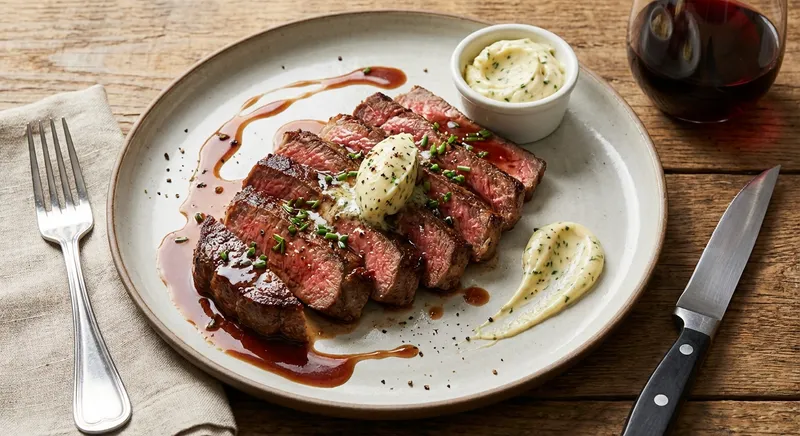
Tender, quick-cooked beef strips seared to a golden-brown edge, finished with two complementary sauces — a glossy red-wine pan jus for depth and an indulgent Dijon-butter cream for richness. The contrast of savory, acidic and velvety textures makes this a restaurant-quality weeknight main that feels special without fuss.
Bring the beef strips to room temperature (15 minutes) and pat thoroughly dry with paper towels; season lightly with kosher salt and a few grinds of black pepper. Why: letting meat warm slightly promotes even cooking; drying the surface ensures a proper Maillard sear instead of steaming.
Prep mise en place: mince garlic, thinly slice the onion, measure wine and stock, and whisk Dijon into the cream in a small bowl. Why: having everything ready prevents overcooking the beef and lets you build sauces quickly while the pan is hot.
Heat a large heavy skillet (cast-iron or stainless steel) over medium-high heat until very hot — about 2–3 minutes. Add 1 tablespoon olive oil and 2 tablespoons butter; swirl to coat. Why: a very hot pan and a mix of oil + butter gives high-heat cooking power (oil raises smoke point) with butter’s flavor for browning.
Working in one layer and in two batches to avoid crowding, add the beef strips and sear 1–2 minutes per side until deep brown on the edges but still slightly pink in the middle. Transfer seared strips to a warm plate and loosely tent with foil. Why: short, high-heat searing creates a flavorful crust (Maillard reaction) while keeping interiors tender; overcrowding would drop the pan temperature and cause steaming.
Lower the heat to medium and add the remaining 1 tbsp olive oil if needed. Add the sliced onion and a pinch of salt; cook, stirring, until softened and beginning to caramelize, about 6–8 minutes. Why: slowly caramelizing onions releases natural sugars and builds a sweet-savory base that complements the beef and balances the sauces.
Add the minced garlic and cook for 30 seconds to 1 minute until fragrant. Why: brief cooking releases garlic’s aromatic oils; longer cooking will burn it and introduce bitterness.
Deglaze the pan with the red wine, scraping up the brown fond with a wooden spoon; bring to a simmer and reduce by about half (2–3 minutes). Why: deglazing dissolves the caramelized bits (fond) into the sauce, concentrating flavor; reducing the wine cooks off harsh alcohol and deepens taste.
Add beef stock, Worcestershire sauce, and thyme. Simmer gently for 3–4 minutes to meld flavors. If you want a slightly thicker jus, whisk the cornstarch into 1 tablespoon cold water and stir it in now, simmering until glossy. Why: combining stock and wine creates a layered jus; a small starch slurry quickly and cleanly thickens without hiding flavors.
Divide the pan: remove about half of the sauce into a small saucepan off the heat and whisk in the Dijon and heavy cream, then return to very low heat to warm (do not boil). Add 1 tablespoon of butter and swirl to emulsify into a silky mustard cream sauce. Why: separating and finishing one portion with cream and Dijon keeps its delicate emulsion from breaking and creates a rich, tangy contrast to the jus.
Return the beef strips and any accumulated juices to the main skillet with the remaining sauce; toss briefly just to rewarm and coat (30–45 seconds). Finish by stirring in 1 tablespoon butter to give the sauce a glossy sheen. Why: warming the beef gently prevents overcooking while the finishing butter enriches and smooths the sauce (mounting with butter rounds flavors and improves mouthfeel).
To serve: spoon a pool of the red-wine jus on the plate, arrange beef strips over it, and drizzle a bit of the creamy Dijon butter sauce alongside or in a swirl. Garnish with chopped parsley and an extra grind of black pepper. Why: presenting both sauces side-by-side lets diners combine flavors as they like — the bright, savory jus and the velvety mustard cream complement each bite.
Leftover and timing notes: If you need to hold the beef briefly, keep it tented on a warm tray (off direct heat) for up to 10 minutes. Reheat gently in the sauce over low heat; avoid blasting in a microwave, which can toughen beef. Why: gentle reheating preserves texture and keeps sauces emulsified.
618
Calories
45g
Protein
7g
Carbs
44g
Fat
1g
Fiber
How did this recipe turn out? Let others know!
to rate this recipe
By Shaina
Tender, quick-cooked beef strips seared to a golden-brown edge, finished with two complementary sauces — a glossy red-wine pan jus for depth and an indulgent Dijon-butter cream for richness. The contrast of savory, acidic and velvety textures makes this a restaurant-quality weeknight main that feels special without fuss.
Bring the beef strips to room temperature (15 minutes) and pat thoroughly dry with paper towels; season lightly with kosher salt and a few grinds of black pepper. Why: letting meat warm slightly promotes even cooking; drying the surface ensures a proper Maillard sear instead of steaming.
Prep mise en place: mince garlic, thinly slice the onion, measure wine and stock, and whisk Dijon into the cream in a small bowl. Why: having everything ready prevents overcooking the beef and lets you build sauces quickly while the pan is hot.
Heat a large heavy skillet (cast-iron or stainless steel) over medium-high heat until very hot — about 2–3 minutes. Add 1 tablespoon olive oil and 2 tablespoons butter; swirl to coat. Why: a very hot pan and a mix of oil + butter gives high-heat cooking power (oil raises smoke point) with butter’s flavor for browning.
Working in one layer and in two batches to avoid crowding, add the beef strips and sear 1–2 minutes per side until deep brown on the edges but still slightly pink in the middle. Transfer seared strips to a warm plate and loosely tent with foil. Why: short, high-heat searing creates a flavorful crust (Maillard reaction) while keeping interiors tender; overcrowding would drop the pan temperature and cause steaming.
Lower the heat to medium and add the remaining 1 tbsp olive oil if needed. Add the sliced onion and a pinch of salt; cook, stirring, until softened and beginning to caramelize, about 6–8 minutes. Why: slowly caramelizing onions releases natural sugars and builds a sweet-savory base that complements the beef and balances the sauces.
Add the minced garlic and cook for 30 seconds to 1 minute until fragrant. Why: brief cooking releases garlic’s aromatic oils; longer cooking will burn it and introduce bitterness.
Deglaze the pan with the red wine, scraping up the brown fond with a wooden spoon; bring to a simmer and reduce by about half (2–3 minutes). Why: deglazing dissolves the caramelized bits (fond) into the sauce, concentrating flavor; reducing the wine cooks off harsh alcohol and deepens taste.
Add beef stock, Worcestershire sauce, and thyme. Simmer gently for 3–4 minutes to meld flavors. If you want a slightly thicker jus, whisk the cornstarch into 1 tablespoon cold water and stir it in now, simmering until glossy. Why: combining stock and wine creates a layered jus; a small starch slurry quickly and cleanly thickens without hiding flavors.
Divide the pan: remove about half of the sauce into a small saucepan off the heat and whisk in the Dijon and heavy cream, then return to very low heat to warm (do not boil). Add 1 tablespoon of butter and swirl to emulsify into a silky mustard cream sauce. Why: separating and finishing one portion with cream and Dijon keeps its delicate emulsion from breaking and creates a rich, tangy contrast to the jus.
Return the beef strips and any accumulated juices to the main skillet with the remaining sauce; toss briefly just to rewarm and coat (30–45 seconds). Finish by stirring in 1 tablespoon butter to give the sauce a glossy sheen. Why: warming the beef gently prevents overcooking while the finishing butter enriches and smooths the sauce (mounting with butter rounds flavors and improves mouthfeel).
To serve: spoon a pool of the red-wine jus on the plate, arrange beef strips over it, and drizzle a bit of the creamy Dijon butter sauce alongside or in a swirl. Garnish with chopped parsley and an extra grind of black pepper. Why: presenting both sauces side-by-side lets diners combine flavors as they like — the bright, savory jus and the velvety mustard cream complement each bite.
Leftover and timing notes: If you need to hold the beef briefly, keep it tented on a warm tray (off direct heat) for up to 10 minutes. Reheat gently in the sauce over low heat; avoid blasting in a microwave, which can toughen beef. Why: gentle reheating preserves texture and keeps sauces emulsified.
618
Calories
45g
Protein
7g
Carbs
44g
Fat
1g
Fiber
Your Rating:
