By Shaina
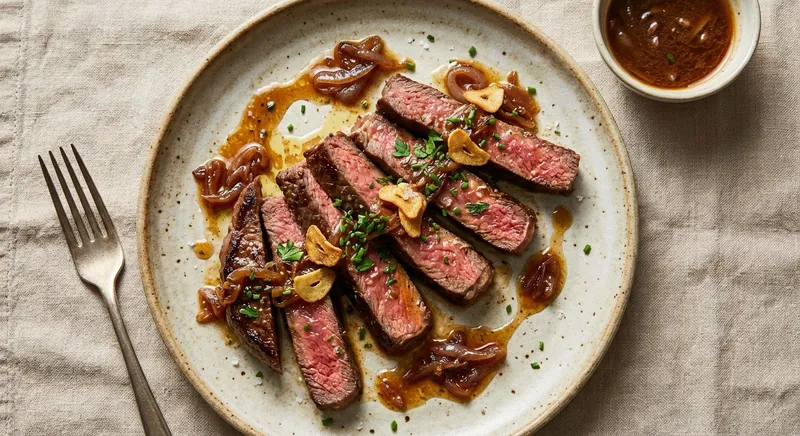
Tender strips of beef are quickly seared in butter and olive oil until caramelized, then finished in a glossy shallot–Worcestershire pan sauce brightened with a touch of Dijon. The result is beef with a deeply savory crust, silky sauce and a home‑chef-friendly technique that tastes like a restaurant plate.
Pat the beef strips dry with paper towels and season evenly with 1/2 tsp sea salt and 1/4 tsp freshly ground black pepper. Why: Removing surface moisture promotes an immediate, hot sear; light seasoning up front begins flavoring the meat but allows you to finish seasoning later.
Heat a large heavy skillet (cast-iron preferred) over medium-high heat for 2–3 minutes until very hot — you should see faint wisps of smoke when you’re ready. Why: A properly hot pan creates Maillard browning — the flavorful crust that gives the beef its roasted, savory notes.
Add 1 tbsp olive oil and 2 tbsp butter to the pan. Swirl to combine and let the butter foam. Why: A mix of oil and butter raises the smoke point while keeping the sauce-rich, buttery flavor; the foaming butter indicates it’s hot and ready to receive meat.
Add the beef strips in a single layer — do not crowd the pan (cook in two batches if necessary). Sear without moving for 1½–2 minutes to develop a deep brown crust, then flip and sear the other side 1–1½ minutes for medium-rare (adjust time for desired doneness). Why: Leaving the meat undisturbed allows the surface to caramelize; quick cooking keeps strips tender rather than overcooking them like a whole steak.
Transfer seared beef to a warm plate and tent loosely with foil. Why: Resting lets juices redistribute so the slices stay juicy when sauced.
Reduce heat to medium and add the remaining 2 tbsp butter to the pan. When it melts and foams, add the chopped shallot and 1/2 tsp salt; cook, stirring, 1½–2 minutes until softened and translucent but not browned. Why: Cooking shallots gently extracts sweetness for the sauce without adding bitter, burned flavors.
Add the minced garlic and cook 20–30 seconds, stirring — just until fragrant. Why: Garlic burns quickly; a short cook time releases its aroma without developing bitterness.
Pour in 1/2 cup beef broth and scrape the brown fond (browned bits) from the pan with a wooden spoon. Stir in 1 tbsp Worcestershire and 1 tsp Dijon. Bring the liquid to a gentle simmer. Why: Deglazing dissolves the caramelized fond into the sauce, which is full of concentrated flavor; Worcestershire and Dijon add umami and bright, tangy depth.
If you prefer a slightly thicker sauce, whisk 1 tsp cornstarch with 1 tbsp cold water to make a slurry and stir into the simmering sauce; simmer 1 minute to thicken. Taste and adjust seasoning with remaining 1/4 tsp salt and 1/4 tsp black pepper. Why: Cornstarch quickly thickens without clouding flavor; seasoning at the end accounts for reduction concentrating the sauce.
Return the beef and any accumulated juices to the pan; toss quickly in the sauce off the heat for 30 seconds to warm through and coat. Why: Finishing in the sauce melds flavors without overcooking the beef strips; off‑heat tossing preserves texture.
Plate the beef strips, spoon extra sauce over the top, and finish with a sprinkle of chopped parsley. Serve immediately. Why: Serving right away keeps the beef at ideal temperature and texture; fresh parsley adds a clean herbal contrast to the rich sauce.
400
Calories
30g
Protein
4g
Carbs
30g
Fat
1g
Fiber
How did this recipe turn out? Let others know!
to rate this recipe
By Shaina
Tender strips of beef are quickly seared in butter and olive oil until caramelized, then finished in a glossy shallot–Worcestershire pan sauce brightened with a touch of Dijon. The result is beef with a deeply savory crust, silky sauce and a home‑chef-friendly technique that tastes like a restaurant plate.
Pat the beef strips dry with paper towels and season evenly with 1/2 tsp sea salt and 1/4 tsp freshly ground black pepper. Why: Removing surface moisture promotes an immediate, hot sear; light seasoning up front begins flavoring the meat but allows you to finish seasoning later.
Heat a large heavy skillet (cast-iron preferred) over medium-high heat for 2–3 minutes until very hot — you should see faint wisps of smoke when you’re ready. Why: A properly hot pan creates Maillard browning — the flavorful crust that gives the beef its roasted, savory notes.
Add 1 tbsp olive oil and 2 tbsp butter to the pan. Swirl to combine and let the butter foam. Why: A mix of oil and butter raises the smoke point while keeping the sauce-rich, buttery flavor; the foaming butter indicates it’s hot and ready to receive meat.
Add the beef strips in a single layer — do not crowd the pan (cook in two batches if necessary). Sear without moving for 1½–2 minutes to develop a deep brown crust, then flip and sear the other side 1–1½ minutes for medium-rare (adjust time for desired doneness). Why: Leaving the meat undisturbed allows the surface to caramelize; quick cooking keeps strips tender rather than overcooking them like a whole steak.
Transfer seared beef to a warm plate and tent loosely with foil. Why: Resting lets juices redistribute so the slices stay juicy when sauced.
Reduce heat to medium and add the remaining 2 tbsp butter to the pan. When it melts and foams, add the chopped shallot and 1/2 tsp salt; cook, stirring, 1½–2 minutes until softened and translucent but not browned. Why: Cooking shallots gently extracts sweetness for the sauce without adding bitter, burned flavors.
Add the minced garlic and cook 20–30 seconds, stirring — just until fragrant. Why: Garlic burns quickly; a short cook time releases its aroma without developing bitterness.
Pour in 1/2 cup beef broth and scrape the brown fond (browned bits) from the pan with a wooden spoon. Stir in 1 tbsp Worcestershire and 1 tsp Dijon. Bring the liquid to a gentle simmer. Why: Deglazing dissolves the caramelized fond into the sauce, which is full of concentrated flavor; Worcestershire and Dijon add umami and bright, tangy depth.
If you prefer a slightly thicker sauce, whisk 1 tsp cornstarch with 1 tbsp cold water to make a slurry and stir into the simmering sauce; simmer 1 minute to thicken. Taste and adjust seasoning with remaining 1/4 tsp salt and 1/4 tsp black pepper. Why: Cornstarch quickly thickens without clouding flavor; seasoning at the end accounts for reduction concentrating the sauce.
Return the beef and any accumulated juices to the pan; toss quickly in the sauce off the heat for 30 seconds to warm through and coat. Why: Finishing in the sauce melds flavors without overcooking the beef strips; off‑heat tossing preserves texture.
Plate the beef strips, spoon extra sauce over the top, and finish with a sprinkle of chopped parsley. Serve immediately. Why: Serving right away keeps the beef at ideal temperature and texture; fresh parsley adds a clean herbal contrast to the rich sauce.
400
Calories
30g
Protein
4g
Carbs
30g
Fat
1g
Fiber
Your Rating:
