By emensah m
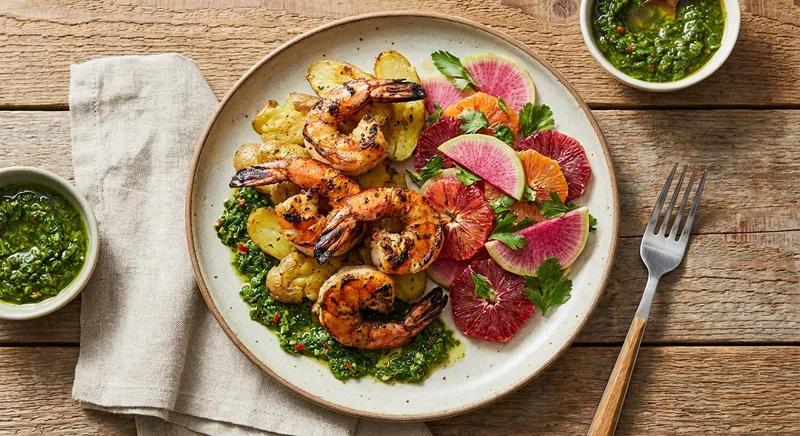
Charred, smoky shrimp brightened by a verdant parsley‑cilantro chimichurri, served with crisp‑edged smashed fingerling potatoes and a peppery winter radish–blood orange salad. Textures from snappy shrimp, crunchy pine nuts and silky orange segments meet vivid herb flavors and a tangy red‑wine vinegar lift—an elegant, restaurant‑quality plate you can make at home.
Bring a large pot of salted water to a simmer for the potatoes. Salted water seasons potatoes from the inside as they cook and raises the boiling point slightly so they cook more evenly.
Parboil the fingerling potatoes (whole) for 12–15 minutes until a knife slides through with slight resistance — you want tender centers but not falling apart. Parboiling reduces the final grill/roast time and ensures the interior is cooked before you smash and crisp the exterior.
While the potatoes cook, make the chimichurri: finely chop the parsley and cilantro (you can pulse briefly in a food processor for a looser texture); place in a bowl and add 4 tbsp red wine vinegar, 4 tbsp extra-virgin olive oil, minced garlic (4 cloves), a pinch of smoked paprika (about ¼ tsp), ½ tsp kosher salt and plenty of freshly cracked black pepper. Stir to combine and taste — chimichurri benefits from a bright, slightly acidic balance to cut rich shrimp and potatoes. Let it rest at room temperature while you finish the rest (15–30 minutes) so the flavors meld.
Drain the potatoes and let them steam-dry in the colander for 2 minutes to lose excess surface moisture. Then spread them on a sheet pan and gently press each potato with the bottom of a small plate or a heavy spatula to ‘smash’ them to about 1/2–3/4 inch thick. Smashing increases surface area so you get more golden, crisp edges when they hit high heat.
Preheat your grill (charcoal preferred) to a medium-high zone for direct heat and a cooler zone for indirect heat. If using oven/roaster, preheat a heavy cast-iron skillet at 230°C (450°F). Charcoal imparts that iconic smoky flavor; if you must use gas, add a small soaked wood chip packet in a smoker box or use smoked paprika on the shrimp to replicate smokiness.
Toss the smashed potatoes with 4 tbsp extra-virgin olive oil, 1 tsp kosher salt and 1/2 tsp freshly cracked black pepper. The oil will help them crisp and brown; seasoning before roasting ensures even flavor through the flesh and exterior crust.
Cook the potatoes on the grill over direct heat (or in the hot cast-iron skillet) for 6–8 minutes per side until deeply golden and crisp, moving them to indirect heat or a cooler part of the grill if they begin to char too quickly. A hot surface creates Maillard browning — the chemical reaction that produces complex, savory flavors and a beautiful crust.
While the potatoes finish, season the shrimp: pat 720 g shrimp dry with paper towels (dry surfaces sear better), then toss with 2 tsp smoked paprika, 1 tsp kosher salt and 1/2 tsp cracked black pepper. Add a light drizzle (about 1 tbsp) of olive oil and toss again so the spice adheres and the oil helps conduct heat and prevent sticking.
Thread shrimp on skewers (if using wooden skewers, soak 20–30 minutes first) or leave loose for grilling. Grill the shrimp over direct high heat for 90 seconds to 2 minutes per side—until opaque and just curled into a loose “C”. Overcooking shrimp makes them tough and rubbery; a quick, hot sear gives a caramelized exterior while keeping the interior tender.
Make the radish–orange salad: thinly slice 240 g winter radish on a mandoline or with a sharp knife, then combine in a bowl with 120 g baby arugula and the segmented flesh of 4 small oranges. Dress very lightly with 1 tbsp of the chimichurri (or 1 tbsp olive oil + a squeeze of orange or vinegar) and season with salt and pepper. The peppery arugula and crunchy radish balance the juicy sweetness of the orange; a light dressing keeps the salad bright and not greasy.
Toast the 40 g pine nuts in a small dry skillet over medium heat for 2–4 minutes, stirring constantly until fragrant and pale golden — watch closely; they burn quickly. Remove to cool immediately to stop carryover cooking.
To finish and plate: create a bed of the arugula–radish–orange salad in the center of each plate. Arrange the smashed potatoes on one side, top with a cluster of 180 g grilled shrimp per person, and spoon 2–3 tbsp chimichurri over the shrimp (reserve extra for passing). Scatter toasted pine nuts over the salad, finish potatoes with flaky sea salt, and grind a last flourish of black pepper over the whole plate. The plating balances color, temperature and texture.
Serve immediately so the shrimp are hot, potatoes are crisp and the salad is cool and refreshing. Offer extra chimichurri on the side for those who like more herb sauce.
782
Calories
53g
Protein
64g
Carbs
36g
Fat
12g
Fiber
How did this recipe turn out? Let others know!
to rate this recipe
By emensah m
Charred, smoky shrimp brightened by a verdant parsley‑cilantro chimichurri, served with crisp‑edged smashed fingerling potatoes and a peppery winter radish–blood orange salad. Textures from snappy shrimp, crunchy pine nuts and silky orange segments meet vivid herb flavors and a tangy red‑wine vinegar lift—an elegant, restaurant‑quality plate you can make at home.
Bring a large pot of salted water to a simmer for the potatoes. Salted water seasons potatoes from the inside as they cook and raises the boiling point slightly so they cook more evenly.
Parboil the fingerling potatoes (whole) for 12–15 minutes until a knife slides through with slight resistance — you want tender centers but not falling apart. Parboiling reduces the final grill/roast time and ensures the interior is cooked before you smash and crisp the exterior.
While the potatoes cook, make the chimichurri: finely chop the parsley and cilantro (you can pulse briefly in a food processor for a looser texture); place in a bowl and add 4 tbsp red wine vinegar, 4 tbsp extra-virgin olive oil, minced garlic (4 cloves), a pinch of smoked paprika (about ¼ tsp), ½ tsp kosher salt and plenty of freshly cracked black pepper. Stir to combine and taste — chimichurri benefits from a bright, slightly acidic balance to cut rich shrimp and potatoes. Let it rest at room temperature while you finish the rest (15–30 minutes) so the flavors meld.
Drain the potatoes and let them steam-dry in the colander for 2 minutes to lose excess surface moisture. Then spread them on a sheet pan and gently press each potato with the bottom of a small plate or a heavy spatula to ‘smash’ them to about 1/2–3/4 inch thick. Smashing increases surface area so you get more golden, crisp edges when they hit high heat.
Preheat your grill (charcoal preferred) to a medium-high zone for direct heat and a cooler zone for indirect heat. If using oven/roaster, preheat a heavy cast-iron skillet at 230°C (450°F). Charcoal imparts that iconic smoky flavor; if you must use gas, add a small soaked wood chip packet in a smoker box or use smoked paprika on the shrimp to replicate smokiness.
Toss the smashed potatoes with 4 tbsp extra-virgin olive oil, 1 tsp kosher salt and 1/2 tsp freshly cracked black pepper. The oil will help them crisp and brown; seasoning before roasting ensures even flavor through the flesh and exterior crust.
Cook the potatoes on the grill over direct heat (or in the hot cast-iron skillet) for 6–8 minutes per side until deeply golden and crisp, moving them to indirect heat or a cooler part of the grill if they begin to char too quickly. A hot surface creates Maillard browning — the chemical reaction that produces complex, savory flavors and a beautiful crust.
While the potatoes finish, season the shrimp: pat 720 g shrimp dry with paper towels (dry surfaces sear better), then toss with 2 tsp smoked paprika, 1 tsp kosher salt and 1/2 tsp cracked black pepper. Add a light drizzle (about 1 tbsp) of olive oil and toss again so the spice adheres and the oil helps conduct heat and prevent sticking.
Thread shrimp on skewers (if using wooden skewers, soak 20–30 minutes first) or leave loose for grilling. Grill the shrimp over direct high heat for 90 seconds to 2 minutes per side—until opaque and just curled into a loose “C”. Overcooking shrimp makes them tough and rubbery; a quick, hot sear gives a caramelized exterior while keeping the interior tender.
Make the radish–orange salad: thinly slice 240 g winter radish on a mandoline or with a sharp knife, then combine in a bowl with 120 g baby arugula and the segmented flesh of 4 small oranges. Dress very lightly with 1 tbsp of the chimichurri (or 1 tbsp olive oil + a squeeze of orange or vinegar) and season with salt and pepper. The peppery arugula and crunchy radish balance the juicy sweetness of the orange; a light dressing keeps the salad bright and not greasy.
Toast the 40 g pine nuts in a small dry skillet over medium heat for 2–4 minutes, stirring constantly until fragrant and pale golden — watch closely; they burn quickly. Remove to cool immediately to stop carryover cooking.
To finish and plate: create a bed of the arugula–radish–orange salad in the center of each plate. Arrange the smashed potatoes on one side, top with a cluster of 180 g grilled shrimp per person, and spoon 2–3 tbsp chimichurri over the shrimp (reserve extra for passing). Scatter toasted pine nuts over the salad, finish potatoes with flaky sea salt, and grind a last flourish of black pepper over the whole plate. The plating balances color, temperature and texture.
Serve immediately so the shrimp are hot, potatoes are crisp and the salad is cool and refreshing. Offer extra chimichurri on the side for those who like more herb sauce.
782
Calories
53g
Protein
64g
Carbs
36g
Fat
12g
Fiber
Your Rating:
