By Amanda Miller
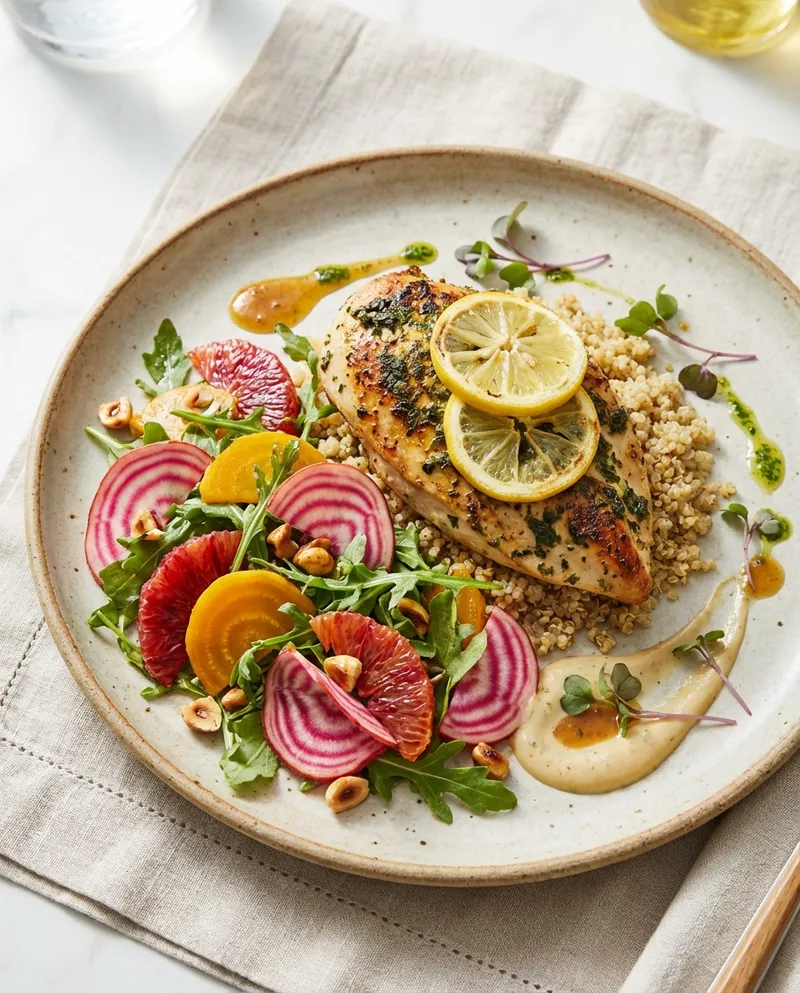
Bright, herb-scented pan-grilled chicken served alongside warm, nutty quinoa and a crisp-sweet salad of very thin shaved beet, peppery arugula and juicy orange segments. The lemon-thyme marinade and a warm dressing meld the ingredients—creating contrasts of tender chicken, crunchy beets and vivid citrus that make this a restaurant-quality, Mediterranean-inspired weeknight centerpiece.
Prep the chicken: pat the 560 g chicken breasts dry and, if they are uneven, place each between plastic wrap and gently pound to an even 1/4" thickness. Why: an even thickness ensures the breasts cook through at the same rate and remain juicy; thin breasts also take on marinade flavors faster.
Make the lemon-thyme marinade: in a bowl whisk together 2 tbsp extra-virgin olive oil, 2 tbsp fresh lemon juice, the minced garlic (2 cloves), 2 tsp chopped thyme, 1/2 tsp sea salt and 1/4 tsp freshly ground black pepper. Reserve the remaining oil and lemon juice for the dressing. Why: a simple acidic marinade with herbs brightens flavor and tenderizes the chicken without overpowering it.
Marinate the chicken: place the pounded breasts in a shallow dish or zipper bag, pour the marinade over them and turn to coat. Refrigerate 15–20 minutes while you start the quinoa. Why: short marination time is enough for thin breasts; over-marinating with citrus can start to 'cook' the chicken and change its texture.
Rinse the quinoa: place 200 g quinoa in a fine-mesh sieve and rinse under cold water until it runs clear; drain well. Why: rinsing removes the natural bitter coating (saponin) and improves the final flavor.
Toast and cook the quinoa: warm a medium saucepan over medium heat and add 1 tsp of the reserved olive oil (from the 4 tbsp total). Add the rinsed quinoa and toast, stirring, for 1–2 minutes until it smells nutty—this step deepens flavor. Add 400 ml water or low-sodium chicken broth and a pinch of salt, bring to a simmer, cover, and lower heat to maintain a gentle simmer for 12–15 minutes, until the liquid is absorbed. Remove from heat and let sit, covered, 5 minutes, then fluff with a fork. Why: toasting builds a nuttier profile; resting off-heat lets the grains finish steaming and prevents a gummy texture.
While the quinoa cooks, prepare the salad components: very thinly shave 240 g raw beet on a mandoline or with a sharp knife into matchsticks/large ribbons and place in a bowl. Segment 2 oranges over a bowl (catching any juices) by cutting off the peel and pith, then cutting between membranes to release clean segments. Why: very thin beet gives crunch and allows the dressing to coat it; segmenting oranges removes bitter membranes and yields the sweetest flesh and extra juice for the dressing.
Make the warm dressing: whisk together the reserved 2 tbsp extra-virgin olive oil, 2 tbsp fresh lemon juice, the orange juices you caught when segmenting, 2 tsp chopped thyme, a pinch of salt and pepper. Warm the dressing gently in a small saucepan or microwave for 10–15 seconds—just warm, not hot. Why: a warm dressing lightly wilts the arugula and beet when tossed with the hot quinoa and helps meld flavors quickly.
Pan-grill the chicken: heat a large heavy skillet (cast-iron preferred) over medium-high until very hot. Pat excess marinade from breasts (too much liquid causes steaming), add 1 tsp oil if needed and place the breasts in the pan, spacing them so they don't touch. Sear 3–4 minutes without moving until a golden-brown crust forms, then flip and cook another 2–3 minutes. Add 1 tbsp unsalted butter and a scatter of remaining thyme in the last minute and spoon the melted butter over the breasts to finish. Why: high initial heat creates the Maillard crust that adds flavor; finishing with butter rounds out acidity and gives a glossy finish.
Check doneness and rest: transfer chicken to a cutting board and rest 5 minutes before slicing. The internal temperature should read 74°C (165°F) in the thickest part. Why: resting lets juices redistribute so the chicken stays moist when sliced.
Assemble the warm salad base: toss the fluffed quinoa with the warm dressing so it is lightly coated—the heat will allow the dressing to penetrate the quinoa and soften the beet slightly. Add the shaved beet, arugula and orange segments and toss gently to combine. Taste and adjust seasoning. Why: tossing while warm integrates flavors and gives a tender-crisp texture to the beet and arugula without turning them soggy.
Slice and plate: slice each rested chicken breast on a diagonal into 4–5 slices. Spoon a bed of warm quinoa-beet-orange-arugula salad onto each plate and fan the chicken over the top. Drizzle any resting juices from the cutting board over the chicken and finish with a crack of black pepper and a sprinkle of fresh thyme. Why: diagonal slicing creates attractive, tender pieces and the plating keeps the warm quinoa in contact with the chicken so every bite has contrast.
Finish and serve: optional — add a light scattering of toasted walnuts or pistachios for crunch, or a small shower of crumbled feta for salty creaminess. Serve immediately. Why: the optional finishes introduce texture and a salty or nutty counterpoint to the citrus-herb profile.
630
Calories
53g
Protein
48g
Carbs
25g
Fat
7g
Fiber
How did this recipe turn out? Let others know!
to rate this recipe
By Amanda Miller
Bright, herb-scented pan-grilled chicken served alongside warm, nutty quinoa and a crisp-sweet salad of very thin shaved beet, peppery arugula and juicy orange segments. The lemon-thyme marinade and a warm dressing meld the ingredients—creating contrasts of tender chicken, crunchy beets and vivid citrus that make this a restaurant-quality, Mediterranean-inspired weeknight centerpiece.
Prep the chicken: pat the 560 g chicken breasts dry and, if they are uneven, place each between plastic wrap and gently pound to an even 1/4" thickness. Why: an even thickness ensures the breasts cook through at the same rate and remain juicy; thin breasts also take on marinade flavors faster.
Make the lemon-thyme marinade: in a bowl whisk together 2 tbsp extra-virgin olive oil, 2 tbsp fresh lemon juice, the minced garlic (2 cloves), 2 tsp chopped thyme, 1/2 tsp sea salt and 1/4 tsp freshly ground black pepper. Reserve the remaining oil and lemon juice for the dressing. Why: a simple acidic marinade with herbs brightens flavor and tenderizes the chicken without overpowering it.
Marinate the chicken: place the pounded breasts in a shallow dish or zipper bag, pour the marinade over them and turn to coat. Refrigerate 15–20 minutes while you start the quinoa. Why: short marination time is enough for thin breasts; over-marinating with citrus can start to 'cook' the chicken and change its texture.
Rinse the quinoa: place 200 g quinoa in a fine-mesh sieve and rinse under cold water until it runs clear; drain well. Why: rinsing removes the natural bitter coating (saponin) and improves the final flavor.
Toast and cook the quinoa: warm a medium saucepan over medium heat and add 1 tsp of the reserved olive oil (from the 4 tbsp total). Add the rinsed quinoa and toast, stirring, for 1–2 minutes until it smells nutty—this step deepens flavor. Add 400 ml water or low-sodium chicken broth and a pinch of salt, bring to a simmer, cover, and lower heat to maintain a gentle simmer for 12–15 minutes, until the liquid is absorbed. Remove from heat and let sit, covered, 5 minutes, then fluff with a fork. Why: toasting builds a nuttier profile; resting off-heat lets the grains finish steaming and prevents a gummy texture.
While the quinoa cooks, prepare the salad components: very thinly shave 240 g raw beet on a mandoline or with a sharp knife into matchsticks/large ribbons and place in a bowl. Segment 2 oranges over a bowl (catching any juices) by cutting off the peel and pith, then cutting between membranes to release clean segments. Why: very thin beet gives crunch and allows the dressing to coat it; segmenting oranges removes bitter membranes and yields the sweetest flesh and extra juice for the dressing.
Make the warm dressing: whisk together the reserved 2 tbsp extra-virgin olive oil, 2 tbsp fresh lemon juice, the orange juices you caught when segmenting, 2 tsp chopped thyme, a pinch of salt and pepper. Warm the dressing gently in a small saucepan or microwave for 10–15 seconds—just warm, not hot. Why: a warm dressing lightly wilts the arugula and beet when tossed with the hot quinoa and helps meld flavors quickly.
Pan-grill the chicken: heat a large heavy skillet (cast-iron preferred) over medium-high until very hot. Pat excess marinade from breasts (too much liquid causes steaming), add 1 tsp oil if needed and place the breasts in the pan, spacing them so they don't touch. Sear 3–4 minutes without moving until a golden-brown crust forms, then flip and cook another 2–3 minutes. Add 1 tbsp unsalted butter and a scatter of remaining thyme in the last minute and spoon the melted butter over the breasts to finish. Why: high initial heat creates the Maillard crust that adds flavor; finishing with butter rounds out acidity and gives a glossy finish.
Check doneness and rest: transfer chicken to a cutting board and rest 5 minutes before slicing. The internal temperature should read 74°C (165°F) in the thickest part. Why: resting lets juices redistribute so the chicken stays moist when sliced.
Assemble the warm salad base: toss the fluffed quinoa with the warm dressing so it is lightly coated—the heat will allow the dressing to penetrate the quinoa and soften the beet slightly. Add the shaved beet, arugula and orange segments and toss gently to combine. Taste and adjust seasoning. Why: tossing while warm integrates flavors and gives a tender-crisp texture to the beet and arugula without turning them soggy.
Slice and plate: slice each rested chicken breast on a diagonal into 4–5 slices. Spoon a bed of warm quinoa-beet-orange-arugula salad onto each plate and fan the chicken over the top. Drizzle any resting juices from the cutting board over the chicken and finish with a crack of black pepper and a sprinkle of fresh thyme. Why: diagonal slicing creates attractive, tender pieces and the plating keeps the warm quinoa in contact with the chicken so every bite has contrast.
Finish and serve: optional — add a light scattering of toasted walnuts or pistachios for crunch, or a small shower of crumbled feta for salty creaminess. Serve immediately. Why: the optional finishes introduce texture and a salty or nutty counterpoint to the citrus-herb profile.
630
Calories
53g
Protein
48g
Carbs
25g
Fat
7g
Fiber
Your Rating:
