By emensah m
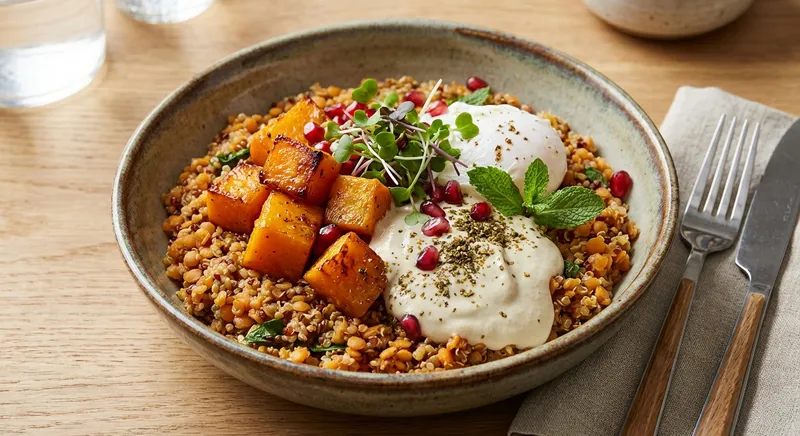
A warm, savory breakfast bowl that balances nutty quinoa and tender red lentils with caramelized roasted butternut, bright lemon, and an earthy za'atar finish. Creamy tahini‑whisked Greek yogurt adds silkiness while wilted spinach and fresh parsley bring color and freshness—comforting, nutritious, and full of Middle Eastern–inspired flavors and textures.
Preheat oven to 220°C / 425°F. Toss the butternut squash cubes with 1 tablespoon of olive oil, a pinch of salt and a few grinds of black pepper. Arrange in a single layer on a rimmed baking sheet. Roast for 20–25 minutes, turning once halfway, until the edges are caramelized and the centers are tender. Why: high heat and a single layer encourage Maillard browning and concentrated sweet flavors—caramelized edges add contrast to the creamy grains.
Rinse the quinoa in a fine-mesh sieve under cold water for 30–60 seconds to remove the bitter saponins. Drain well. Why: rinsing prevents bitterness and gives a cleaner, nuttier quinoa flavor.
Place rinsed quinoa in a small saucepan with 200 ml (about 3/4 cup + 1 tbsp) water and a pinch of salt. Bring to a boil, then reduce to low, cover tightly and simmer for 12–15 minutes until the water is absorbed. Remove from heat and let rest, covered, for 5 minutes, then fluff with a fork. Why: cooking quinoa with a tight lid steams the seed and resting lets the little tails 'unfurl' for light, separate grains.
Rinse red lentils under cold water briefly (they're dusty from processing). Place in a small saucepan with 240–300 ml (1 to 1 1/4 cups) water and a small pinch of salt. Bring to a gentle boil, then reduce to a lively simmer and cook uncovered for 8–12 minutes until tender but not mushy. You want them soft enough to eat easily but still holding some shape. If they start to foam, skim the foam. Why: red lentils cook quickly; cooking separate from quinoa lets you control texture so lentils remain tender, not disintegrated into puree.
While grains cook, make the tahini-yogurt drizzle: in a small bowl whisk together the Greek yogurt and tahini until smooth. Add the juice of half a lemon (reserve the other half for final finish), 1/4 teaspoon salt and a pinch of black pepper. If the mixture is too thick, whisk in 1–2 teaspoons of warm water to loosen to a pourable but creamy consistency. Why: whisking tahini into yogurt and acid (lemon) emulsifies the fat and proteins, yielding a glossy, silky sauce that coats the bowl evenly.
When lentils are done, drain any excess water and season with a small knob (about 1/2 tsp) of olive oil or a flick of butter if you like. Fold the warm quinoa and lentils together in a bowl to combine textures—quinoa offers bite, lentils give creamy body. Taste and adjust salt and pepper. Why: folding the two warm components together allows the flavors to marry and gives a satisfying contrast of textures in each spoonful.
Gently wilt the baby spinach: toss the leaves into the warm quinoa-lentil mix and immediately fold once or twice just until the leaves soften (30–60 seconds). You can also briefly toss the spinach in a hot non-stick skillet with a teaspoon of olive oil and a pinch of salt for 30 seconds. Why: quick wilting keeps bright color and avoids sogginess—the residual heat is enough to tenderize without losing freshness.
Build each bowl: divide the warm quinoa-lentil-spinach mix between two bowls. Top with an even portion of roasted butternut squash cubes, a tablespoon of chopped parsley, and a drizzle (about 2 tablespoons per bowl) of tahini-yogurt. Sprinkle each bowl with 1 teaspoon za'atar, a squeeze of fresh lemon (about 1/2 lemon per bowl), and finish with freshly cracked black pepper. If you like, finish with a tiny drizzle (1/2 tsp) of olive oil. Why: assembling warm and cool elements maintains temperature balance—bright acid and za'atar awaken the nutty and sweet flavors.
Serve immediately so the squash stays slightly crisp at the edges and the yogurt drizzle remains cool-tempered. Leftovers: store components separately—grains/lentils and roasted squash refrigerate well for up to 3 days; reheat gently to avoid drying. Why: separating components keeps textures intact and preserves the contrast that makes the bowl special.
618
Calories
25g
Protein
75g
Carbs
27g
Fat
13g
Fiber
How did this recipe turn out? Let others know!
to rate this recipe
By emensah m
A warm, savory breakfast bowl that balances nutty quinoa and tender red lentils with caramelized roasted butternut, bright lemon, and an earthy za'atar finish. Creamy tahini‑whisked Greek yogurt adds silkiness while wilted spinach and fresh parsley bring color and freshness—comforting, nutritious, and full of Middle Eastern–inspired flavors and textures.
Preheat oven to 220°C / 425°F. Toss the butternut squash cubes with 1 tablespoon of olive oil, a pinch of salt and a few grinds of black pepper. Arrange in a single layer on a rimmed baking sheet. Roast for 20–25 minutes, turning once halfway, until the edges are caramelized and the centers are tender. Why: high heat and a single layer encourage Maillard browning and concentrated sweet flavors—caramelized edges add contrast to the creamy grains.
Rinse the quinoa in a fine-mesh sieve under cold water for 30–60 seconds to remove the bitter saponins. Drain well. Why: rinsing prevents bitterness and gives a cleaner, nuttier quinoa flavor.
Place rinsed quinoa in a small saucepan with 200 ml (about 3/4 cup + 1 tbsp) water and a pinch of salt. Bring to a boil, then reduce to low, cover tightly and simmer for 12–15 minutes until the water is absorbed. Remove from heat and let rest, covered, for 5 minutes, then fluff with a fork. Why: cooking quinoa with a tight lid steams the seed and resting lets the little tails 'unfurl' for light, separate grains.
Rinse red lentils under cold water briefly (they're dusty from processing). Place in a small saucepan with 240–300 ml (1 to 1 1/4 cups) water and a small pinch of salt. Bring to a gentle boil, then reduce to a lively simmer and cook uncovered for 8–12 minutes until tender but not mushy. You want them soft enough to eat easily but still holding some shape. If they start to foam, skim the foam. Why: red lentils cook quickly; cooking separate from quinoa lets you control texture so lentils remain tender, not disintegrated into puree.
While grains cook, make the tahini-yogurt drizzle: in a small bowl whisk together the Greek yogurt and tahini until smooth. Add the juice of half a lemon (reserve the other half for final finish), 1/4 teaspoon salt and a pinch of black pepper. If the mixture is too thick, whisk in 1–2 teaspoons of warm water to loosen to a pourable but creamy consistency. Why: whisking tahini into yogurt and acid (lemon) emulsifies the fat and proteins, yielding a glossy, silky sauce that coats the bowl evenly.
When lentils are done, drain any excess water and season with a small knob (about 1/2 tsp) of olive oil or a flick of butter if you like. Fold the warm quinoa and lentils together in a bowl to combine textures—quinoa offers bite, lentils give creamy body. Taste and adjust salt and pepper. Why: folding the two warm components together allows the flavors to marry and gives a satisfying contrast of textures in each spoonful.
Gently wilt the baby spinach: toss the leaves into the warm quinoa-lentil mix and immediately fold once or twice just until the leaves soften (30–60 seconds). You can also briefly toss the spinach in a hot non-stick skillet with a teaspoon of olive oil and a pinch of salt for 30 seconds. Why: quick wilting keeps bright color and avoids sogginess—the residual heat is enough to tenderize without losing freshness.
Build each bowl: divide the warm quinoa-lentil-spinach mix between two bowls. Top with an even portion of roasted butternut squash cubes, a tablespoon of chopped parsley, and a drizzle (about 2 tablespoons per bowl) of tahini-yogurt. Sprinkle each bowl with 1 teaspoon za'atar, a squeeze of fresh lemon (about 1/2 lemon per bowl), and finish with freshly cracked black pepper. If you like, finish with a tiny drizzle (1/2 tsp) of olive oil. Why: assembling warm and cool elements maintains temperature balance—bright acid and za'atar awaken the nutty and sweet flavors.
Serve immediately so the squash stays slightly crisp at the edges and the yogurt drizzle remains cool-tempered. Leftovers: store components separately—grains/lentils and roasted squash refrigerate well for up to 3 days; reheat gently to avoid drying. Why: separating components keeps textures intact and preserves the contrast that makes the bowl special.
618
Calories
25g
Protein
75g
Carbs
27g
Fat
13g
Fiber
Your Rating:
