By abbey f
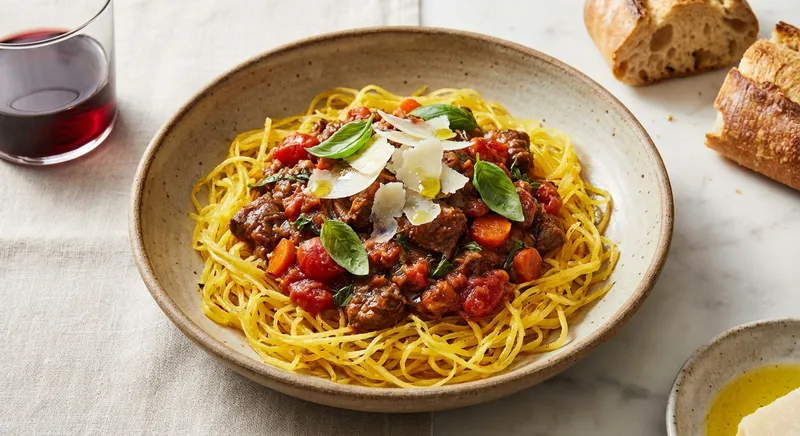
A rustic, Italian-inspired lamb ragu braised in tomatoes and aromatic soffritto, spooned over tender roasted spaghetti squash strands. The lamb’s rich, savory flavor is balanced by bright tomatoes, sweet carrot and onion, and a hint of red pepper heat — a restaurant-quality, lower-carb alternative to pasta that feels both comforting and elegant.
Preheat the oven to 400°F (200°C). Prepare the spaghetti squash by halving it lengthwise and scooping out the seeds. Drizzle the cut sides with 1 tablespoon olive oil and a pinch of salt and pepper, then place cut-side down on a baking sheet lined with parchment. Roast for 30–40 minutes until the flesh is easily pierced with a fork and begins to separate into strands. Roasting concentrates flavor and dries the flesh slightly so it mimics pasta texture—do not over-roast or it will become mushy.
While the squash roasts, make the soffritto (the flavor base). Heat a wide, heavy-bottomed skillet or sauté pan over medium heat and add the remaining 1 tablespoon olive oil. Once shimmering, add the diced onion, carrot and celery. Cook gently for 6–8 minutes until soft and translucent. Sweating these vegetables slowly releases their sugars and builds the sweet, savory foundation for the ragu—high heat would brown too quickly and lose the delicate balance.
Add the minced garlic, dried oregano and red pepper flakes to the softened vegetables and cook for 30–45 seconds, stirring. Toasting the dried oregano and red pepper briefly in oil blooms their aromatics so the sauce has more depth; garlic should be added later and watched closely to avoid burning and bitterness.
Increase heat to medium-high and add the ground lamb to the pan. Break it into small pieces with a wooden spoon and spread it into an even layer. Let it brown for 2–3 minutes undisturbed, then continue to break and brown. Browning (the Maillard reaction) develops complex, meaty flavors—don’t rush this step; you want golden bits on the lamb, not gray steamed meat.
Season with 1 teaspoon of the kosher salt and the 1/2 teaspoon black pepper while the lamb browns. Once the lamb is mostly browned and any liquid has reduced, add the crushed tomatoes. Stir to combine, scraping up any browned bits from the bottom of the pan—those bits carry a lot of flavor into the sauce.
Bring the ragu to a gentle simmer, then lower the heat so the sauce is barely bubbling. Partially cover the pan and simmer for 20–25 minutes, stirring occasionally. This low, patient simmer lets the tomato and lamb flavors meld and the sauce reduce to a thicker, silkier consistency. Taste and adjust seasoning—add the remaining 1/2 teaspoon salt if needed.
When the squash is done and cool enough to handle, use a fork to scrape the flesh into spaghetti-like strands directly onto a rimmed platter or into bowls. Toss lightly with a small drizzle (½ tablespoon) of olive oil and a pinch of salt to keep the strands separate and flavorful. Tossing with oil prevents the squash from collapsing and adds mouthfeel similar to pasta tossed with a little olive oil.
Spoon the lamb ragu over the roasted squash strands. Finish each serving with a sprinkle of chopped parsley and a tablespoon of grated Pecorino Romano or Parmesan if using. The salty cheese brightens and balances the rich meat and tomato flavors while parsley adds freshness.
Serve immediately while hot. Leftovers: store sauce and squash separately in airtight containers in the refrigerator for up to 3 days; reheat gently on the stovetop (sauce) and in a low oven or microwave (squash) to avoid turning the squash mushy.
500
Calories
35g
Protein
20g
Carbs
34g
Fat
5g
Fiber
How did this recipe turn out? Let others know!
to rate this recipe
By abbey f
A rustic, Italian-inspired lamb ragu braised in tomatoes and aromatic soffritto, spooned over tender roasted spaghetti squash strands. The lamb’s rich, savory flavor is balanced by bright tomatoes, sweet carrot and onion, and a hint of red pepper heat — a restaurant-quality, lower-carb alternative to pasta that feels both comforting and elegant.
Preheat the oven to 400°F (200°C). Prepare the spaghetti squash by halving it lengthwise and scooping out the seeds. Drizzle the cut sides with 1 tablespoon olive oil and a pinch of salt and pepper, then place cut-side down on a baking sheet lined with parchment. Roast for 30–40 minutes until the flesh is easily pierced with a fork and begins to separate into strands. Roasting concentrates flavor and dries the flesh slightly so it mimics pasta texture—do not over-roast or it will become mushy.
While the squash roasts, make the soffritto (the flavor base). Heat a wide, heavy-bottomed skillet or sauté pan over medium heat and add the remaining 1 tablespoon olive oil. Once shimmering, add the diced onion, carrot and celery. Cook gently for 6–8 minutes until soft and translucent. Sweating these vegetables slowly releases their sugars and builds the sweet, savory foundation for the ragu—high heat would brown too quickly and lose the delicate balance.
Add the minced garlic, dried oregano and red pepper flakes to the softened vegetables and cook for 30–45 seconds, stirring. Toasting the dried oregano and red pepper briefly in oil blooms their aromatics so the sauce has more depth; garlic should be added later and watched closely to avoid burning and bitterness.
Increase heat to medium-high and add the ground lamb to the pan. Break it into small pieces with a wooden spoon and spread it into an even layer. Let it brown for 2–3 minutes undisturbed, then continue to break and brown. Browning (the Maillard reaction) develops complex, meaty flavors—don’t rush this step; you want golden bits on the lamb, not gray steamed meat.
Season with 1 teaspoon of the kosher salt and the 1/2 teaspoon black pepper while the lamb browns. Once the lamb is mostly browned and any liquid has reduced, add the crushed tomatoes. Stir to combine, scraping up any browned bits from the bottom of the pan—those bits carry a lot of flavor into the sauce.
Bring the ragu to a gentle simmer, then lower the heat so the sauce is barely bubbling. Partially cover the pan and simmer for 20–25 minutes, stirring occasionally. This low, patient simmer lets the tomato and lamb flavors meld and the sauce reduce to a thicker, silkier consistency. Taste and adjust seasoning—add the remaining 1/2 teaspoon salt if needed.
When the squash is done and cool enough to handle, use a fork to scrape the flesh into spaghetti-like strands directly onto a rimmed platter or into bowls. Toss lightly with a small drizzle (½ tablespoon) of olive oil and a pinch of salt to keep the strands separate and flavorful. Tossing with oil prevents the squash from collapsing and adds mouthfeel similar to pasta tossed with a little olive oil.
Spoon the lamb ragu over the roasted squash strands. Finish each serving with a sprinkle of chopped parsley and a tablespoon of grated Pecorino Romano or Parmesan if using. The salty cheese brightens and balances the rich meat and tomato flavors while parsley adds freshness.
Serve immediately while hot. Leftovers: store sauce and squash separately in airtight containers in the refrigerator for up to 3 days; reheat gently on the stovetop (sauce) and in a low oven or microwave (squash) to avoid turning the squash mushy.
500
Calories
35g
Protein
20g
Carbs
34g
Fat
5g
Fiber
Your Rating:
