By abbey f
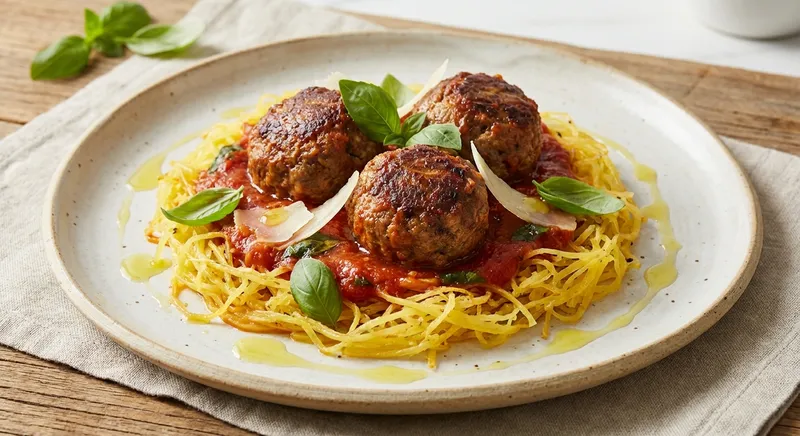
Juicy, herb‑bright meatballs made from beef and pork simmered in a fragrant crushed‑tomato and fresh‑basil sauce, served over tender strands of spaghetti squash for a light yet deeply satisfying Italian‑inspired paleo meal. The meatballs have a crisp sear that locks in juices while the gentle tomato simmer keeps them silky; the squash provides a delicate, slightly sweet bed that soaks up the sauce.
Bring all ingredients to room temperature for 10–15 minutes before forming meatballs (if meat was refrigerated). This helps the meat bind more evenly and makes shaping easier.
In a medium bowl combine the ground beef (200 g) and ground pork (50 g) with 3 tbsp almond flour, the finely minced 2 cloves garlic, 1/2 tsp salt, and 1/4–1/2 tsp freshly ground black pepper. Mix gently with your hands or a fork just until combined — do not overwork. Why: overmixing tightens the proteins and yields dense meatballs; a light touch keeps them tender and juicy.
Portion the mixture into 8 evenly sized meatballs (about 40–45 g each). Wet your hands lightly between portions if the mixture sticks; smoothing them into compact rounds helps them brown evenly. Why: even sizing ensures uniform cooking so all meatballs finish at the same time.
Heat a large sauté pan over medium‑high heat and add 1 tbsp olive oil. When the oil shimmers and is hot but not smoking (about 1 minute), add the meatballs in a single layer leaving space between each. Brown on the first side without moving them for 2–3 minutes to develop a golden crust. Why: searing creates Maillard crusts that lock in flavor and juices and adds a caramelized savory note to the finished dish.
Turn meatballs carefully to brown all sides — about 6–8 minutes total to get a good color. They will still be slightly undercooked inside; we will finish them in the sauce. Remove browned meatballs to a plate and tent loosely with foil. Why: finishing in sauce prevents overbrowning and allows the meatballs to steam gently, keeping them moist.
Lower the heat to medium and add the remaining minced garlic (if not already mixed in—this recipe included the garlic in the meat; if you prefer more garlic, add another clove now) to the pan for 20–30 seconds, stirring. Why: quick sauté of garlic releases its aromatic oils; don’t let it brown or it will become bitter.
Pour 1 cup (240 ml) crushed tomatoes into the pan and use a wooden spoon to scrape up any browned bits (fond) from the bottom. Add 1/2 tsp salt and a few grinds of pepper, then bring the sauce to a gentle simmer. Why: the fond contains concentrated flavor; deglazing with tomatoes builds a deep sauce base.
Nestle the browned meatballs back into the simmering tomato sauce, cover the pan partially, and reduce heat to low. Simmer gently for 12–15 minutes, turning the meatballs once halfway through. Why: simmering at low heat finishes the meat gently, allowing starches and proteins to relax and absorb sauce flavors without becoming tough.
Stir in the chopped fresh basil (reserve some leaves for garnish) about 1–2 minutes before you finish cooking so the herb retains its bright flavor and color. Taste the sauce and adjust seasoning with additional salt and pepper as needed. Why: adding fresh basil at the end preserves its aroma and prevents it from losing vibrancy through long cooking.
Warm the cooked spaghetti squash (2 cups) briefly: either in a microwave for 1–2 minutes or in a skillet over medium heat with a drizzle of olive oil to reheat and dry off any excess moisture. Season squash lightly with a pinch of salt and pepper. Why: warming the squash and removing surface moisture helps the sauce cling to the strands rather than diluting it.
To serve, divide the spaghetti squash between two shallow bowls, spoon 4–5 meatballs and plenty of tomato‑basil sauce over each portion, and finish with a drizzle of olive oil and torn basil leaves for freshness. Why: plating this way lets the squash soak up the sauce and makes a visually appealing composition—meatballs perched on a bright nest of squash strands.
If making ahead: cool the meatballs and sauce separately, then refrigerate up to 2 days, or freeze. Reheat gently over low heat to avoid breaking the meatballs.
532
Calories
27g
Protein
19g
Carbs
40g
Fat
5g
Fiber
How did this recipe turn out? Let others know!
to rate this recipe
By abbey f
Juicy, herb‑bright meatballs made from beef and pork simmered in a fragrant crushed‑tomato and fresh‑basil sauce, served over tender strands of spaghetti squash for a light yet deeply satisfying Italian‑inspired paleo meal. The meatballs have a crisp sear that locks in juices while the gentle tomato simmer keeps them silky; the squash provides a delicate, slightly sweet bed that soaks up the sauce.
Bring all ingredients to room temperature for 10–15 minutes before forming meatballs (if meat was refrigerated). This helps the meat bind more evenly and makes shaping easier.
In a medium bowl combine the ground beef (200 g) and ground pork (50 g) with 3 tbsp almond flour, the finely minced 2 cloves garlic, 1/2 tsp salt, and 1/4–1/2 tsp freshly ground black pepper. Mix gently with your hands or a fork just until combined — do not overwork. Why: overmixing tightens the proteins and yields dense meatballs; a light touch keeps them tender and juicy.
Portion the mixture into 8 evenly sized meatballs (about 40–45 g each). Wet your hands lightly between portions if the mixture sticks; smoothing them into compact rounds helps them brown evenly. Why: even sizing ensures uniform cooking so all meatballs finish at the same time.
Heat a large sauté pan over medium‑high heat and add 1 tbsp olive oil. When the oil shimmers and is hot but not smoking (about 1 minute), add the meatballs in a single layer leaving space between each. Brown on the first side without moving them for 2–3 minutes to develop a golden crust. Why: searing creates Maillard crusts that lock in flavor and juices and adds a caramelized savory note to the finished dish.
Turn meatballs carefully to brown all sides — about 6–8 minutes total to get a good color. They will still be slightly undercooked inside; we will finish them in the sauce. Remove browned meatballs to a plate and tent loosely with foil. Why: finishing in sauce prevents overbrowning and allows the meatballs to steam gently, keeping them moist.
Lower the heat to medium and add the remaining minced garlic (if not already mixed in—this recipe included the garlic in the meat; if you prefer more garlic, add another clove now) to the pan for 20–30 seconds, stirring. Why: quick sauté of garlic releases its aromatic oils; don’t let it brown or it will become bitter.
Pour 1 cup (240 ml) crushed tomatoes into the pan and use a wooden spoon to scrape up any browned bits (fond) from the bottom. Add 1/2 tsp salt and a few grinds of pepper, then bring the sauce to a gentle simmer. Why: the fond contains concentrated flavor; deglazing with tomatoes builds a deep sauce base.
Nestle the browned meatballs back into the simmering tomato sauce, cover the pan partially, and reduce heat to low. Simmer gently for 12–15 minutes, turning the meatballs once halfway through. Why: simmering at low heat finishes the meat gently, allowing starches and proteins to relax and absorb sauce flavors without becoming tough.
Stir in the chopped fresh basil (reserve some leaves for garnish) about 1–2 minutes before you finish cooking so the herb retains its bright flavor and color. Taste the sauce and adjust seasoning with additional salt and pepper as needed. Why: adding fresh basil at the end preserves its aroma and prevents it from losing vibrancy through long cooking.
Warm the cooked spaghetti squash (2 cups) briefly: either in a microwave for 1–2 minutes or in a skillet over medium heat with a drizzle of olive oil to reheat and dry off any excess moisture. Season squash lightly with a pinch of salt and pepper. Why: warming the squash and removing surface moisture helps the sauce cling to the strands rather than diluting it.
To serve, divide the spaghetti squash between two shallow bowls, spoon 4–5 meatballs and plenty of tomato‑basil sauce over each portion, and finish with a drizzle of olive oil and torn basil leaves for freshness. Why: plating this way lets the squash soak up the sauce and makes a visually appealing composition—meatballs perched on a bright nest of squash strands.
If making ahead: cool the meatballs and sauce separately, then refrigerate up to 2 days, or freeze. Reheat gently over low heat to avoid breaking the meatballs.
532
Calories
27g
Protein
19g
Carbs
40g
Fat
5g
Fiber
Your Rating:
