By Chef
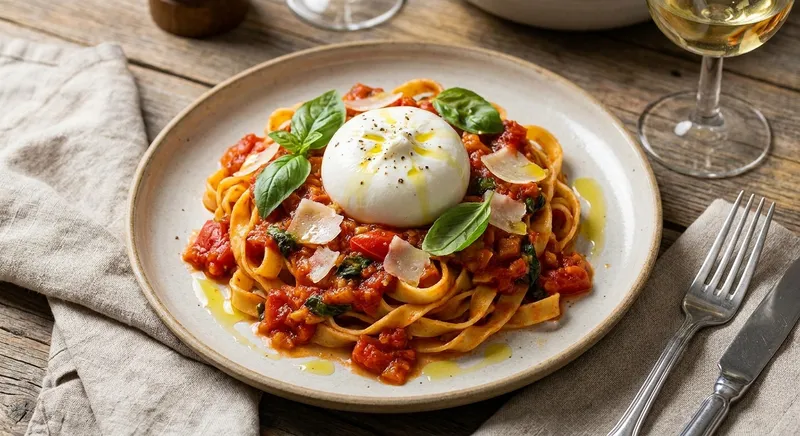
A bright, slow-simmered marinara tossed with al dente pasta — simple ingredients transformed into a restaurant-quality plate. The sauce balances rich roasted tomato sweetness, garlic and onion depth, and a glossy finish of butter and olive oil; fresh basil and a shower of Parmesan add aromatic lift and savory richness.
Bring a large pot of water to a rolling boil and salt it generously (about 1 tbsp salt for 4-5 liters/quarts). Salted water seasons the pasta from the inside as it cooks; it should taste like the sea.
While the water comes to a boil, prepare the tomatoes: pour the canned tomatoes into a bowl and crush them lightly with your hands or a potato masher. Leaving some texture gives the sauce a rustic, restaurant-style mouthfeel — don’t purée unless you want a completely smooth sauce.
Heat a large sauté pan or shallow pot over medium heat. Add 3 tbsp olive oil. When the oil shimmers (not smoking), add the diced onion. Cook 6–8 minutes until translucent and just beginning to brown at the edges. Sweating the onion slowly releases its sugars and builds a sweet, aromatic base for the tomato sauce.
Add minced garlic and cook 30–45 seconds, stirring. Garlic cooks quickly — you want it fragrant but not browned, which would introduce bitterness.
Stir in the tomato paste and cook 1–2 minutes, stirring constantly. Toasting the paste in oil blooms the concentrated tomato flavor and removes the raw edge, deepening the sauce’s umami.
Add the crushed canned tomatoes, dried oregano, red pepper flakes (if using), and sugar. Stir to combine and bring to a gentle simmer. The sugar is optional; it tames overly acidic tomatoes but won’t make the sauce noticeably sweet when used sparingly.
Lower the heat and simmer gently, uncovered, for 18–22 minutes, stirring occasionally. Simmering reduces and concentrates flavors; leaving the pan partially uncovered lets steam escape so the sauce thickens without needing added thickeners.
Taste and season with 1–1 1/2 tsp salt (adjust to your canned tomatoes and preference) and freshly ground black pepper. Add a splash (1 tsp) of red wine vinegar if the tomatoes need brightening — acidity balances sweetness and enhances overall flavor.
About 10 minutes into the sauce’s simmer, add the dry pasta to the boiling water and cook until very al dente — 1–2 minutes less than package directions. Pasta finished a little undercooked (al dente+) will finish cooking in the sauce and absorb flavor without becoming mushy.
When the pasta is 2 minutes from done, reserve 1/2 cup of the starchy cooking water and drain the pasta. The starchy water will help bind the sauce to the pasta, creating a silky emulsion.
Off the heat, add the drained pasta to the sauce pan with the marinara. Add the reserved pasta water gradually, tossing the pasta with tongs or a fork. Add 1 tbsp butter and half the torn basil. Toss for 1–2 minutes until the sauce clings to the noodles and becomes glossy. The butter enriches the sauce and the pasta water helps form an emulsion so the sauce adheres to every strand.
Plate immediately and finish with the remaining basil and a generous grating of Parmesan. A final high-quality olive oil drizzle is optional. Serve hot.
513
Calories
16g
Protein
78g
Carbs
16g
Fat
6g
Fiber
How did this recipe turn out? Let others know!
to rate this recipe
By Chef
A bright, slow-simmered marinara tossed with al dente pasta — simple ingredients transformed into a restaurant-quality plate. The sauce balances rich roasted tomato sweetness, garlic and onion depth, and a glossy finish of butter and olive oil; fresh basil and a shower of Parmesan add aromatic lift and savory richness.
Bring a large pot of water to a rolling boil and salt it generously (about 1 tbsp salt for 4-5 liters/quarts). Salted water seasons the pasta from the inside as it cooks; it should taste like the sea.
While the water comes to a boil, prepare the tomatoes: pour the canned tomatoes into a bowl and crush them lightly with your hands or a potato masher. Leaving some texture gives the sauce a rustic, restaurant-style mouthfeel — don’t purée unless you want a completely smooth sauce.
Heat a large sauté pan or shallow pot over medium heat. Add 3 tbsp olive oil. When the oil shimmers (not smoking), add the diced onion. Cook 6–8 minutes until translucent and just beginning to brown at the edges. Sweating the onion slowly releases its sugars and builds a sweet, aromatic base for the tomato sauce.
Add minced garlic and cook 30–45 seconds, stirring. Garlic cooks quickly — you want it fragrant but not browned, which would introduce bitterness.
Stir in the tomato paste and cook 1–2 minutes, stirring constantly. Toasting the paste in oil blooms the concentrated tomato flavor and removes the raw edge, deepening the sauce’s umami.
Add the crushed canned tomatoes, dried oregano, red pepper flakes (if using), and sugar. Stir to combine and bring to a gentle simmer. The sugar is optional; it tames overly acidic tomatoes but won’t make the sauce noticeably sweet when used sparingly.
Lower the heat and simmer gently, uncovered, for 18–22 minutes, stirring occasionally. Simmering reduces and concentrates flavors; leaving the pan partially uncovered lets steam escape so the sauce thickens without needing added thickeners.
Taste and season with 1–1 1/2 tsp salt (adjust to your canned tomatoes and preference) and freshly ground black pepper. Add a splash (1 tsp) of red wine vinegar if the tomatoes need brightening — acidity balances sweetness and enhances overall flavor.
About 10 minutes into the sauce’s simmer, add the dry pasta to the boiling water and cook until very al dente — 1–2 minutes less than package directions. Pasta finished a little undercooked (al dente+) will finish cooking in the sauce and absorb flavor without becoming mushy.
When the pasta is 2 minutes from done, reserve 1/2 cup of the starchy cooking water and drain the pasta. The starchy water will help bind the sauce to the pasta, creating a silky emulsion.
Off the heat, add the drained pasta to the sauce pan with the marinara. Add the reserved pasta water gradually, tossing the pasta with tongs or a fork. Add 1 tbsp butter and half the torn basil. Toss for 1–2 minutes until the sauce clings to the noodles and becomes glossy. The butter enriches the sauce and the pasta water helps form an emulsion so the sauce adheres to every strand.
Plate immediately and finish with the remaining basil and a generous grating of Parmesan. A final high-quality olive oil drizzle is optional. Serve hot.
513
Calories
16g
Protein
78g
Carbs
16g
Fat
6g
Fiber
Your Rating:
