By emensah m
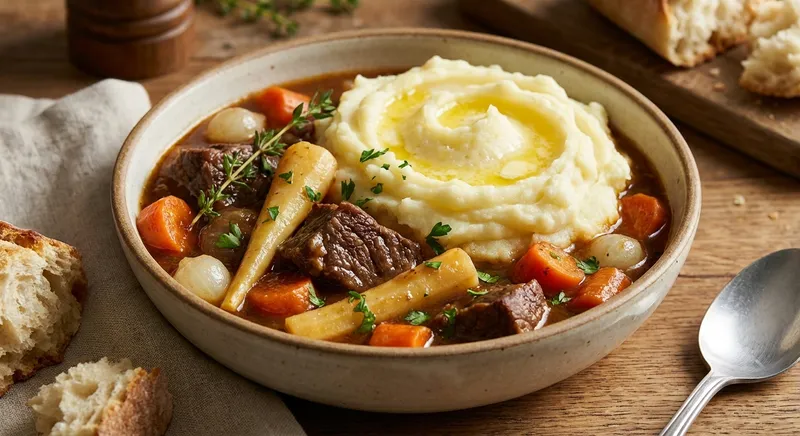
A cozy, restaurant-quality stew that pairs tender braised beef and caramelized root vegetables with silky, butter-rich mashed potatoes. Bright tomato paste and fresh thyme deepen the savory braise while the buttery mash soaks up every drop — comfort food elevated with classic braising techniques.
Bring the potatoes to a simmer: Place the peeled and quartered potatoes in a pot and cover with cold water by 1 inch. Add 1 teaspoon salt. Start with cold water so the potato edges and centers heat evenly and finish at the same time, preventing mealy, grainy mash. Bring to a gentle boil and simmer while you begin the stew.
Pat the beef dry and season: Thoroughly pat the beef cubes dry with paper towels (moisture inhibits browning). Season evenly with 1/2 teaspoon kosher salt and 1/4 teaspoon black pepper. Dry seasoning and good contact with hot fat creates the Maillard crust that adds deep, savory flavor to the finished stew.
Brown the beef in two batches: Heat 1 tablespoon of olive oil + 1 tablespoon of butter in a heavy Dutch oven or heavy-bottomed pan over medium-high heat until shimmering. Add half the beef in a single layer and let it sear undisturbed for 1½–2 minutes until a deep brown crust forms, then turn to brown the other sides (browning builds complex flavor). Remove to a plate and repeat with the remaining beef, adding the remaining tablespoon of oil if needed.
Sweat the aromatics: Reduce heat to medium, add the diced onion, sliced celery and carrots to the pot (add a touch more oil if pan is dry). Sweat for 6–8 minutes until the onion is translucent and the vegetables begin to color. Sweating builds sweetness; the light browning on vegetables contributes depth to the braise.
Bloom the tomato paste: Push the vegetables to one side, add the tablespoon of tomato paste and cook, stirring, for 30–45 seconds. Toasting the paste in fat caramelizes its natural sugars and removes raw acidity, enriching the stew’s body and color.
Deglaze and assemble the braise: Pour in about 1/2 cup of the beef broth and stir, scraping the brown bits (fond) from the bottom — those bits are pure flavor. Return the browned beef and any accumulated juices to the pot, then add the remaining broth and tuck in the thyme sprigs. The liquid should come about two-thirds up the beef and vegetables; this allows some surface evaporation to concentrate flavors while still braising gently.
Simmer slowly: Bring to a gentle simmer, then lower the heat to maintain a very gentle simmer (or cover and transfer to a 325°F / 160°C oven). Cook for 1 to 1¼ hours until the beef is fork-tender. Slow, gentle cooking breaks down connective tissue without drying the meat, creating meltingly tender beef and a silky broth.
Finish and adjust seasoning: Once the beef is tender, remove thyme stems, taste the braise and adjust salt and pepper. If you want a slightly thicker sauce, lift out about 1/2 cup of braising liquid, whisk in 1 teaspoon cornstarch (optional), then stir it back into the pot and simmer for 2–3 minutes to thicken. Always finish the sauce—temperature and evaporation alter seasoning, so final tasting is essential.
Mash the potatoes while the stew rests: Drain the cooked potatoes when fork-tender (about 15–18 minutes from simmer). Return to the warm pot off the heat to let excess moisture steam off for a minute. Add 1 tablespoon butter, warmed milk, and mash to your desired texture. Adding butter and warm milk at the end yields silkier, creamier mash — avoid overworking starchy potatoes which make them gluey.
Plate and serve: Spoon a generous scoop of mashed potatoes onto each plate, ladle the beef and root vegetable stew over or beside the mash, and spoon some glossy braising jus on top. Finish with a grind of black pepper and chopped parsley for brightness. The mash acts as a sponge for the concentrated braising liquid — that union is the point of this classic pairing.
686
Calories
27g
Protein
68g
Carbs
35g
Fat
11g
Fiber
How did this recipe turn out? Let others know!
to rate this recipe
By emensah m
A cozy, restaurant-quality stew that pairs tender braised beef and caramelized root vegetables with silky, butter-rich mashed potatoes. Bright tomato paste and fresh thyme deepen the savory braise while the buttery mash soaks up every drop — comfort food elevated with classic braising techniques.
Bring the potatoes to a simmer: Place the peeled and quartered potatoes in a pot and cover with cold water by 1 inch. Add 1 teaspoon salt. Start with cold water so the potato edges and centers heat evenly and finish at the same time, preventing mealy, grainy mash. Bring to a gentle boil and simmer while you begin the stew.
Pat the beef dry and season: Thoroughly pat the beef cubes dry with paper towels (moisture inhibits browning). Season evenly with 1/2 teaspoon kosher salt and 1/4 teaspoon black pepper. Dry seasoning and good contact with hot fat creates the Maillard crust that adds deep, savory flavor to the finished stew.
Brown the beef in two batches: Heat 1 tablespoon of olive oil + 1 tablespoon of butter in a heavy Dutch oven or heavy-bottomed pan over medium-high heat until shimmering. Add half the beef in a single layer and let it sear undisturbed for 1½–2 minutes until a deep brown crust forms, then turn to brown the other sides (browning builds complex flavor). Remove to a plate and repeat with the remaining beef, adding the remaining tablespoon of oil if needed.
Sweat the aromatics: Reduce heat to medium, add the diced onion, sliced celery and carrots to the pot (add a touch more oil if pan is dry). Sweat for 6–8 minutes until the onion is translucent and the vegetables begin to color. Sweating builds sweetness; the light browning on vegetables contributes depth to the braise.
Bloom the tomato paste: Push the vegetables to one side, add the tablespoon of tomato paste and cook, stirring, for 30–45 seconds. Toasting the paste in fat caramelizes its natural sugars and removes raw acidity, enriching the stew’s body and color.
Deglaze and assemble the braise: Pour in about 1/2 cup of the beef broth and stir, scraping the brown bits (fond) from the bottom — those bits are pure flavor. Return the browned beef and any accumulated juices to the pot, then add the remaining broth and tuck in the thyme sprigs. The liquid should come about two-thirds up the beef and vegetables; this allows some surface evaporation to concentrate flavors while still braising gently.
Simmer slowly: Bring to a gentle simmer, then lower the heat to maintain a very gentle simmer (or cover and transfer to a 325°F / 160°C oven). Cook for 1 to 1¼ hours until the beef is fork-tender. Slow, gentle cooking breaks down connective tissue without drying the meat, creating meltingly tender beef and a silky broth.
Finish and adjust seasoning: Once the beef is tender, remove thyme stems, taste the braise and adjust salt and pepper. If you want a slightly thicker sauce, lift out about 1/2 cup of braising liquid, whisk in 1 teaspoon cornstarch (optional), then stir it back into the pot and simmer for 2–3 minutes to thicken. Always finish the sauce—temperature and evaporation alter seasoning, so final tasting is essential.
Mash the potatoes while the stew rests: Drain the cooked potatoes when fork-tender (about 15–18 minutes from simmer). Return to the warm pot off the heat to let excess moisture steam off for a minute. Add 1 tablespoon butter, warmed milk, and mash to your desired texture. Adding butter and warm milk at the end yields silkier, creamier mash — avoid overworking starchy potatoes which make them gluey.
Plate and serve: Spoon a generous scoop of mashed potatoes onto each plate, ladle the beef and root vegetable stew over or beside the mash, and spoon some glossy braising jus on top. Finish with a grind of black pepper and chopped parsley for brightness. The mash acts as a sponge for the concentrated braising liquid — that union is the point of this classic pairing.
686
Calories
27g
Protein
68g
Carbs
35g
Fat
11g
Fiber
Your Rating:
