By abbey f
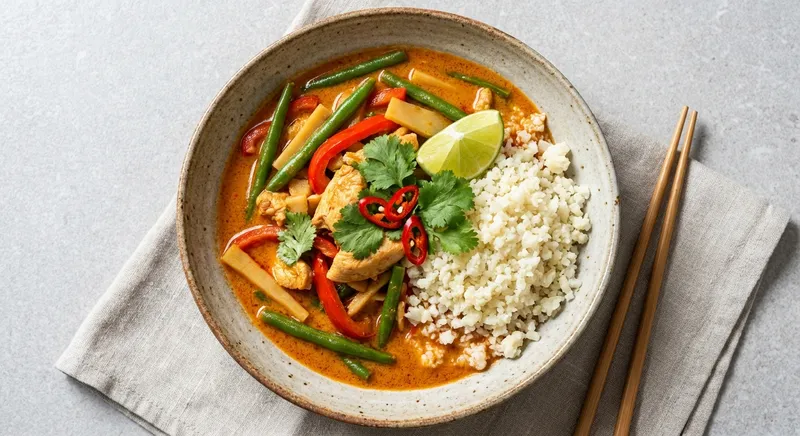
Silky, fragrant red curry coats tender pieces of chicken and bright, crisp vegetables, finished with aromatic basil (or cilantro) and a splash of lime. Served over fluffy cauliflower rice, this low-carb Thai-inspired dish balances rich coconut creaminess, warm chile-spice from the red curry paste, and lively citrus — a restaurant-quality weeknight curry that feels special but comes together quickly.
Prep everything first: chop the chicken into even 2–3 cm pieces, slice the onion, bell peppers and zucchini, mince the garlic, and measure the curry paste and coconut milk. Mise en place speeds the cooking — red curry cooks quickly and you don't want ingredients waiting while the sauce reduces.
Warm a large heavy skillet or wok over medium-high heat and add the coconut oil. Swirl to coat. Heating the pan first ensures the oil is hot enough to gently sizzle aromatics rather than steam them.
Add the sliced onion and a pinch of salt; sauté 2–3 minutes until translucent and slightly softened. Add the minced garlic and sauté 20–30 seconds until fragrant. Softening the onion first builds sweetness and depth; garlic burns quickly, so add it later and watch it closely.
Push the aromatics to one side of the pan and add the red curry paste. Cook the paste 30–45 seconds, stirring constantly, until it becomes aromatic and slightly darker. This 'blooming' step releases the paste's essential oils and intensifies the curry flavor — raw paste tastes flat compared with toasted paste.
Add the chopped chicken in a single layer and sear 2 minutes without moving, then stir and cook 1–2 more minutes until the exterior turns opaque. You're not trying to fully cook the chicken here — just to seal in juices and add a touch of browned flavor before simmering in coconut milk.
Pour in the coconut milk, stir to combine with the curry paste and scrape any browned bits from the bottom of the pan. Bring to a gentle simmer (small bubbles) — avoid a rolling boil which can break the coconut milk and make the sauce grainy. Simmer 5 minutes to allow the chicken to finish cooking and to let the flavors marry.
Add the bell peppers and zucchini, then simmer 3–4 minutes more until vegetables are tender-crisp. These quick-simmered vegetables keep color, texture, and freshness; overcooking would make them soft and muddy.
Season the curry with 1 tsp salt (or to taste) and freshly ground black pepper. Squeeze in the lime juice and stir in most of the chopped basil (reserve a little for garnish). Balancing with acid brightens the rich coconut and rounds the curry flavors.
While the curry finishes, warm another large nonstick skillet over medium-high heat and add the cauliflower rice (no oil needed if using a nonstick pan, otherwise 1 tsp oil). Sauté 4–6 minutes until just tender and any frozen moisture has evaporated. Season lightly with salt and a squeeze of lime if you like. Cooking cauliflower rice briefly preserves its light texture so it mimics steamed rice without becoming mushy.
Taste and adjust: add a pinch more salt or a dash more lime if it needs brightness. Serve the curry spooned over cauliflower rice and finish with the remaining fresh basil (or cilantro) and optional lime wedges. A final fresh herb garnish adds fragrance and color that makes the dish look, and taste, finished.
492
Calories
37g
Protein
19g
Carbs
32g
Fat
4g
Fiber
How did this recipe turn out? Let others know!
to rate this recipe
By abbey f
Silky, fragrant red curry coats tender pieces of chicken and bright, crisp vegetables, finished with aromatic basil (or cilantro) and a splash of lime. Served over fluffy cauliflower rice, this low-carb Thai-inspired dish balances rich coconut creaminess, warm chile-spice from the red curry paste, and lively citrus — a restaurant-quality weeknight curry that feels special but comes together quickly.
Prep everything first: chop the chicken into even 2–3 cm pieces, slice the onion, bell peppers and zucchini, mince the garlic, and measure the curry paste and coconut milk. Mise en place speeds the cooking — red curry cooks quickly and you don't want ingredients waiting while the sauce reduces.
Warm a large heavy skillet or wok over medium-high heat and add the coconut oil. Swirl to coat. Heating the pan first ensures the oil is hot enough to gently sizzle aromatics rather than steam them.
Add the sliced onion and a pinch of salt; sauté 2–3 minutes until translucent and slightly softened. Add the minced garlic and sauté 20–30 seconds until fragrant. Softening the onion first builds sweetness and depth; garlic burns quickly, so add it later and watch it closely.
Push the aromatics to one side of the pan and add the red curry paste. Cook the paste 30–45 seconds, stirring constantly, until it becomes aromatic and slightly darker. This 'blooming' step releases the paste's essential oils and intensifies the curry flavor — raw paste tastes flat compared with toasted paste.
Add the chopped chicken in a single layer and sear 2 minutes without moving, then stir and cook 1–2 more minutes until the exterior turns opaque. You're not trying to fully cook the chicken here — just to seal in juices and add a touch of browned flavor before simmering in coconut milk.
Pour in the coconut milk, stir to combine with the curry paste and scrape any browned bits from the bottom of the pan. Bring to a gentle simmer (small bubbles) — avoid a rolling boil which can break the coconut milk and make the sauce grainy. Simmer 5 minutes to allow the chicken to finish cooking and to let the flavors marry.
Add the bell peppers and zucchini, then simmer 3–4 minutes more until vegetables are tender-crisp. These quick-simmered vegetables keep color, texture, and freshness; overcooking would make them soft and muddy.
Season the curry with 1 tsp salt (or to taste) and freshly ground black pepper. Squeeze in the lime juice and stir in most of the chopped basil (reserve a little for garnish). Balancing with acid brightens the rich coconut and rounds the curry flavors.
While the curry finishes, warm another large nonstick skillet over medium-high heat and add the cauliflower rice (no oil needed if using a nonstick pan, otherwise 1 tsp oil). Sauté 4–6 minutes until just tender and any frozen moisture has evaporated. Season lightly with salt and a squeeze of lime if you like. Cooking cauliflower rice briefly preserves its light texture so it mimics steamed rice without becoming mushy.
Taste and adjust: add a pinch more salt or a dash more lime if it needs brightness. Serve the curry spooned over cauliflower rice and finish with the remaining fresh basil (or cilantro) and optional lime wedges. A final fresh herb garnish adds fragrance and color that makes the dish look, and taste, finished.
492
Calories
37g
Protein
19g
Carbs
32g
Fat
4g
Fiber
Your Rating:
