By abbey f
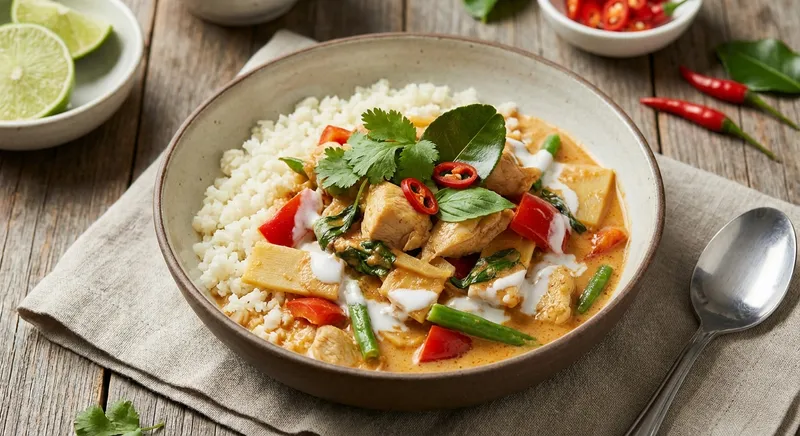
Silky, fragrant red coconut curry with tender chicken and crisp mixed vegetables served over light, garlicky cauliflower rice. Bright Thai aromatics and creamy coconut milk balance the heat of red curry paste while fresh basil or cilantro adds a finishing lift — restaurant-quality comfort that’s naturally gluten- and dairy-free.
Prep the ingredients: Pat the chicken dry and cut into 2–3 cm bite-size pieces so they cook quickly and evenly. Slice the onion thin, mince the garlic, and roughly chop the basil or cilantro. Cut the mixed vegetables into bite-size pieces (thin strips for bell pepper and diagonals for snap peas). Rice the cauliflower: pulse florets in a food processor in 1–2 second bursts until it resembles rice (or grate on a box grater). Dry the riced cauliflower well with a clean kitchen towel — removing moisture helps it sauté rather than steam, producing a firmer, more rice-like texture.
Warm the pan and bloom aromatics: Heat 1 tablespoon coconut oil in a large, heavy skillet or wok over medium-high heat until shimmering. Add the sliced onion and sauté 2–3 minutes until translucent to build sweetness and a flavor base; add the garlic and cook 30 seconds more to release the garlic oils. Blooming the aromatics in oil concentrates their flavor and forms the backbone of the curry.
Brown the chicken briefly: Push the aromatics to the side, add the chicken pieces in a single layer (don’t overcrowd — do this in batches if needed). Sear 2–3 minutes per side until lightly golden but not fully cooked through. Searing at higher heat creates Maillard flavor (those browned bits) which deepens the curry’s taste.
Toast the curry paste: Push the chicken and aromatics to the center, reduce heat to medium, add the remaining 1 tablespoon coconut oil and the 2 tablespoons red curry paste. Stir and cook for 30–45 seconds to bloom the paste — this releases the essential oils in the chilies and aromatics and prevents a raw, pasty taste. If the paste sticks, add a tablespoon of coconut milk to loosen it.
Add coconut milk and simmer: Pour in the remaining coconut milk and stir to combine, scraping up the browned bits from the pan (those bits carry concentrated flavor). Add 1 tablespoon soy sauce and 1 teaspoon sugar to balance and season. Increase heat to bring the sauce to a gentle simmer, then reduce to medium-low. Simmer 6–8 minutes to allow the flavors to meld and the sauce to slightly thicken — coconut milk reduces and becomes silkier, coating the chicken and vegetables.
Finish the chicken and vegetables: Add the partially cooked chicken back (if you cooked in batches) and the mixed vegetables. Simmer 4–6 minutes until the chicken is cooked through (internal temp 74°C/165°F for breast) and the vegetables are tender-crisp. Adding vegetables late keeps them vibrant in color and texture — you want crunch and contrast against the creamy curry.
Taste and adjust seasonings: Season with salt and freshly ground pepper to taste. If the curry needs brightness, stir in a teaspoon more sugar or a splash of soy to adjust balance. Remove from heat and stir in half of the chopped basil/cilantro to preserve freshness.
Make the cauliflower rice: While the curry simmers, heat a separate large skillet over medium-high heat. Add a light spray or 1 teaspoon coconut oil and the riced cauliflower. Sauté 4–6 minutes, stirring frequently, until the cauliflower is tender and slightly golden. Season with salt, pepper and the minced remaining garlic (add garlic after the cauliflower begins to soften to prevent burning). Finish with a little chopped cilantro or basil for fragrance. Cooking cauliflower rice separately keeps it from getting soggy from the curry.
Plate and garnish: Spoon cauliflower rice into shallow bowls, ladle the coconut chicken curry over the top, and finish with the remaining fresh herbs and a crack of black pepper. Let the dish rest 1–2 minutes before serving so the sauce settles and flavors marry.
Storage and reheating: Cool leftovers within 2 hours and store in an airtight container in the refrigerator for 3–4 days. Reheat gently on the stovetop over low heat, adding a tablespoon of water or coconut milk if the sauce tightens. Freezing is possible (separate cauliflower rice for best texture) — freeze curry for up to 3 months and thaw overnight in the fridge before reheating.
600
Calories
52g
Protein
21g
Carbs
33g
Fat
5g
Fiber
How did this recipe turn out? Let others know!
to rate this recipe
By abbey f
Silky, fragrant red coconut curry with tender chicken and crisp mixed vegetables served over light, garlicky cauliflower rice. Bright Thai aromatics and creamy coconut milk balance the heat of red curry paste while fresh basil or cilantro adds a finishing lift — restaurant-quality comfort that’s naturally gluten- and dairy-free.
Prep the ingredients: Pat the chicken dry and cut into 2–3 cm bite-size pieces so they cook quickly and evenly. Slice the onion thin, mince the garlic, and roughly chop the basil or cilantro. Cut the mixed vegetables into bite-size pieces (thin strips for bell pepper and diagonals for snap peas). Rice the cauliflower: pulse florets in a food processor in 1–2 second bursts until it resembles rice (or grate on a box grater). Dry the riced cauliflower well with a clean kitchen towel — removing moisture helps it sauté rather than steam, producing a firmer, more rice-like texture.
Warm the pan and bloom aromatics: Heat 1 tablespoon coconut oil in a large, heavy skillet or wok over medium-high heat until shimmering. Add the sliced onion and sauté 2–3 minutes until translucent to build sweetness and a flavor base; add the garlic and cook 30 seconds more to release the garlic oils. Blooming the aromatics in oil concentrates their flavor and forms the backbone of the curry.
Brown the chicken briefly: Push the aromatics to the side, add the chicken pieces in a single layer (don’t overcrowd — do this in batches if needed). Sear 2–3 minutes per side until lightly golden but not fully cooked through. Searing at higher heat creates Maillard flavor (those browned bits) which deepens the curry’s taste.
Toast the curry paste: Push the chicken and aromatics to the center, reduce heat to medium, add the remaining 1 tablespoon coconut oil and the 2 tablespoons red curry paste. Stir and cook for 30–45 seconds to bloom the paste — this releases the essential oils in the chilies and aromatics and prevents a raw, pasty taste. If the paste sticks, add a tablespoon of coconut milk to loosen it.
Add coconut milk and simmer: Pour in the remaining coconut milk and stir to combine, scraping up the browned bits from the pan (those bits carry concentrated flavor). Add 1 tablespoon soy sauce and 1 teaspoon sugar to balance and season. Increase heat to bring the sauce to a gentle simmer, then reduce to medium-low. Simmer 6–8 minutes to allow the flavors to meld and the sauce to slightly thicken — coconut milk reduces and becomes silkier, coating the chicken and vegetables.
Finish the chicken and vegetables: Add the partially cooked chicken back (if you cooked in batches) and the mixed vegetables. Simmer 4–6 minutes until the chicken is cooked through (internal temp 74°C/165°F for breast) and the vegetables are tender-crisp. Adding vegetables late keeps them vibrant in color and texture — you want crunch and contrast against the creamy curry.
Taste and adjust seasonings: Season with salt and freshly ground pepper to taste. If the curry needs brightness, stir in a teaspoon more sugar or a splash of soy to adjust balance. Remove from heat and stir in half of the chopped basil/cilantro to preserve freshness.
Make the cauliflower rice: While the curry simmers, heat a separate large skillet over medium-high heat. Add a light spray or 1 teaspoon coconut oil and the riced cauliflower. Sauté 4–6 minutes, stirring frequently, until the cauliflower is tender and slightly golden. Season with salt, pepper and the minced remaining garlic (add garlic after the cauliflower begins to soften to prevent burning). Finish with a little chopped cilantro or basil for fragrance. Cooking cauliflower rice separately keeps it from getting soggy from the curry.
Plate and garnish: Spoon cauliflower rice into shallow bowls, ladle the coconut chicken curry over the top, and finish with the remaining fresh herbs and a crack of black pepper. Let the dish rest 1–2 minutes before serving so the sauce settles and flavors marry.
Storage and reheating: Cool leftovers within 2 hours and store in an airtight container in the refrigerator for 3–4 days. Reheat gently on the stovetop over low heat, adding a tablespoon of water or coconut milk if the sauce tightens. Freezing is possible (separate cauliflower rice for best texture) — freeze curry for up to 3 months and thaw overnight in the fridge before reheating.
600
Calories
52g
Protein
21g
Carbs
33g
Fat
5g
Fiber
Your Rating:
