By abbey f
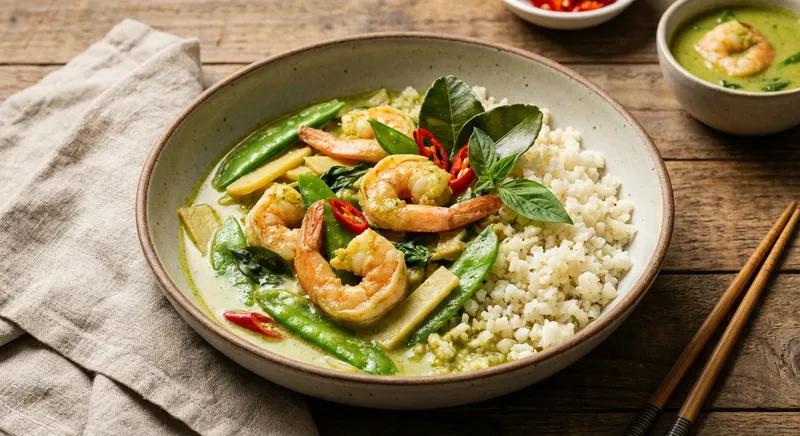
Bright, aromatic Thai green curry made with tender shrimp, crisp-tender vegetables and creamy coconut milk, served over fragrant cauliflower rice. The curry balances fresh lime and cilantro with the herbal heat of green curry paste, delivering silky sauce, poppable snap peas and a satisfying lift from the lime — a weeknight restaurant-quality dish with paleo-friendly ingredients.
Prepare the shrimp and vegetables: pat the shrimp dry with paper towels and season lightly with salt and pepper. Dry shrimp will sear and poach evenly in the coconut milk instead of steaming, preserving texture. Slice the bell pepper and zucchini and trim the snap peas so everything is ready to go (quick cooking is key so pieces are uniform).
Warm a large skillet or wok over medium-high heat and add 1 tablespoon oil. Heating the pan first ensures an immediate sizzle when aromatics hit the surface, which develops deeper flavor.
Sauté shallot, garlic and a pinch of salt for 60–90 seconds until fragrant and translucent. This softens the shallot and mellows raw garlic sharpness; doing it briefly keeps garlic from burning and turning bitter.
Add 1 1/2 tablespoons Thai green curry paste and cook, stirring, for 30–45 seconds until fragrant. Toasting the paste briefly in hot oil blooms the aromatics and releases the paste's essential oils so the curry tastes brighter and deeper.
Pour in 1/2 cup full-fat coconut milk and stir to combine, scraping any browned bits from the pan. Simmer the coconut milk and paste for 2–3 minutes to allow the flavors to marry and the sauce to thicken slightly — this improves mouthfeel and concentrates taste without reducing too much liquid.
Add the bell pepper, zucchini and snap peas to the coconut-curry base and simmer gently for 2–3 minutes: cooking the vegetables briefly keeps them crisp-tender so they hold shape and color while absorbing curry flavor.
Stir in fish sauce (1 tsp) and 1 tsp palm sugar or honey if using; taste. Fish sauce adds umami and saltiness that mimics the restaurant balance; a touch of sugar rounds the edges and balances the lime that will be added at the end.
Add shrimp in a single layer and simmer for 2–3 minutes until just pink and opaque (shrimp cook very quickly). Overcooking shrimp makes them rubbery; they should curl loosely and feel springy when done.
Finish the curry by stirring in lime juice and most of the cilantro (reserve a little for garnish). Acid brightens the rich coconut base and lifts the herbal notes of the green curry — add it at the end so it remains fresh.
While the curry cooks, heat a separate large nonstick skillet over medium and add the cauliflower rice. If using frozen, press dry first. Sauté the cauliflower rice with a pinch of salt and a drizzle of oil for 3–4 minutes until warmed through and slightly toasted. Toasting removes excess moisture and gives the rice a nutty background flavor so it doesn’t taste raw.
Taste the curry and adjust: add more fish sauce for salt/umami, a squeeze more lime for brightness, or 1–2 tbsp water if you prefer a looser sauce. Balancing at the end lets you tailor seasoning to your palate.
Divide cauliflower rice between two plates, spoon the shrimp and vegetables and plenty of sauce over the top, and garnish with remaining cilantro and an extra lime wedge. Serving immediately preserves texture contrast between warm fragrant rice and silky curry.
428
Calories
28g
Protein
30g
Carbs
24g
Fat
7g
Fiber
How did this recipe turn out? Let others know!
to rate this recipe
By abbey f
Bright, aromatic Thai green curry made with tender shrimp, crisp-tender vegetables and creamy coconut milk, served over fragrant cauliflower rice. The curry balances fresh lime and cilantro with the herbal heat of green curry paste, delivering silky sauce, poppable snap peas and a satisfying lift from the lime — a weeknight restaurant-quality dish with paleo-friendly ingredients.
Prepare the shrimp and vegetables: pat the shrimp dry with paper towels and season lightly with salt and pepper. Dry shrimp will sear and poach evenly in the coconut milk instead of steaming, preserving texture. Slice the bell pepper and zucchini and trim the snap peas so everything is ready to go (quick cooking is key so pieces are uniform).
Warm a large skillet or wok over medium-high heat and add 1 tablespoon oil. Heating the pan first ensures an immediate sizzle when aromatics hit the surface, which develops deeper flavor.
Sauté shallot, garlic and a pinch of salt for 60–90 seconds until fragrant and translucent. This softens the shallot and mellows raw garlic sharpness; doing it briefly keeps garlic from burning and turning bitter.
Add 1 1/2 tablespoons Thai green curry paste and cook, stirring, for 30–45 seconds until fragrant. Toasting the paste briefly in hot oil blooms the aromatics and releases the paste's essential oils so the curry tastes brighter and deeper.
Pour in 1/2 cup full-fat coconut milk and stir to combine, scraping any browned bits from the pan. Simmer the coconut milk and paste for 2–3 minutes to allow the flavors to marry and the sauce to thicken slightly — this improves mouthfeel and concentrates taste without reducing too much liquid.
Add the bell pepper, zucchini and snap peas to the coconut-curry base and simmer gently for 2–3 minutes: cooking the vegetables briefly keeps them crisp-tender so they hold shape and color while absorbing curry flavor.
Stir in fish sauce (1 tsp) and 1 tsp palm sugar or honey if using; taste. Fish sauce adds umami and saltiness that mimics the restaurant balance; a touch of sugar rounds the edges and balances the lime that will be added at the end.
Add shrimp in a single layer and simmer for 2–3 minutes until just pink and opaque (shrimp cook very quickly). Overcooking shrimp makes them rubbery; they should curl loosely and feel springy when done.
Finish the curry by stirring in lime juice and most of the cilantro (reserve a little for garnish). Acid brightens the rich coconut base and lifts the herbal notes of the green curry — add it at the end so it remains fresh.
While the curry cooks, heat a separate large nonstick skillet over medium and add the cauliflower rice. If using frozen, press dry first. Sauté the cauliflower rice with a pinch of salt and a drizzle of oil for 3–4 minutes until warmed through and slightly toasted. Toasting removes excess moisture and gives the rice a nutty background flavor so it doesn’t taste raw.
Taste the curry and adjust: add more fish sauce for salt/umami, a squeeze more lime for brightness, or 1–2 tbsp water if you prefer a looser sauce. Balancing at the end lets you tailor seasoning to your palate.
Divide cauliflower rice between two plates, spoon the shrimp and vegetables and plenty of sauce over the top, and garnish with remaining cilantro and an extra lime wedge. Serving immediately preserves texture contrast between warm fragrant rice and silky curry.
428
Calories
28g
Protein
30g
Carbs
24g
Fat
7g
Fiber
Your Rating:
