By emensah m
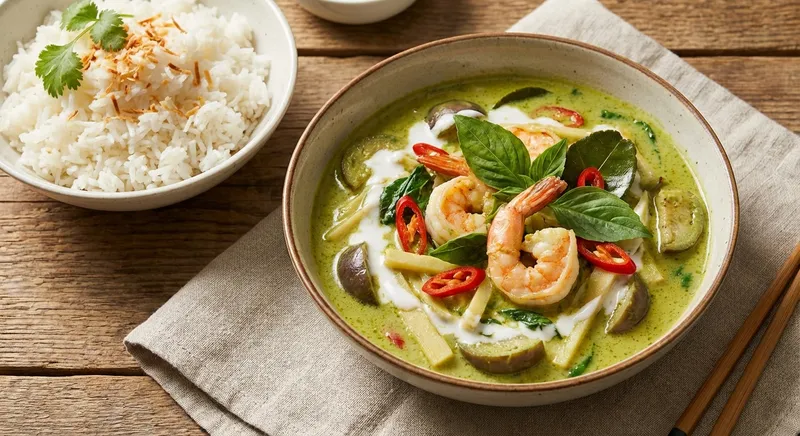
Silky, fragrant green curry simmered with sweet shrimp, crisp vegetables and tender bamboo shoots, served over steaming jasmine rice. Bright lime and fresh basil cut through the rich coconut broth while green curry paste delivers herbaceous heat — a restaurant-quality Thai classic that’s easy enough for a weeknight.
Rinse the jasmine rice under cold water until the water runs clear, then cook it using a 1:1.25 rice-to-water ratio (1 cup rice to 1 1/4 cups water) in a saucepan or rice cooker. Bring to a simmer, cover, and cook gently for 12–14 minutes, then remove from heat and let rest, covered, for 10 minutes. Why: Rinsing removes excess surface starch so the rice cooks into separate, fluffy grains; the rest period allows steam to finish cooking without gummy rice.
Pat the shrimp dry and season lightly with a pinch of salt and pepper. Why: Dry shrimp sear more cleanly and will not water down the curry; a little salt brings forward their natural sweetness.
Heat a wide skillet or medium saucepan over medium heat. Add 1 tbsp vegetable oil and when it shimmers, add the sliced shallot and sauté 1–2 minutes until translucent. Add the minced garlic and cook 20–30 seconds until fragrant. Why: Gently sweating aromatic aromatics in hot oil builds the savory base; cooking garlic only briefly prevents it from turning bitter.
Add the 2 tbsp green curry paste to the pan and stir for 30–45 seconds to bloom the spices and aromatics in the paste. Why: Toasting the paste for a short time in oil releases its essential oils, deepening the flavor of the finished curry.
Pour in the light coconut milk and stir to integrate the paste, scraping any browned bits off the bottom. Bring to a gentle simmer. Why: Adding coconut milk cools the pan slightly and creates the curry’s creamy sauce—bringing it to a simmer allows flavors to meld without breaking (over-boiling can separate coconut milk).
Add fish sauce and 1 tsp sugar, then taste for balance—you want a harmonious mix of salty, sweet and spicy. Add a splash more fish sauce or a pinch more sugar if needed. Why: Thai curries depend on a balance of salty, sweet, acidic and spicy components; small adjustments here make a big difference.
Add the bamboo shoots and bell pepper strips to the simmering curry. Cook 3–4 minutes until the pepper just begins to soften. Why: Adding sturdier vegetables first ensures everything finishes at the same time; you want the pepper tender-crisp so it retains texture.
Stir in the zucchini slices and simmer 2 minutes. Why: Zucchini cooks quickly; adding it later prevents it from becoming mushy and preserves its fresh color and bite.
Turn the heat to medium-high, push the vegetables to the side, and add the seasoned shrimp in a single layer. Sear shrimp 1 minute per side (about 2–3 minutes total depending on size) until just opaque and curled. Then fold the shrimp into the sauce and remove from heat. Why: Searing shrimp briefly develops a subtle caramelization and ensures they stay tender — overcooking will make them rubbery.
Finish with the juice and zest of 1 lime and most of the basil leaves (reserve a few for garnish). Stir and taste; adjust with a little more fish sauce or lime if needed. Why: Acid brightens the rich coconut base and fresh basil brings the herbal, slightly sweet finish that defines Thai green curry.
Serve the curry spooned over steaming jasmine rice, garnish with remaining basil leaves and an extra lime wedge. Why: Serving immediately preserves the texture contrast between hot coconut curry and fluffy rice; basil on top delivers immediate aromatic impact.
418
Calories
27g
Protein
48g
Carbs
12g
Fat
3g
Fiber
How did this recipe turn out? Let others know!
to rate this recipe
Silky, fragrant green curry simmered with sweet shrimp, crisp vegetables and tender bamboo shoots, served over steaming jasmine rice. Bright lime and fresh basil cut through the rich coconut broth while green curry paste delivers herbaceous heat — a restaurant-quality Thai classic that’s easy enough for a weeknight.
Rinse the jasmine rice under cold water until the water runs clear, then cook it using a 1:1.25 rice-to-water ratio (1 cup rice to 1 1/4 cups water) in a saucepan or rice cooker. Bring to a simmer, cover, and cook gently for 12–14 minutes, then remove from heat and let rest, covered, for 10 minutes. Why: Rinsing removes excess surface starch so the rice cooks into separate, fluffy grains; the rest period allows steam to finish cooking without gummy rice.
Pat the shrimp dry and season lightly with a pinch of salt and pepper. Why: Dry shrimp sear more cleanly and will not water down the curry; a little salt brings forward their natural sweetness.
Heat a wide skillet or medium saucepan over medium heat. Add 1 tbsp vegetable oil and when it shimmers, add the sliced shallot and sauté 1–2 minutes until translucent. Add the minced garlic and cook 20–30 seconds until fragrant. Why: Gently sweating aromatic aromatics in hot oil builds the savory base; cooking garlic only briefly prevents it from turning bitter.
Add the 2 tbsp green curry paste to the pan and stir for 30–45 seconds to bloom the spices and aromatics in the paste. Why: Toasting the paste for a short time in oil releases its essential oils, deepening the flavor of the finished curry.
Pour in the light coconut milk and stir to integrate the paste, scraping any browned bits off the bottom. Bring to a gentle simmer. Why: Adding coconut milk cools the pan slightly and creates the curry’s creamy sauce—bringing it to a simmer allows flavors to meld without breaking (over-boiling can separate coconut milk).
Add fish sauce and 1 tsp sugar, then taste for balance—you want a harmonious mix of salty, sweet and spicy. Add a splash more fish sauce or a pinch more sugar if needed. Why: Thai curries depend on a balance of salty, sweet, acidic and spicy components; small adjustments here make a big difference.
Add the bamboo shoots and bell pepper strips to the simmering curry. Cook 3–4 minutes until the pepper just begins to soften. Why: Adding sturdier vegetables first ensures everything finishes at the same time; you want the pepper tender-crisp so it retains texture.
Stir in the zucchini slices and simmer 2 minutes. Why: Zucchini cooks quickly; adding it later prevents it from becoming mushy and preserves its fresh color and bite.
Turn the heat to medium-high, push the vegetables to the side, and add the seasoned shrimp in a single layer. Sear shrimp 1 minute per side (about 2–3 minutes total depending on size) until just opaque and curled. Then fold the shrimp into the sauce and remove from heat. Why: Searing shrimp briefly develops a subtle caramelization and ensures they stay tender — overcooking will make them rubbery.
Finish with the juice and zest of 1 lime and most of the basil leaves (reserve a few for garnish). Stir and taste; adjust with a little more fish sauce or lime if needed. Why: Acid brightens the rich coconut base and fresh basil brings the herbal, slightly sweet finish that defines Thai green curry.
Serve the curry spooned over steaming jasmine rice, garnish with remaining basil leaves and an extra lime wedge. Why: Serving immediately preserves the texture contrast between hot coconut curry and fluffy rice; basil on top delivers immediate aromatic impact.
418
Calories
27g
Protein
48g
Carbs
12g
Fat
3g
Fiber
Your Rating:
