By Kathryn Scott
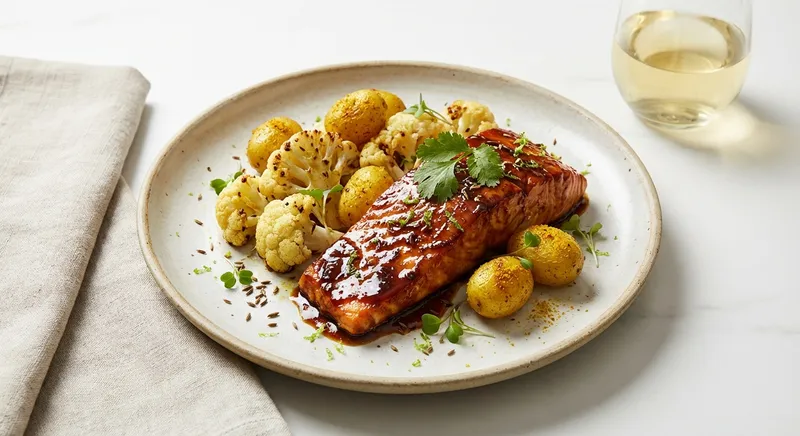
A balance of bright, tangy tamarind glaze and rich, buttery salmon, served alongside cumin-scented, caramelized cauliflower and golden turmeric potatoes. The glaze gives a sticky sweet-sour finish while the warm spices (cumin and turmeric) add earthy depth — a modern Indo-fusion plate with restaurant polish that’s quick enough for weeknight cooking.
Preheat and organize: Preheat your oven to 220°C / 425°F (convection if available). Arrange two rimmed baking sheets and line one with parchment for the potatoes and another for the cauliflower (or use one sheet and stagger roasting times). Preheating gives even oven heat so potatoes and cauliflower brown properly instead of steaming.
Make the tamarind glaze (yields ~6 tbsp; 1.5 tbsp per person): In a small saucepan, combine tamarind paste (3 tbsp), honey (2 tbsp), minced garlic (2 cloves), and 1 tbsp water. Warm gently over medium-low heat, stirring, until the honey loosens and the tamarind integrates (about 3–4 minutes). Simmer 1–2 minutes to mellow the raw tamarind acidity and let the garlic soften. Remove from heat and season with a pinch of salt and a grind of pepper. Why: simmering briefly concentrates and balances the sweet-sour, and softens raw garlic so it won’t be sharp on the finished fish.
Prep the baby potatoes: While the glaze is warming, bring a medium pot of salted water to a boil. Add the halved baby potatoes (480 g) and simmer 8–10 minutes until they’re just tender when pierced with a knife (they should still hold shape). Drain and let steam-dry for a minute — this rough-cooks the insides so the oven can focus on crisping the exterior. Why: parboiling shortens oven time and yields a creamier interior with a crisper skin.
Season and roast the potatoes: Toss the drained potatoes with 1 tbsp olive oil, ground turmeric (1.5 tsp), 1 tsp salt and ½ tsp black pepper. Spread cut-side down on the preheated baking sheet in a single layer. Roast in the top third of the oven for 20–25 minutes, turning once halfway through, until edges are golden and crisp. Why: cut-side down contact with the hot pan promotes caramelization and crispness; turmeric gives aroma, color and a faint earthy note.
Prep the cauliflower while potatoes roast: Toss cauliflower florets (400 g) with the remaining 3 tbsp olive oil, ground cumin (2 tsp), ¾ tsp salt and ½ tsp black pepper. Spread on the second baking sheet in a single layer. Why: oil coats the florets so they brown; dry, spaced florets caramelize rather than steam.
Roast the cauliflower: When the potatoes have about 12–15 minutes left, put the cauliflower into the oven on the middle rack. Roast for 18–22 minutes, turning once, until edges are deeply golden and some tips are nearly browned — that caramelization is where the flavor lives. Why: timing lets both vegetables finish together, and roasting at high heat develops Maillard flavors that complement the tangy glaze.
Bring the salmon to room temperature: Pat salmon fillets (160 g each) dry with paper towels and season both sides lightly with salt and freshly ground black pepper. Let rest at room temperature for 10–15 minutes while the vegetables finish. Why: room-temperature fish cooks more evenly and sears better; patting dry encourages a crisp skin.
Sear the salmon: Heat a heavy skillet (cast-iron preferred) over medium-high heat until shimmering. Add a thin film of oil (about ½ tbsp) and place the salmon skin-side down, pressing gently for 10 seconds to keep the fillet flat. Sear skin-side down for 3–4 minutes until the skin is crisp and fat renders. Why: a hot pan and pressing ensure full skin contact so it crisps rather than shrivels; rendering adds flavor and prevents sticking.
Finish the salmon in the oven with glaze: Flip the fillets and spoon or brush ~1½ tbsp of the tamarind glaze onto the top of each fillet. Transfer the skillet to the oven (or move fillets to a baking sheet) and roast 4–6 minutes for medium (internal temperature ~52–54°C / 125–130°F) — salmon continues to cook while resting. Why: brushing glaze after searing avoids burning the sugars on a dry pan; a short oven finish cooks gently through without overcooking.
Rest and glaze again: Remove salmon from the oven and rest 3 minutes. Brush a second, thin layer of glaze for a glossy finish. Taste a cauliflower floret and a potato. Adjust vegetables with a final pinch of salt if needed. Why: resting lets juices redistribute so the fish is moist, and a second glaze layer gives shine and a concentrated tamarind note without burning.
Plate and finish: On each plate, place a portion of turmeric potatoes and a generous portion of cumin-roasted cauliflower. Top with the salmon (skin-side down). Scatter 1 tbsp chopped cilantro over each plate and serve with a lemon wedge (½ lemon per person) to squeeze over the salmon just before eating. Why: fresh cilantro and lemon cut through the richness and brighten the tamarind’s sweet-tart profile.
Serve suggestions: Serve immediately while the salmon is warm and the vegetables are crisp. Offer extra glaze at the table for those who like it saucier. Leftovers keep 24–48 hours in an airtight container; reheat gently to preserve texture.
640
Calories
37g
Protein
46g
Carbs
35g
Fat
6g
Fiber
How did this recipe turn out? Let others know!
to rate this recipe
By Kathryn Scott
A balance of bright, tangy tamarind glaze and rich, buttery salmon, served alongside cumin-scented, caramelized cauliflower and golden turmeric potatoes. The glaze gives a sticky sweet-sour finish while the warm spices (cumin and turmeric) add earthy depth — a modern Indo-fusion plate with restaurant polish that’s quick enough for weeknight cooking.
Preheat and organize: Preheat your oven to 220°C / 425°F (convection if available). Arrange two rimmed baking sheets and line one with parchment for the potatoes and another for the cauliflower (or use one sheet and stagger roasting times). Preheating gives even oven heat so potatoes and cauliflower brown properly instead of steaming.
Make the tamarind glaze (yields ~6 tbsp; 1.5 tbsp per person): In a small saucepan, combine tamarind paste (3 tbsp), honey (2 tbsp), minced garlic (2 cloves), and 1 tbsp water. Warm gently over medium-low heat, stirring, until the honey loosens and the tamarind integrates (about 3–4 minutes). Simmer 1–2 minutes to mellow the raw tamarind acidity and let the garlic soften. Remove from heat and season with a pinch of salt and a grind of pepper. Why: simmering briefly concentrates and balances the sweet-sour, and softens raw garlic so it won’t be sharp on the finished fish.
Prep the baby potatoes: While the glaze is warming, bring a medium pot of salted water to a boil. Add the halved baby potatoes (480 g) and simmer 8–10 minutes until they’re just tender when pierced with a knife (they should still hold shape). Drain and let steam-dry for a minute — this rough-cooks the insides so the oven can focus on crisping the exterior. Why: parboiling shortens oven time and yields a creamier interior with a crisper skin.
Season and roast the potatoes: Toss the drained potatoes with 1 tbsp olive oil, ground turmeric (1.5 tsp), 1 tsp salt and ½ tsp black pepper. Spread cut-side down on the preheated baking sheet in a single layer. Roast in the top third of the oven for 20–25 minutes, turning once halfway through, until edges are golden and crisp. Why: cut-side down contact with the hot pan promotes caramelization and crispness; turmeric gives aroma, color and a faint earthy note.
Prep the cauliflower while potatoes roast: Toss cauliflower florets (400 g) with the remaining 3 tbsp olive oil, ground cumin (2 tsp), ¾ tsp salt and ½ tsp black pepper. Spread on the second baking sheet in a single layer. Why: oil coats the florets so they brown; dry, spaced florets caramelize rather than steam.
Roast the cauliflower: When the potatoes have about 12–15 minutes left, put the cauliflower into the oven on the middle rack. Roast for 18–22 minutes, turning once, until edges are deeply golden and some tips are nearly browned — that caramelization is where the flavor lives. Why: timing lets both vegetables finish together, and roasting at high heat develops Maillard flavors that complement the tangy glaze.
Bring the salmon to room temperature: Pat salmon fillets (160 g each) dry with paper towels and season both sides lightly with salt and freshly ground black pepper. Let rest at room temperature for 10–15 minutes while the vegetables finish. Why: room-temperature fish cooks more evenly and sears better; patting dry encourages a crisp skin.
Sear the salmon: Heat a heavy skillet (cast-iron preferred) over medium-high heat until shimmering. Add a thin film of oil (about ½ tbsp) and place the salmon skin-side down, pressing gently for 10 seconds to keep the fillet flat. Sear skin-side down for 3–4 minutes until the skin is crisp and fat renders. Why: a hot pan and pressing ensure full skin contact so it crisps rather than shrivels; rendering adds flavor and prevents sticking.
Finish the salmon in the oven with glaze: Flip the fillets and spoon or brush ~1½ tbsp of the tamarind glaze onto the top of each fillet. Transfer the skillet to the oven (or move fillets to a baking sheet) and roast 4–6 minutes for medium (internal temperature ~52–54°C / 125–130°F) — salmon continues to cook while resting. Why: brushing glaze after searing avoids burning the sugars on a dry pan; a short oven finish cooks gently through without overcooking.
Rest and glaze again: Remove salmon from the oven and rest 3 minutes. Brush a second, thin layer of glaze for a glossy finish. Taste a cauliflower floret and a potato. Adjust vegetables with a final pinch of salt if needed. Why: resting lets juices redistribute so the fish is moist, and a second glaze layer gives shine and a concentrated tamarind note without burning.
Plate and finish: On each plate, place a portion of turmeric potatoes and a generous portion of cumin-roasted cauliflower. Top with the salmon (skin-side down). Scatter 1 tbsp chopped cilantro over each plate and serve with a lemon wedge (½ lemon per person) to squeeze over the salmon just before eating. Why: fresh cilantro and lemon cut through the richness and brighten the tamarind’s sweet-tart profile.
Serve suggestions: Serve immediately while the salmon is warm and the vegetables are crisp. Offer extra glaze at the table for those who like it saucier. Leftovers keep 24–48 hours in an airtight container; reheat gently to preserve texture.
640
Calories
37g
Protein
46g
Carbs
35g
Fat
6g
Fiber
Your Rating:
