By emensah m
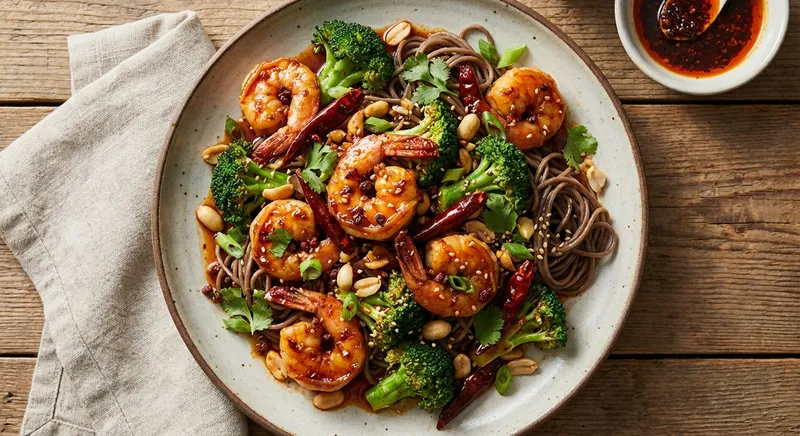
Succulent, plump shrimp tossed in a bright, umami-forward Sichuan-inspired sauce with Doubanjiang, garlic and ginger, served over nutty buckwheat soba and crisp-tender broccoli. High-heat searing, a quick blanch for the broccoli, and a silky sauce balanced with rice vinegar and sesame oil make this a restaurant-quality weeknight stir-fry — bold, fragrant, and perfectly textured.
Start mise en place (why: stir-fries move fast). Peel, devein and pat the shrimp very dry with paper towels; transfer to a bowl. Trim broccoli into bite-sized florets and rinse; mince garlic and ginger and slice scallions, keeping whites and greens separate.
If using cornstarch (recommended for a silky exterior), toss the shrimp with 2 tsp cornstarch and a pinch of salt — just enough to lightly coat. This forms a thin protective layer that helps shrimp stay juicy and gives a slight velvety sheen when seared.
Bring a large pot of salted water to a rolling boil and cook the buckwheat soba according to package directions but subtract 1 minute from the suggested time (why: noodles will finish cooking in the wok and you want them al dente). Stir while cooking to prevent sticking.
When noodles are 30–60 seconds shy of your target, reserve 1/2 cup (120 ml) of the cooking water, then drain and immediately rinse under cold running water to stop cooking and remove surface starch (why: shocking prevents gummy noodles and keeps buckwheat flavor clean). Toss noodles with 1 tsp neutral oil to keep separated.
While the water heats or noodles cook, blanch the broccoli: add the florets to the boiling water for 45–60 seconds until bright green and just tender, then transfer to an ice bath or rinse under cold water (why: quick blanching preserves color, shortens wok time, and ensures even texture). Drain well and set aside.
Make the sauce in a bowl: whisk together doubanjiang, low-sodium soy sauce, rice vinegar, sesame oil, and 2–3 tbsp of the reserved noodle water to thin if needed (why: premixing lets you control heat and seasoning and the noodle water helps the sauce cling to noodles because of its starch). Taste and adjust — a pinch of sugar (optional) can round the heat.
Preheat a large heavy-bottomed wok or skillet over high heat until it’s smoking slightly (why: high heat is essential for rapid searing and the characteristic 'wok hei' aroma). Add half the neutral oil (about 2 tbsp) and swirl to coat.
Add the shrimp in a single layer (do not overcrowd — work in two batches if needed). Sear 45–60 seconds per side until just opaque with lightly browned edges (why: quick, high-heat searing locks juices and develops a bit of Maillard browning). Transfer shrimp to a plate and keep warm.
Wipe the wok if it has charred bits, reheat on high, and add the remaining neutral oil. Add the white parts of the scallions, minced garlic and minced ginger. Stir and cook 20–30 seconds until fragrant — do not let garlic burn (why: blooming garlic and ginger in hot oil releases their aromatic oils and lets the doubanjiang harmonize with them).
Add the blanched broccoli and toss quickly to warm through and pick up the aromatics. Add the sauce and bring it to a simmer so it slightly thickens and glazes the vegetables (why: heating the sauce activates the doubanjiang flavors and tying the sauce to the veggies makes the dish cohesive).
Return the shrimp to the wok along with the cooked soba. Toss vigorously for 30–60 seconds, adding up to 1/4 cup reserved noodle water if the pan looks dry (why: tossing off the heat helps finish the noodles, blends flavors, and allows the sauce starch to coat everything evenly without overcooking the shrimp).
Turn off the heat and stir in the green parts of the scallions and toasted sesame seeds. Taste and adjust with a squeeze of lime and a final splash of soy or vinegar if needed (why: finishing with fresh scallion and acid brightens the dish and sesame seeds add nuttiness and texture).
Serve immediately into bowls, garnish with extra scallion greens, a sprinkle of sesame seeds, and lime wedges on the side (why: hot, freshly tossed stir-fries should be served right away to preserve texture and temperature).
619
Calories
55g
Protein
61g
Carbs
20g
Fat
8g
Fiber
How did this recipe turn out? Let others know!
to rate this recipe
By emensah m
Succulent, plump shrimp tossed in a bright, umami-forward Sichuan-inspired sauce with Doubanjiang, garlic and ginger, served over nutty buckwheat soba and crisp-tender broccoli. High-heat searing, a quick blanch for the broccoli, and a silky sauce balanced with rice vinegar and sesame oil make this a restaurant-quality weeknight stir-fry — bold, fragrant, and perfectly textured.
Start mise en place (why: stir-fries move fast). Peel, devein and pat the shrimp very dry with paper towels; transfer to a bowl. Trim broccoli into bite-sized florets and rinse; mince garlic and ginger and slice scallions, keeping whites and greens separate.
If using cornstarch (recommended for a silky exterior), toss the shrimp with 2 tsp cornstarch and a pinch of salt — just enough to lightly coat. This forms a thin protective layer that helps shrimp stay juicy and gives a slight velvety sheen when seared.
Bring a large pot of salted water to a rolling boil and cook the buckwheat soba according to package directions but subtract 1 minute from the suggested time (why: noodles will finish cooking in the wok and you want them al dente). Stir while cooking to prevent sticking.
When noodles are 30–60 seconds shy of your target, reserve 1/2 cup (120 ml) of the cooking water, then drain and immediately rinse under cold running water to stop cooking and remove surface starch (why: shocking prevents gummy noodles and keeps buckwheat flavor clean). Toss noodles with 1 tsp neutral oil to keep separated.
While the water heats or noodles cook, blanch the broccoli: add the florets to the boiling water for 45–60 seconds until bright green and just tender, then transfer to an ice bath or rinse under cold water (why: quick blanching preserves color, shortens wok time, and ensures even texture). Drain well and set aside.
Make the sauce in a bowl: whisk together doubanjiang, low-sodium soy sauce, rice vinegar, sesame oil, and 2–3 tbsp of the reserved noodle water to thin if needed (why: premixing lets you control heat and seasoning and the noodle water helps the sauce cling to noodles because of its starch). Taste and adjust — a pinch of sugar (optional) can round the heat.
Preheat a large heavy-bottomed wok or skillet over high heat until it’s smoking slightly (why: high heat is essential for rapid searing and the characteristic 'wok hei' aroma). Add half the neutral oil (about 2 tbsp) and swirl to coat.
Add the shrimp in a single layer (do not overcrowd — work in two batches if needed). Sear 45–60 seconds per side until just opaque with lightly browned edges (why: quick, high-heat searing locks juices and develops a bit of Maillard browning). Transfer shrimp to a plate and keep warm.
Wipe the wok if it has charred bits, reheat on high, and add the remaining neutral oil. Add the white parts of the scallions, minced garlic and minced ginger. Stir and cook 20–30 seconds until fragrant — do not let garlic burn (why: blooming garlic and ginger in hot oil releases their aromatic oils and lets the doubanjiang harmonize with them).
Add the blanched broccoli and toss quickly to warm through and pick up the aromatics. Add the sauce and bring it to a simmer so it slightly thickens and glazes the vegetables (why: heating the sauce activates the doubanjiang flavors and tying the sauce to the veggies makes the dish cohesive).
Return the shrimp to the wok along with the cooked soba. Toss vigorously for 30–60 seconds, adding up to 1/4 cup reserved noodle water if the pan looks dry (why: tossing off the heat helps finish the noodles, blends flavors, and allows the sauce starch to coat everything evenly without overcooking the shrimp).
Turn off the heat and stir in the green parts of the scallions and toasted sesame seeds. Taste and adjust with a squeeze of lime and a final splash of soy or vinegar if needed (why: finishing with fresh scallion and acid brightens the dish and sesame seeds add nuttiness and texture).
Serve immediately into bowls, garnish with extra scallion greens, a sprinkle of sesame seeds, and lime wedges on the side (why: hot, freshly tossed stir-fries should be served right away to preserve texture and temperature).
619
Calories
55g
Protein
61g
Carbs
20g
Fat
8g
Fiber
Your Rating:
