By Courtney Hulce
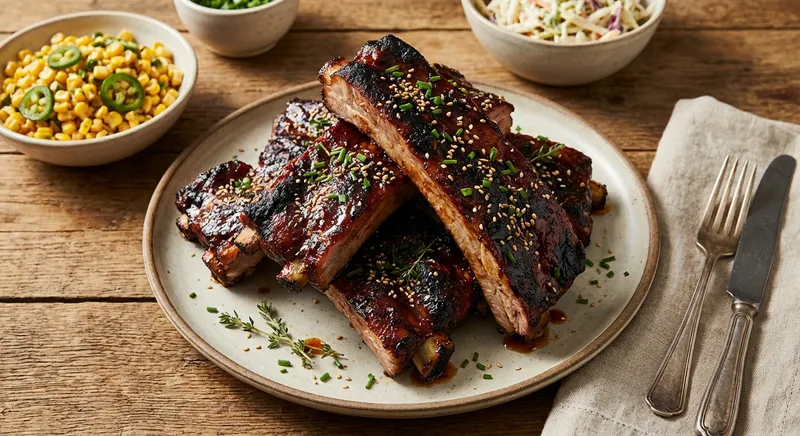
Fall-from-the-bone baby back ribs finished with a sticky, smoky-sweet barbecue glaze. The ribs are dry-rubbed, gently braised in apple juice to render fat and deepen flavor, then glazed and broiled for a lacquered finish—crisp at the edges, tender and juicy inside. Think restaurant-quality BBQ you can make in your oven any night of the year.
Preheat and prep: Preheat your oven to 300°F (150°C). This low oven temperature lets the ribs braise gently so collagen breaks down without drying out the meat—yielding tender, silky ribs rather than stringy or tough meat.
Remove the membrane: Flip each rack bone-side up and use a paper towel to grab and pull the silvery membrane off the back of the ribs. Removing this thin membrane allows the rub and moisture to penetrate the meat and prevents a tough barrier after cooking.
Make the dry rub: In a small bowl combine 2 tbsp brown sugar, 2 tbsp smoked paprika, 2 tsp garlic powder, 1 tbsp onion powder, 1 tsp mustard powder, 1/2 tsp cayenne, 2 tsp kosher salt and 1 tsp black pepper. Stir to mix. The sugar promotes caramelization, paprika gives smoky depth, and the aromatics season the meat evenly.
Rub the ribs: Pat ribs dry with paper towels, then rub a thin film of olive oil over both sides—this helps the rub adhere. Massage the dry rub evenly over the meat side and the edges. Let the seasoned racks rest on a wire rack for 15–20 minutes at room temperature while you make the sauce; this short rest lets the rub start to draw flavor in.
Sear (optional but recommended): Heat a large oven-safe skillet or cast-iron pan over medium-high heat and add 1 tbsp oil. Sear the meat side of each rack for 1–2 minutes until lightly browned. This quick sear adds flavor through the Maillard reaction and helps the final glaze stick. (If your ribs fit directly in a roasting pan, you can skip this step—searing amps flavor but is not required.)
Arrange for braising: Place the ribs meat-side up in a roasting pan or baking dish big enough for both racks. Pour 1/2 cup apple juice into the bottom of the pan (it should not cover the ribs). The liquid creates a humid oven environment and a flavorful steam that keeps the meat moist while heat slowly breaks down connective tissue.
Cover tightly and bake low and slow: Tightly cover the pan with aluminum foil (or a lid) and bake at 300°F (150°C) for 2 hours. The tight cover traps steam and ensures even cooking; 2 hours lets the collagen convert to gelatin without evaporating the juices.
Make the glaze while ribs braise: Combine 1 cup ketchup, 1/3 cup brown sugar, 2 tbsp molasses, 2 tbsp apple cider vinegar, 2 tbsp Worcestershire, 1 tbsp Dijon, 1 tsp smoked paprika, 1/2 tsp salt, 2 minced garlic cloves and 2 tbsp butter in a small saucepan. Simmer gently over medium-low for 8–10 minutes, stirring occasionally, until slightly thickened. Simmering reduces raw tomato brightness and concentrates sugars so the glaze will caramelize cleanly on the ribs.
Check tenderness and baste: After 2 hours, remove the foil and test ribs for tenderness—an internal fork or meat thermometer should slide in easily; meat should pull back slightly from bones. If not tender, re-cover and return to oven for 15–30 more minutes. If tender, brush a generous layer of glaze over the meat side—the glaze sticks best when the surface is slightly dry from uncovered baking.
Broil for lacquered finish: Increase oven heat to Broil (or 500°F / 260°C if your oven has no broil setting). Place racks under the broiler 4–6 inches from the heat source and broil 2–3 minutes, watching carefully until glaze bubbles and darkens—do not walk away. Remove, brush a second thin glaze layer, and broil 1–2 more minutes for deep color. This quick high heat caramelizes sugars in the glaze into a sticky, glossy finish.
Rest and slice: Transfer ribs to a cutting board and let rest 8–10 minutes so juices redistribute—slicing immediately can cause juices to run out and dry the meat. Cut between the bones into portions and spoon any pan juices over slices.
Garnish and serve: Sprinkle chopped parsley or chives if using, and serve with extra glaze on the side. The contrast of bright herbs and tangy glaze lifts the richness of the pork.
1181
Calories
51g
Protein
58g
Carbs
84g
Fat
2g
Fiber
How did this recipe turn out? Let others know!
to rate this recipe
By Courtney Hulce
Fall-from-the-bone baby back ribs finished with a sticky, smoky-sweet barbecue glaze. The ribs are dry-rubbed, gently braised in apple juice to render fat and deepen flavor, then glazed and broiled for a lacquered finish—crisp at the edges, tender and juicy inside. Think restaurant-quality BBQ you can make in your oven any night of the year.
Preheat and prep: Preheat your oven to 300°F (150°C). This low oven temperature lets the ribs braise gently so collagen breaks down without drying out the meat—yielding tender, silky ribs rather than stringy or tough meat.
Remove the membrane: Flip each rack bone-side up and use a paper towel to grab and pull the silvery membrane off the back of the ribs. Removing this thin membrane allows the rub and moisture to penetrate the meat and prevents a tough barrier after cooking.
Make the dry rub: In a small bowl combine 2 tbsp brown sugar, 2 tbsp smoked paprika, 2 tsp garlic powder, 1 tbsp onion powder, 1 tsp mustard powder, 1/2 tsp cayenne, 2 tsp kosher salt and 1 tsp black pepper. Stir to mix. The sugar promotes caramelization, paprika gives smoky depth, and the aromatics season the meat evenly.
Rub the ribs: Pat ribs dry with paper towels, then rub a thin film of olive oil over both sides—this helps the rub adhere. Massage the dry rub evenly over the meat side and the edges. Let the seasoned racks rest on a wire rack for 15–20 minutes at room temperature while you make the sauce; this short rest lets the rub start to draw flavor in.
Sear (optional but recommended): Heat a large oven-safe skillet or cast-iron pan over medium-high heat and add 1 tbsp oil. Sear the meat side of each rack for 1–2 minutes until lightly browned. This quick sear adds flavor through the Maillard reaction and helps the final glaze stick. (If your ribs fit directly in a roasting pan, you can skip this step—searing amps flavor but is not required.)
Arrange for braising: Place the ribs meat-side up in a roasting pan or baking dish big enough for both racks. Pour 1/2 cup apple juice into the bottom of the pan (it should not cover the ribs). The liquid creates a humid oven environment and a flavorful steam that keeps the meat moist while heat slowly breaks down connective tissue.
Cover tightly and bake low and slow: Tightly cover the pan with aluminum foil (or a lid) and bake at 300°F (150°C) for 2 hours. The tight cover traps steam and ensures even cooking; 2 hours lets the collagen convert to gelatin without evaporating the juices.
Make the glaze while ribs braise: Combine 1 cup ketchup, 1/3 cup brown sugar, 2 tbsp molasses, 2 tbsp apple cider vinegar, 2 tbsp Worcestershire, 1 tbsp Dijon, 1 tsp smoked paprika, 1/2 tsp salt, 2 minced garlic cloves and 2 tbsp butter in a small saucepan. Simmer gently over medium-low for 8–10 minutes, stirring occasionally, until slightly thickened. Simmering reduces raw tomato brightness and concentrates sugars so the glaze will caramelize cleanly on the ribs.
Check tenderness and baste: After 2 hours, remove the foil and test ribs for tenderness—an internal fork or meat thermometer should slide in easily; meat should pull back slightly from bones. If not tender, re-cover and return to oven for 15–30 more minutes. If tender, brush a generous layer of glaze over the meat side—the glaze sticks best when the surface is slightly dry from uncovered baking.
Broil for lacquered finish: Increase oven heat to Broil (or 500°F / 260°C if your oven has no broil setting). Place racks under the broiler 4–6 inches from the heat source and broil 2–3 minutes, watching carefully until glaze bubbles and darkens—do not walk away. Remove, brush a second thin glaze layer, and broil 1–2 more minutes for deep color. This quick high heat caramelizes sugars in the glaze into a sticky, glossy finish.
Rest and slice: Transfer ribs to a cutting board and let rest 8–10 minutes so juices redistribute—slicing immediately can cause juices to run out and dry the meat. Cut between the bones into portions and spoon any pan juices over slices.
Garnish and serve: Sprinkle chopped parsley or chives if using, and serve with extra glaze on the side. The contrast of bright herbs and tangy glaze lifts the richness of the pork.
1181
Calories
51g
Protein
58g
Carbs
84g
Fat
2g
Fiber
Your Rating:
