By abbey f
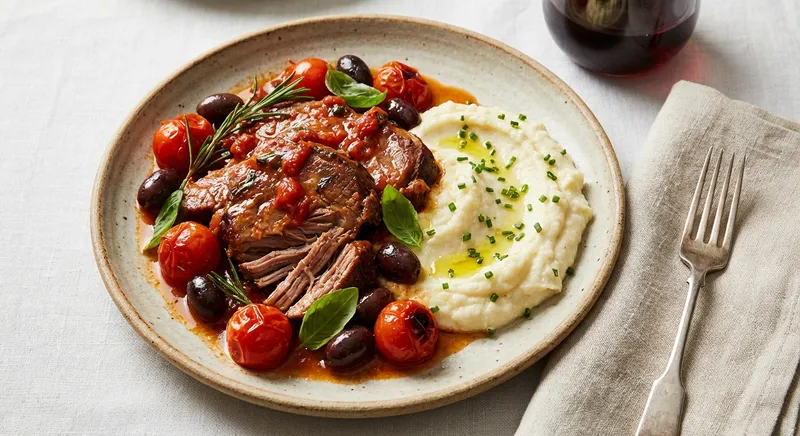
Slow-braised pork shoulder simmered in a bright, savory tomato sauce studded with briny Kalamata olives and capers, served atop a silky lemon-kissed cauliflower mash. The dish balances rich, fork-tender meat with bright acidity and salty, Mediterranean flavors — a restaurant-quality comfort meal that’s surprisingly light thanks to the cauliflower mash.
Pat the pork shoulder dry and cut into 3–4 large chunks (about 100–140 g each). Drying prevents steaming and helps a better brown crust — the Maillard reaction adds deep savory flavor to the braise.
Season the pork generously with 1 tsp kosher salt and 1/4 tsp black pepper. Heat a large, heavy-bottomed skillet or Dutch oven over medium-high heat and add 2 tbsp olive oil. When oil is shimmering (not smoking), add the pork pieces in a single layer without crowding. Sear 3–4 minutes per side until a deep golden-brown crust forms. Searing locks in flavor and builds fond (brown bits) that will flavor the sauce.
Remove the pork to a plate. Lower heat to medium, add 1 tbsp butter and the diced onion. Cook, stirring occasionally, 6–8 minutes until the onion softens and starts to brown — caramelized onion adds sweetness that balances the tomatoes. Add the garlic and red pepper flakes and cook 30–45 seconds until fragrant (don’t let garlic burn).
Pour in the wine to deglaze the pan, scraping up the browned bits with a wooden spoon. Allow the wine to reduce by half (about 2–3 minutes) — reduction concentrates flavor and removes harsh alcohol taste. If you’re skipping wine, use an equal amount of stock.
Return the pork to the pot. Add the canned crushed tomatoes, chicken stock, rosemary sprig, bay leaf, remaining 1/2 tsp salt, and another 1/4 tsp pepper. Stir to combine, bring to a gentle simmer, then lower heat to maintain a low simmer. Partially cover the pot and braise for 60–75 minutes, turning the pork halfway through. Low, steady heat will break down connective tissue in the shoulder, producing tender, shreddable meat without drying it out.
About 15 minutes before the pork is done, stir in the halved Kalamata olives and drained capers. The final short cook on the olives/capers keeps their briny flavor bright and prevents them from becoming mealy.
While the pork finishes braising, steam the cauliflower: place florets in a steamer basket over boiling water (or in a pot with a couple inches of water covered) and steam until very tender, 8–10 minutes. Tender cauliflower mashes smoothly and stays moist — boiling can waterlog it.
Transfer the steamed cauliflower to a blender or food processor (or use an immersion blender). Add 1 tbsp butter, 1 tbsp olive oil, the milk, lemon zest, and a pinch of salt. Blend to a silky consistency. Taste and adjust seasoning. The lemon brightens the mash and cuts the richness of pork and butter.
Remove the pork from the braise, discard the rosemary sprig and bay leaf, and let the meat rest on a cutting board 5 minutes. Shred or slice the pork against the grain and return to the sauce to coat. Resting allows juices to redistribute so the meat remains succulent.
To serve: spoon a generous bed of cauliflower mash onto each plate, top with braised pork and a ladle of tomato-olive sauce. Finish with an optional sprinkle of Parmigiano-Reggiano and a drizzle of good olive oil. The contrast of creamy mash, tender pork, and briny sauce is the signature of this dish.
682
Calories
31g
Protein
24g
Carbs
50g
Fat
8g
Fiber
How did this recipe turn out? Let others know!
to rate this recipe
By abbey f
Slow-braised pork shoulder simmered in a bright, savory tomato sauce studded with briny Kalamata olives and capers, served atop a silky lemon-kissed cauliflower mash. The dish balances rich, fork-tender meat with bright acidity and salty, Mediterranean flavors — a restaurant-quality comfort meal that’s surprisingly light thanks to the cauliflower mash.
Pat the pork shoulder dry and cut into 3–4 large chunks (about 100–140 g each). Drying prevents steaming and helps a better brown crust — the Maillard reaction adds deep savory flavor to the braise.
Season the pork generously with 1 tsp kosher salt and 1/4 tsp black pepper. Heat a large, heavy-bottomed skillet or Dutch oven over medium-high heat and add 2 tbsp olive oil. When oil is shimmering (not smoking), add the pork pieces in a single layer without crowding. Sear 3–4 minutes per side until a deep golden-brown crust forms. Searing locks in flavor and builds fond (brown bits) that will flavor the sauce.
Remove the pork to a plate. Lower heat to medium, add 1 tbsp butter and the diced onion. Cook, stirring occasionally, 6–8 minutes until the onion softens and starts to brown — caramelized onion adds sweetness that balances the tomatoes. Add the garlic and red pepper flakes and cook 30–45 seconds until fragrant (don’t let garlic burn).
Pour in the wine to deglaze the pan, scraping up the browned bits with a wooden spoon. Allow the wine to reduce by half (about 2–3 minutes) — reduction concentrates flavor and removes harsh alcohol taste. If you’re skipping wine, use an equal amount of stock.
Return the pork to the pot. Add the canned crushed tomatoes, chicken stock, rosemary sprig, bay leaf, remaining 1/2 tsp salt, and another 1/4 tsp pepper. Stir to combine, bring to a gentle simmer, then lower heat to maintain a low simmer. Partially cover the pot and braise for 60–75 minutes, turning the pork halfway through. Low, steady heat will break down connective tissue in the shoulder, producing tender, shreddable meat without drying it out.
About 15 minutes before the pork is done, stir in the halved Kalamata olives and drained capers. The final short cook on the olives/capers keeps their briny flavor bright and prevents them from becoming mealy.
While the pork finishes braising, steam the cauliflower: place florets in a steamer basket over boiling water (or in a pot with a couple inches of water covered) and steam until very tender, 8–10 minutes. Tender cauliflower mashes smoothly and stays moist — boiling can waterlog it.
Transfer the steamed cauliflower to a blender or food processor (or use an immersion blender). Add 1 tbsp butter, 1 tbsp olive oil, the milk, lemon zest, and a pinch of salt. Blend to a silky consistency. Taste and adjust seasoning. The lemon brightens the mash and cuts the richness of pork and butter.
Remove the pork from the braise, discard the rosemary sprig and bay leaf, and let the meat rest on a cutting board 5 minutes. Shred or slice the pork against the grain and return to the sauce to coat. Resting allows juices to redistribute so the meat remains succulent.
To serve: spoon a generous bed of cauliflower mash onto each plate, top with braised pork and a ladle of tomato-olive sauce. Finish with an optional sprinkle of Parmigiano-Reggiano and a drizzle of good olive oil. The contrast of creamy mash, tender pork, and briny sauce is the signature of this dish.
682
Calories
31g
Protein
24g
Carbs
50g
Fat
8g
Fiber
Your Rating:
