By abbey f
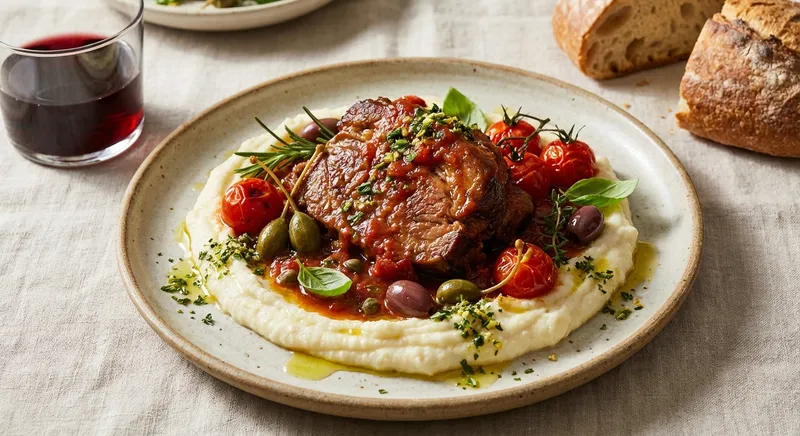
Tender, slow-braised pork shoulder simmers in a fragrant tomato, rosemary and olive sauce — brightened by salty capers and briny Kalamatas — and is served atop a silky cauliflower mash. The dish balances rich, fall-apart pork with a tangy Mediterranean sauce and a light, buttery mash for a restaurant-style plate that's comforting yet refined.
Pat the pork shoulder dry and season evenly with 1 tsp kosher salt and 1/4 tsp freshly ground black pepper. Drying the surface removes excess moisture so the meat can brown — browning creates Maillard flavor compounds that deepen the final sauce.
Heat a large, heavy-bottomed skillet or Dutch oven over medium-high heat and add 1 tbsp olive oil. When the oil shimmers, sear the pork on all sides (about 3 minutes per side) until a deep golden crust forms. Searing at high heat develops flavor and 'locks in' juices; don't move the meat constantly — let it contact the pan so a crust can form.
Transfer the seared pork to a plate. Reduce heat to medium, add the thinly sliced onion to the hot pan and a pinch of salt, and cook until soft and lightly caramelized (6–8 minutes). Caramelizing the onion adds sweetness and a savory base for the braise.
Add the minced garlic and the rosemary sprigs to the onions and cook for 30–45 seconds until fragrant — garlic can burn quickly, so cook just until aromatic. Stir to deglaze any browned bits in the pan to capture concentrated flavor.
Pour in the crushed tomatoes and 120 ml water or stock, scraping the pan to lift the fond (browned bits). Bring the mixture to a gentle simmer and season with the remaining 1/2 tsp salt and remaining 1/4 tsp pepper. The tomatoes provide acidity to balance the richness of the pork and help tenderize the meat during braising.
Return the seared pork to the pan, nestling it into the tomato mixture. Cover the pan with a tight-fitting lid and reduce the heat to low so the sauce is barely simmering. Braise gently for 50–60 minutes, turning the pork once halfway through so it cooks evenly. Low, steady heat breaks down connective tissue (collagen) into gelatin, yielding tender, moist pork.
After 50–60 minutes, test for doneness: the pork should be fork-tender and easily pull apart. Remove the pork onto a cutting board and tent loosely with foil to rest while you finish the sauce. Resting lets the meat reabsorb juices and makes slicing easier.
While the pork rests, stir the olives and capers into the simmering tomato sauce and simmer uncovered for 4–6 minutes to meld flavors and reduce slightly. The briny olives and capers brighten the sauce — add them late to preserve their texture and fresh flavor.
Meanwhile, bring a large pot of salted water (1 tsp salt) to a boil and add the cauliflower florets. Cook until very tender, 8–10 minutes. Cooking the cauliflower until very soft ensures a silky mash without graininess.
Drain the cauliflower well, reserving 60–80 ml of the cooking water. Return the cauliflower to the pot off the heat, add 1 tbsp butter, a pinch of salt and the reserved cooking water a splash at a time, and mash with a potato masher or use an immersion blender for an ultra-smooth texture. Use the starchy cooking water instead of milk for a lighter, cream-like finish.
Slice or pull the pork into portions and return briefly to the sauce for 1–2 minutes to rewarm and coat in sauce. Spoon a generous mound of cauliflower mash onto each plate, top with the braised pork and spoon the olives-and-caper tomato sauce over the meat. Finish with a drizzle of extra-virgin olive oil and a sprinkle of chopped fresh rosemary for aroma and color.
Taste and adjust seasoning: add more salt or a squeeze of lemon (optional) if the sauce needs brightness. Serve immediately while hot.
750
Calories
42g
Protein
23g
Carbs
58g
Fat
8g
Fiber
How did this recipe turn out? Let others know!
to rate this recipe
By abbey f
Tender, slow-braised pork shoulder simmers in a fragrant tomato, rosemary and olive sauce — brightened by salty capers and briny Kalamatas — and is served atop a silky cauliflower mash. The dish balances rich, fall-apart pork with a tangy Mediterranean sauce and a light, buttery mash for a restaurant-style plate that's comforting yet refined.
Pat the pork shoulder dry and season evenly with 1 tsp kosher salt and 1/4 tsp freshly ground black pepper. Drying the surface removes excess moisture so the meat can brown — browning creates Maillard flavor compounds that deepen the final sauce.
Heat a large, heavy-bottomed skillet or Dutch oven over medium-high heat and add 1 tbsp olive oil. When the oil shimmers, sear the pork on all sides (about 3 minutes per side) until a deep golden crust forms. Searing at high heat develops flavor and 'locks in' juices; don't move the meat constantly — let it contact the pan so a crust can form.
Transfer the seared pork to a plate. Reduce heat to medium, add the thinly sliced onion to the hot pan and a pinch of salt, and cook until soft and lightly caramelized (6–8 minutes). Caramelizing the onion adds sweetness and a savory base for the braise.
Add the minced garlic and the rosemary sprigs to the onions and cook for 30–45 seconds until fragrant — garlic can burn quickly, so cook just until aromatic. Stir to deglaze any browned bits in the pan to capture concentrated flavor.
Pour in the crushed tomatoes and 120 ml water or stock, scraping the pan to lift the fond (browned bits). Bring the mixture to a gentle simmer and season with the remaining 1/2 tsp salt and remaining 1/4 tsp pepper. The tomatoes provide acidity to balance the richness of the pork and help tenderize the meat during braising.
Return the seared pork to the pan, nestling it into the tomato mixture. Cover the pan with a tight-fitting lid and reduce the heat to low so the sauce is barely simmering. Braise gently for 50–60 minutes, turning the pork once halfway through so it cooks evenly. Low, steady heat breaks down connective tissue (collagen) into gelatin, yielding tender, moist pork.
After 50–60 minutes, test for doneness: the pork should be fork-tender and easily pull apart. Remove the pork onto a cutting board and tent loosely with foil to rest while you finish the sauce. Resting lets the meat reabsorb juices and makes slicing easier.
While the pork rests, stir the olives and capers into the simmering tomato sauce and simmer uncovered for 4–6 minutes to meld flavors and reduce slightly. The briny olives and capers brighten the sauce — add them late to preserve their texture and fresh flavor.
Meanwhile, bring a large pot of salted water (1 tsp salt) to a boil and add the cauliflower florets. Cook until very tender, 8–10 minutes. Cooking the cauliflower until very soft ensures a silky mash without graininess.
Drain the cauliflower well, reserving 60–80 ml of the cooking water. Return the cauliflower to the pot off the heat, add 1 tbsp butter, a pinch of salt and the reserved cooking water a splash at a time, and mash with a potato masher or use an immersion blender for an ultra-smooth texture. Use the starchy cooking water instead of milk for a lighter, cream-like finish.
Slice or pull the pork into portions and return briefly to the sauce for 1–2 minutes to rewarm and coat in sauce. Spoon a generous mound of cauliflower mash onto each plate, top with the braised pork and spoon the olives-and-caper tomato sauce over the meat. Finish with a drizzle of extra-virgin olive oil and a sprinkle of chopped fresh rosemary for aroma and color.
Taste and adjust seasoning: add more salt or a squeeze of lemon (optional) if the sauce needs brightness. Serve immediately while hot.
750
Calories
42g
Protein
23g
Carbs
58g
Fat
8g
Fiber
Your Rating:
