By abbey f
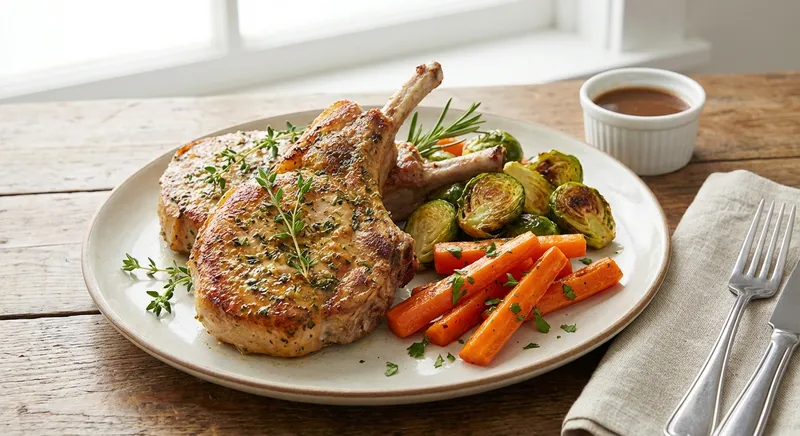
Bone-in pork chops are rubbed with fresh rosemary and thyme, seared to a golden crust, then finished in the oven alongside caramelized Brussels sprouts, sweet carrot sticks and red onion. The result is a rustic Italian-inspired, paleo-friendly dinner with juicy, herb-scented pork, crisp-tender roasted vegetables and bright, savory pan juices — restaurant-quality flavor with straightforward home-cook technique.
Bring the pork chops to room temperature for 20–30 minutes and pat dry with paper towels. Season both sides liberally with salt and pepper, then rub with the chopped rosemary and thyme mixed with 1 tablespoon of the olive oil. Why: letting meat come to room temp ensures even cooking and patting dry and salting early helps create a better sear; the olive oil with herbs forms an aromatic crust when seared.
Preheat the oven to 200°C (400°F). While the oven heats, toss the halved Brussels sprouts, carrot sticks and red onion in the remaining 1 tablespoon olive oil, a pinch of salt and pepper and spread them on a rimmed baking sheet in a single layer. Why: 400°F is hot enough to caramelize vegetables quickly without overcooking the pork; a single layer promotes even roasting and browning, which concentrates flavor.
Heat a large ovenproof skillet (cast iron ideal) over medium-high heat until shimmering. Add the pork chops, presentation-side down (fat/skin side first if present), and sear without moving for 2–3 minutes until a deep golden-brown crust forms. Flip and sear the other side 1–2 minutes. Why: high-heat searing creates the Maillard crust that gives pork intense savory flavor; doing this before the oven locks in juices and adds texture.
Nestle the seared pork chops onto the baking sheet among the vegetables (or place them on a wire rack over the vegetables if your pan allows), keeping them slightly apart for air circulation. Transfer the sheet to the preheated oven and roast for 10–14 minutes, or until an instant-read thermometer inserted into the thickest part of the meat (not touching bone) reads 60–62°C (140–144°F). Why: finishing in the oven cooks the meat gently and evenly; pulling pork at 60–62°C allows for carryover cooking to 63–65°C (145°F) producing juicy, slightly blush center recommended by many chefs.
While everything roasts, wipe out the skillet (if using) and place it back on medium heat. If there are pan drippings, deglaze with 1–2 tablespoons of warm water (or a splash of chicken stock if you have it) scraping up the browned bits; spoon this savory jus over the rested chops later. Why: deglazing captures concentrated flavor from the sear and makes a quick pan sauce without extra calories or thickening agents.
Remove pork and vegetables from the oven when the thermometer target is reached. Tent the pork loosely with foil and rest for 6–8 minutes — the internal temperature will rise a few degrees during this time. Why: resting allows the muscle fibers to relax and reabsorb juices so the meat remains moist when sliced.
While the pork rests, give the vegetables a quick toss on the sheet pan (they’ll continue to crisp as they cool). Taste for seasoning and add a small pinch of salt or pepper if needed. To serve, slice the pork chops against the grain (if visible), arrange on plates with the roasted vegetables, and drizzle with the reserved pan jus. Why: slicing against the grain shortens protein fibers and makes each bite more tender; the jus ties the dish together with a savory finish.
801
Calories
56g
Protein
17g
Carbs
57g
Fat
6g
Fiber
How did this recipe turn out? Let others know!
to rate this recipe
By abbey f
Bone-in pork chops are rubbed with fresh rosemary and thyme, seared to a golden crust, then finished in the oven alongside caramelized Brussels sprouts, sweet carrot sticks and red onion. The result is a rustic Italian-inspired, paleo-friendly dinner with juicy, herb-scented pork, crisp-tender roasted vegetables and bright, savory pan juices — restaurant-quality flavor with straightforward home-cook technique.
Bring the pork chops to room temperature for 20–30 minutes and pat dry with paper towels. Season both sides liberally with salt and pepper, then rub with the chopped rosemary and thyme mixed with 1 tablespoon of the olive oil. Why: letting meat come to room temp ensures even cooking and patting dry and salting early helps create a better sear; the olive oil with herbs forms an aromatic crust when seared.
Preheat the oven to 200°C (400°F). While the oven heats, toss the halved Brussels sprouts, carrot sticks and red onion in the remaining 1 tablespoon olive oil, a pinch of salt and pepper and spread them on a rimmed baking sheet in a single layer. Why: 400°F is hot enough to caramelize vegetables quickly without overcooking the pork; a single layer promotes even roasting and browning, which concentrates flavor.
Heat a large ovenproof skillet (cast iron ideal) over medium-high heat until shimmering. Add the pork chops, presentation-side down (fat/skin side first if present), and sear without moving for 2–3 minutes until a deep golden-brown crust forms. Flip and sear the other side 1–2 minutes. Why: high-heat searing creates the Maillard crust that gives pork intense savory flavor; doing this before the oven locks in juices and adds texture.
Nestle the seared pork chops onto the baking sheet among the vegetables (or place them on a wire rack over the vegetables if your pan allows), keeping them slightly apart for air circulation. Transfer the sheet to the preheated oven and roast for 10–14 minutes, or until an instant-read thermometer inserted into the thickest part of the meat (not touching bone) reads 60–62°C (140–144°F). Why: finishing in the oven cooks the meat gently and evenly; pulling pork at 60–62°C allows for carryover cooking to 63–65°C (145°F) producing juicy, slightly blush center recommended by many chefs.
While everything roasts, wipe out the skillet (if using) and place it back on medium heat. If there are pan drippings, deglaze with 1–2 tablespoons of warm water (or a splash of chicken stock if you have it) scraping up the browned bits; spoon this savory jus over the rested chops later. Why: deglazing captures concentrated flavor from the sear and makes a quick pan sauce without extra calories or thickening agents.
Remove pork and vegetables from the oven when the thermometer target is reached. Tent the pork loosely with foil and rest for 6–8 minutes — the internal temperature will rise a few degrees during this time. Why: resting allows the muscle fibers to relax and reabsorb juices so the meat remains moist when sliced.
While the pork rests, give the vegetables a quick toss on the sheet pan (they’ll continue to crisp as they cool). Taste for seasoning and add a small pinch of salt or pepper if needed. To serve, slice the pork chops against the grain (if visible), arrange on plates with the roasted vegetables, and drizzle with the reserved pan jus. Why: slicing against the grain shortens protein fibers and makes each bite more tender; the jus ties the dish together with a savory finish.
801
Calories
56g
Protein
17g
Carbs
57g
Fat
6g
Fiber
Your Rating:
