By emensah m
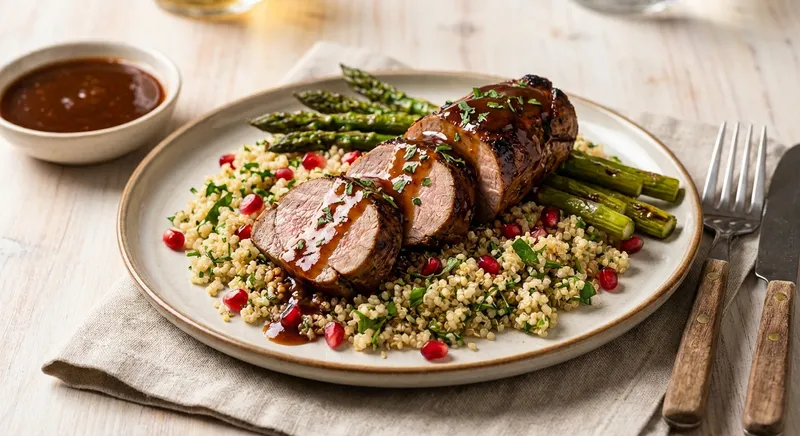
A glossy, sweet-tangy pork tenderloin glazed with tamarind and pure maple syrup, served over bright spring quinoa studded with parsley and mint, alongside crisp roasted asparagus and jewel-like pomegranate arils. The glaze caramelizes to a lacquered finish that contrasts with the herbaceous quinoa and the popping freshness of pomegranate—elegant, balanced, and restaurant-worthy yet simple enough for a weeknight.
Bring the quinoa and broth to the front: place 240 g rinsed quinoa in a fine sieve and rinse under cold water until the water runs clear (this removes quinoa's natural bitter coating, the saponin). Meanwhile bring 480 ml broth to a gentle simmer in a medium saucepan—using broth (not water) layers savory flavor into the quinoa.
Cook the quinoa: add the rinsed quinoa to the simmering broth, return to a gentle simmer, cover, and reduce heat to low. Cook 12–15 minutes until liquid is absorbed and the germ has spiraled out of the grain. Remove from heat and let rest, covered, 10 minutes—this steam finish ensures fluffy separate grains rather than gluey porridge.
Preheat oven and prepare asparagus: preheat the oven to 220°C (425°F). Toss 320 g asparagus with 4 tsp olive oil, a pinch of sea salt and black pepper on a rimmed baking sheet in a single layer—roasting at high heat quickly softens the stalks while caramelizing tips for sweetness and smoky notes.
Roast asparagus: roast in the preheated oven for 10–12 minutes (depending on thickness) until tender-crisp and slightly browned. Start roasting now so it finishes around the same time as the pork—timing keeps everything hot and at peak texture.
Make the sticky tamarind–maple glaze: in a small bowl whisk 2 tsp tamarind paste, 4 tbsp pure maple syrup, 4 tsp low-sodium soy sauce and the minced garlic (4 cloves). Taste and adjust balance—if the tamarind is intensely sour, add a touch more maple; if it’s mild, a small squeeze of lemon or extra tamarind can sharpen. The combination gives sweet, sour, umami and a garlicky underpinning.
Season and sear the pork: pat the 640 g pork medallions dry with paper towels (dry surface = better sear). Season lightly with sea salt and black pepper. Heat a large heavy skillet over medium-high heat with 2 tbsp olive oil—hot oil and a dry surface produce Maillard browning, which creates deep flavor. Sear pork 1½–2 minutes per side until golden; you just want color, not full cook-through.
Glaze and finish the pork in the pan: reduce heat to medium, pour the tamarind–maple glaze into the skillet with the pork. As the glaze warms it will thin—use a spoon to baste the pork repeatedly for 2–3 minutes so the sugars caramelize evenly and form a glossy lacquer. The glaze’s acidity counters the maple’s sweetness and the soy adds depth.
Transfer to oven to finish (if needed): if medallions are thick, transfer the skillet (ovenproof) or move pork to a baking sheet and roast in the 220°C (425°F) oven for 6–8 minutes until an instant-read thermometer reads 63°C (145°F) for medium-rare to medium; for thinner medallions you may not need the oven—carryover will bring the temp up a few degrees during rest. Cooking to 63°C yields tender, juicy pork.
Rest and glaze again: remove pork to a cutting board and let rest 5–7 minutes (resting lets juices redistribute; slicing too early dries the meat). While resting, spoon any remaining glaze into the hot pan and reduce for 1–2 minutes to concentrate; then brush a final coat over the sliced medallions for extra shine and flavor.
Finish the quinoa: fluff the rested quinoa with a fork to separate grains. Stir in 2 tbsp of the chopped parsley and 2 tbsp chopped mint (reserve the rest for garnish) and 1 tbsp olive oil (optional) to add silk and lift the flavors—fresh herbs brighten the nutty quinoa. Season to taste with sea salt and pepper.
Plate with care: spoon a bed of herb quinoa onto warm plates, arrange sliced pork medallions on top or alongside, place roasted asparagus next to the protein, then scatter 1 tbsp pomegranate arils over each portion for bursts of acidity and texture. Spoon any extra reduced glaze over the pork for an attractive lacquered finish.
Garnish and finish: sprinkle the remaining chopped herbs over the dish and, if you like, a small pinch of flaky sea salt over the glazed pork to heighten brightness. Serve immediately so the textures contrast—creamy quinoa, crisp asparagus and sticky-sweet pork.
717
Calories
47g
Protein
62g
Carbs
33g
Fat
7g
Fiber
How did this recipe turn out? Let others know!
to rate this recipe
By emensah m
A glossy, sweet-tangy pork tenderloin glazed with tamarind and pure maple syrup, served over bright spring quinoa studded with parsley and mint, alongside crisp roasted asparagus and jewel-like pomegranate arils. The glaze caramelizes to a lacquered finish that contrasts with the herbaceous quinoa and the popping freshness of pomegranate—elegant, balanced, and restaurant-worthy yet simple enough for a weeknight.
Bring the quinoa and broth to the front: place 240 g rinsed quinoa in a fine sieve and rinse under cold water until the water runs clear (this removes quinoa's natural bitter coating, the saponin). Meanwhile bring 480 ml broth to a gentle simmer in a medium saucepan—using broth (not water) layers savory flavor into the quinoa.
Cook the quinoa: add the rinsed quinoa to the simmering broth, return to a gentle simmer, cover, and reduce heat to low. Cook 12–15 minutes until liquid is absorbed and the germ has spiraled out of the grain. Remove from heat and let rest, covered, 10 minutes—this steam finish ensures fluffy separate grains rather than gluey porridge.
Preheat oven and prepare asparagus: preheat the oven to 220°C (425°F). Toss 320 g asparagus with 4 tsp olive oil, a pinch of sea salt and black pepper on a rimmed baking sheet in a single layer—roasting at high heat quickly softens the stalks while caramelizing tips for sweetness and smoky notes.
Roast asparagus: roast in the preheated oven for 10–12 minutes (depending on thickness) until tender-crisp and slightly browned. Start roasting now so it finishes around the same time as the pork—timing keeps everything hot and at peak texture.
Make the sticky tamarind–maple glaze: in a small bowl whisk 2 tsp tamarind paste, 4 tbsp pure maple syrup, 4 tsp low-sodium soy sauce and the minced garlic (4 cloves). Taste and adjust balance—if the tamarind is intensely sour, add a touch more maple; if it’s mild, a small squeeze of lemon or extra tamarind can sharpen. The combination gives sweet, sour, umami and a garlicky underpinning.
Season and sear the pork: pat the 640 g pork medallions dry with paper towels (dry surface = better sear). Season lightly with sea salt and black pepper. Heat a large heavy skillet over medium-high heat with 2 tbsp olive oil—hot oil and a dry surface produce Maillard browning, which creates deep flavor. Sear pork 1½–2 minutes per side until golden; you just want color, not full cook-through.
Glaze and finish the pork in the pan: reduce heat to medium, pour the tamarind–maple glaze into the skillet with the pork. As the glaze warms it will thin—use a spoon to baste the pork repeatedly for 2–3 minutes so the sugars caramelize evenly and form a glossy lacquer. The glaze’s acidity counters the maple’s sweetness and the soy adds depth.
Transfer to oven to finish (if needed): if medallions are thick, transfer the skillet (ovenproof) or move pork to a baking sheet and roast in the 220°C (425°F) oven for 6–8 minutes until an instant-read thermometer reads 63°C (145°F) for medium-rare to medium; for thinner medallions you may not need the oven—carryover will bring the temp up a few degrees during rest. Cooking to 63°C yields tender, juicy pork.
Rest and glaze again: remove pork to a cutting board and let rest 5–7 minutes (resting lets juices redistribute; slicing too early dries the meat). While resting, spoon any remaining glaze into the hot pan and reduce for 1–2 minutes to concentrate; then brush a final coat over the sliced medallions for extra shine and flavor.
Finish the quinoa: fluff the rested quinoa with a fork to separate grains. Stir in 2 tbsp of the chopped parsley and 2 tbsp chopped mint (reserve the rest for garnish) and 1 tbsp olive oil (optional) to add silk and lift the flavors—fresh herbs brighten the nutty quinoa. Season to taste with sea salt and pepper.
Plate with care: spoon a bed of herb quinoa onto warm plates, arrange sliced pork medallions on top or alongside, place roasted asparagus next to the protein, then scatter 1 tbsp pomegranate arils over each portion for bursts of acidity and texture. Spoon any extra reduced glaze over the pork for an attractive lacquered finish.
Garnish and finish: sprinkle the remaining chopped herbs over the dish and, if you like, a small pinch of flaky sea salt over the glazed pork to heighten brightness. Serve immediately so the textures contrast—creamy quinoa, crisp asparagus and sticky-sweet pork.
717
Calories
47g
Protein
62g
Carbs
33g
Fat
7g
Fiber
Your Rating:
