By emensah m
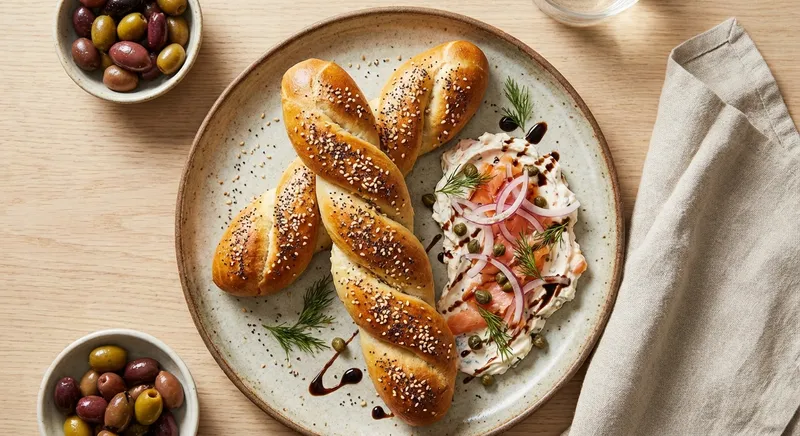
Baguels are an irresistible hybrid: the dense, toothsome chew of a classic New York bagel stretched into an elongated, sandwich-ready shape with a blistered, glossy crust. Each bite delivers a crisp, slightly caramelized exterior, a resilient, open-yet-dense crumb, and toasts beautifully — perfect for deli-style sandwiches or slathering with butter and jam.
Measure and warm liquids: Weigh 300 g warm water (100–110°F / 38–43°C). Warm water wakes yeast without killing it; too hot kills yeast, too cool slows fermentation.
Bloom the yeast and sugar (if using active dry): If using active dry yeast, sprinkle 7 g yeast and 10 g of the sugar into the warm water, stir gently and wait 5–8 minutes until foamy. For instant yeast, you may mix it directly with the flour, but dissolving in warm water shortens the initial wait and ensures yeast viability.
Mix flour, salt, oil and remaining sugar: Put 500 g bread flour and 10 g salt in a large bowl. Add 15 g olive oil and the remaining sugar (approx 15 g). Mix once to combine. Salt controls yeast activity and enhances flavor; oil softens the crumb and helps stretch the dough for the baguette-style shape.
Combine and autolyse briefly: Pour the yeast-water into the flour and mix with a wooden spoon or spatula until a shaggy dough forms. Let rest 10–15 minutes (autolyse). This resting period hydrates the flour and starts gluten development, making kneading faster and improving texture.
Knead to develop a strong gluten network: Turn the dough onto a lightly floured surface and knead 8–10 minutes by hand (or 6–7 minutes in a stand mixer with dough hook) until the dough is smooth, elastic, and holds a slight windowpane when stretched. Strong gluten is essential for the characteristic chew of a bagel/‘baguel’ and for the elongated shape to hold during proofing and boil.
First rise (bulk fermentation): Shape into a ball, place in a lightly oiled bowl, cover with plastic wrap or a towel, and let rise in a warm spot 45–60 minutes, until about 50–70% larger. This controlled rise creates flavor without overproofing; underproofed dough will be tight, overproofed will deflate in the boil.
Divide and pre-shape: Turn the dough out and gently degas. Divide into 8 equal pieces (approx 125–130 g each). Pre-shape each piece into a tight cylinder and rest 10 minutes under a damp towel to relax the gluten — relaxed dough is easier to shape into a long, uniform baguette-like roll without springback.
Final shaping into 'baguels': On a lightly floured surface, roll each rested cylinder into an elongated shape about 10–12" (25–30 cm) long, tapering the ends slightly like a mini-baguette but thicker in the middle (aim for 2–2.5" / 5–6 cm width). This shape gives the toast-ready center of a baguette with the density and chew of a bagel.
Proof on a tray: Place shaped baguels seam-side down on a parchment-lined baking sheet dusted with semolina or cornmeal (optional for texture), cover loosely with lightly oiled plastic or a damp towel, and proof 25–35 minutes until puffed but not fully doubled. This final proof relaxes the dough and primes the interior for a good oven spring.
Preheat oven and prepare boiling bath: Preheat oven to 450°F (230°C) with a rack in the lower third. About 15 minutes before baking, bring ~2 liters of water to a rolling simmer in a wide pot. Add 15 g baking soda and 15 g honey to the water — the alkaline baking soda converts surface starches to dextrins and promotes Maillard browning and chew; the honey adds color and subtle flavor.
Boil briefly to set the crust: Working 2–3 at a time, gently lower each baguel into the simmering water and boil 30–45 seconds per side (flip once) — longer boiling makes a chewier, denser interior and thicker crust. Use a slotted spatula to transfer back to the prepared baking sheet.
Egg wash and toppings: Beat 1 large egg with 1 tablespoon water to make a wash. Brush each wet baguel lightly for a glossy, deep brown crust. Sprinkle sesame, poppy seeds, or coarse salt now if desired. The egg wash helps seeds adhere and develops a shiny, celebratory crust.
Bake with steam: Place tray in the lower third of the oven and bake 18–22 minutes, rotating once, until deeply golden and slightly blistered. For a crisper crust, create steam in the first 6–8 minutes by placing a small pan of hot water on the bottom rack or by spritzing the oven. Steam helps the crust expand before it sets, producing better oven spring and a thin, crisp exterior.
Cool and rest: Transfer baked baguels to a wire rack and cool 15–30 minutes before slicing. Cooling allows the crumb to set; slicing while hot yields a gummy interior. Reheat or toast before serving to revive surface crunch.
275
Calories
7g
Protein
53g
Carbs
3g
Fat
2g
Fiber
How did this recipe turn out? Let others know!
to rate this recipe
By emensah m
Baguels are an irresistible hybrid: the dense, toothsome chew of a classic New York bagel stretched into an elongated, sandwich-ready shape with a blistered, glossy crust. Each bite delivers a crisp, slightly caramelized exterior, a resilient, open-yet-dense crumb, and toasts beautifully — perfect for deli-style sandwiches or slathering with butter and jam.
Measure and warm liquids: Weigh 300 g warm water (100–110°F / 38–43°C). Warm water wakes yeast without killing it; too hot kills yeast, too cool slows fermentation.
Bloom the yeast and sugar (if using active dry): If using active dry yeast, sprinkle 7 g yeast and 10 g of the sugar into the warm water, stir gently and wait 5–8 minutes until foamy. For instant yeast, you may mix it directly with the flour, but dissolving in warm water shortens the initial wait and ensures yeast viability.
Mix flour, salt, oil and remaining sugar: Put 500 g bread flour and 10 g salt in a large bowl. Add 15 g olive oil and the remaining sugar (approx 15 g). Mix once to combine. Salt controls yeast activity and enhances flavor; oil softens the crumb and helps stretch the dough for the baguette-style shape.
Combine and autolyse briefly: Pour the yeast-water into the flour and mix with a wooden spoon or spatula until a shaggy dough forms. Let rest 10–15 minutes (autolyse). This resting period hydrates the flour and starts gluten development, making kneading faster and improving texture.
Knead to develop a strong gluten network: Turn the dough onto a lightly floured surface and knead 8–10 minutes by hand (or 6–7 minutes in a stand mixer with dough hook) until the dough is smooth, elastic, and holds a slight windowpane when stretched. Strong gluten is essential for the characteristic chew of a bagel/‘baguel’ and for the elongated shape to hold during proofing and boil.
First rise (bulk fermentation): Shape into a ball, place in a lightly oiled bowl, cover with plastic wrap or a towel, and let rise in a warm spot 45–60 minutes, until about 50–70% larger. This controlled rise creates flavor without overproofing; underproofed dough will be tight, overproofed will deflate in the boil.
Divide and pre-shape: Turn the dough out and gently degas. Divide into 8 equal pieces (approx 125–130 g each). Pre-shape each piece into a tight cylinder and rest 10 minutes under a damp towel to relax the gluten — relaxed dough is easier to shape into a long, uniform baguette-like roll without springback.
Final shaping into 'baguels': On a lightly floured surface, roll each rested cylinder into an elongated shape about 10–12" (25–30 cm) long, tapering the ends slightly like a mini-baguette but thicker in the middle (aim for 2–2.5" / 5–6 cm width). This shape gives the toast-ready center of a baguette with the density and chew of a bagel.
Proof on a tray: Place shaped baguels seam-side down on a parchment-lined baking sheet dusted with semolina or cornmeal (optional for texture), cover loosely with lightly oiled plastic or a damp towel, and proof 25–35 minutes until puffed but not fully doubled. This final proof relaxes the dough and primes the interior for a good oven spring.
Preheat oven and prepare boiling bath: Preheat oven to 450°F (230°C) with a rack in the lower third. About 15 minutes before baking, bring ~2 liters of water to a rolling simmer in a wide pot. Add 15 g baking soda and 15 g honey to the water — the alkaline baking soda converts surface starches to dextrins and promotes Maillard browning and chew; the honey adds color and subtle flavor.
Boil briefly to set the crust: Working 2–3 at a time, gently lower each baguel into the simmering water and boil 30–45 seconds per side (flip once) — longer boiling makes a chewier, denser interior and thicker crust. Use a slotted spatula to transfer back to the prepared baking sheet.
Egg wash and toppings: Beat 1 large egg with 1 tablespoon water to make a wash. Brush each wet baguel lightly for a glossy, deep brown crust. Sprinkle sesame, poppy seeds, or coarse salt now if desired. The egg wash helps seeds adhere and develops a shiny, celebratory crust.
Bake with steam: Place tray in the lower third of the oven and bake 18–22 minutes, rotating once, until deeply golden and slightly blistered. For a crisper crust, create steam in the first 6–8 minutes by placing a small pan of hot water on the bottom rack or by spritzing the oven. Steam helps the crust expand before it sets, producing better oven spring and a thin, crisp exterior.
Cool and rest: Transfer baked baguels to a wire rack and cool 15–30 minutes before slicing. Cooling allows the crumb to set; slicing while hot yields a gummy interior. Reheat or toast before serving to revive surface crunch.
275
Calories
7g
Protein
53g
Carbs
3g
Fat
2g
Fiber
Your Rating:
