By Emily Russell-smith
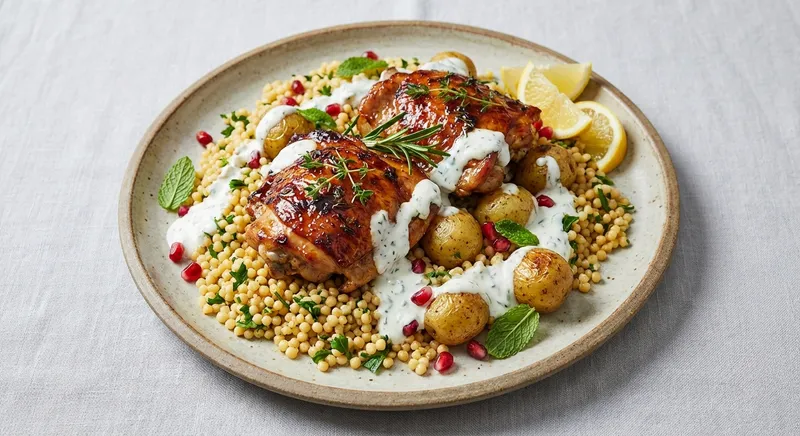
Bone-in, skin-on chicken thighs are marinated in a garlicky balsamic-rosemary mixture, roasted until the skin is deeply caramelized and crisp, and served with toasted Israeli (pearl) couscous studded with sweet peas and oven-rousted baby potatoes. A bright mint-yogurt drizzle with lemon cuts through the richness for a balanced, restaurant-quality plate of Mediterranean-inspired comfort.
Make the marinade and marinate the chicken: In a bowl combine 2 tbsp (30 ml) of the balsamic vinegar, minced garlic, chopped rosemary, 1 tbsp (15 ml) olive oil, 1/2 tsp smoked paprika, 1 tsp kosher salt and 1/2 tsp freshly ground black pepper. Whisk to blend. Pat the chicken thighs dry with paper towels (dry skin browns more crisply), then rub the marinade over the skin and under the skin where possible. Let rest at room temperature for 15–20 minutes or refrigerate up to 2 hours. WHY: The short marinade flavors the meat surface and the under-skin rub helps aromatics reach the meat; drying the skin first ensures a crisp, caramelized crust when seared/roasted.
Parboil the new potatoes: Place the halved baby potatoes in a pot, cover with cold salted water by 1 inch, bring to a simmer and cook 8–10 minutes until just tender when pierced with a knife (not falling apart). Drain and let steam-dry briefly. WHY: Parboiling gives the potatoes a tender interior while roasting afterwards produces a crisp, golden exterior in the same time the chicken needs to finish.
Preheat the oven to 425°F / 220°C with a rack in the middle. Line a rimmed baking sheet or roasting pan with foil or parchment for easier cleanup and to reflect heat; set a wire rack on the sheet if you like extra air circulation under the chicken (optional). WHY: A hot oven at 220°C produces rapid browning and caramelization on the skin and potatoes; a wire rack improves air circulation and crisping.
Sear the chicken skin: Heat a large ovenproof skillet over medium-high heat. When hot, place the chicken thighs skin-side down (no additional oil—there's plenty of fat in the skin) and press gently so the skin makes full contact. Sear 4–6 minutes without moving until deeply golden and most fat has rendered. WHY: Searing renders fat, crisps the skin and creates Maillard flavors that deepen the finished dish; starting on the stovetop gives more control over skin browning than oven-only roasting.
Toss the parboiled potatoes with 3 tbsp (45 ml) olive oil, a pinch of salt, pepper and 1/2 tsp smoked paprika. Spread them around the chicken in the roasting pan (or on the same rimmed sheet), cut sides down so they develop a golden crust. Reserve the remaining 2 tbsp (30 ml) balsamic vinegar for glazing. WHY: Coating the potatoes with oil and placing cut side down maximizes surface contact for browning; smoked paprika adds an earthy, slightly smoky note that complements the balsamic.
Roast: Transfer the skillet or sheet to the preheated oven. Roast 20–25 minutes, then brush the chicken skins with the reserved balsamic vinegar (this is the glaze). Continue roasting another 8–12 minutes until the internal temperature of the chicken reaches 165°F (74°C) at the thickest part (away from bone) and the potatoes are tender and deeply golden. WHY: Adding the balsamic near the end prevents the sugars from burning and gives a glossy, tangy glaze that balances the chicken's richness. Checking internal temperature ensures food safety and avoids overcooking.
Rest the chicken: Remove the pan from the oven and transfer chicken to a plate; tent loosely with foil and rest 5–8 minutes. Resting lets juices redistribute for juicier meat and makes carving easier. While the chicken rests, continue with the couscous and vegetables so everything finishes together.
Toast the Israeli couscous: In a medium saucepan, heat 4 tsp (approx. 20 ml) olive oil over medium heat. Add the dry Israeli couscous and toast, stirring constantly, 2–3 minutes until a few pearls take on a light golden color. WHY: Toasting the couscous adds a nutty depth and helps separate the pearls so the final texture is more complex and less gummy.
Add hot stock and cook covered: Pour the 640 ml hot stock into the toasted couscous, bring to a gentle simmer, reduce heat to low, cover and cook 8–10 minutes (follow package guidance as needed) until the liquid is absorbed and pearls are tender. Remove from heat and let sit covered 3 minutes to steam. WHY: Using hot stock keeps the cooking steady; resting after cooking lets any residual steam finish the pearls without overcooking.
Finish the couscous with peas and aromatics: Fluff the couscous with a fork, stir in the peas (they will warm through from the couscous heat), add 1 tsp lemon juice, 1 tsp lemon zest, salt and pepper to taste, and the remaining chopped rosemary if you like. Taste and adjust acidity/salt. WHY: Adding peas off-heat preserves their bright color and fresh flavor; lemon brightens the earthy couscous and cuts richness.
Make the mint-yogurt drizzle: In a small bowl mix the Greek yogurt, chopped mint, remaining lemon zest (if any), 1 tsp lemon juice, a pinch of salt and pepper and 1–2 tsp water or olive oil to loosen to a spoonable consistency. WHY: The chilled, tangy yogurt sauce cools and freshens the plate and the mint adds a fragrant lift that pairs especially well with the balsamic and rosemary.
Plate and finish: Spoon a bed of couscous onto each plate, arrange a few roasted potatoes and a chicken thigh on top. Drizzle a spoonful of mint-yogurt over the chicken and potatoes and finish with a light sprinkle of flaky sea salt, a grind of black pepper and a final drizzle of any pan juices or a teaspoon of the reserved balsamic if desired. WHY: Layering hot and cold elements creates contrast in temperature and texture; finishing with flaky salt and a touch of acidity elevates the flavors and presentation.
Serve immediately: Offer lemon wedges and extra mint-yogurt on the side. Store leftovers (separate chicken and yogurt) in airtight containers in the refrigerator up to 3 days. WHY: The yogurt contains fresh herbs and should be kept chilled; separating components preserves textures (reheating chicken separately keeps skin from getting soggy).
1015
Calories
52g
Protein
83g
Carbs
49g
Fat
8g
Fiber
How did this recipe turn out? Let others know!
to rate this recipe
By Emily Russell-smith
Bone-in, skin-on chicken thighs are marinated in a garlicky balsamic-rosemary mixture, roasted until the skin is deeply caramelized and crisp, and served with toasted Israeli (pearl) couscous studded with sweet peas and oven-rousted baby potatoes. A bright mint-yogurt drizzle with lemon cuts through the richness for a balanced, restaurant-quality plate of Mediterranean-inspired comfort.
Make the marinade and marinate the chicken: In a bowl combine 2 tbsp (30 ml) of the balsamic vinegar, minced garlic, chopped rosemary, 1 tbsp (15 ml) olive oil, 1/2 tsp smoked paprika, 1 tsp kosher salt and 1/2 tsp freshly ground black pepper. Whisk to blend. Pat the chicken thighs dry with paper towels (dry skin browns more crisply), then rub the marinade over the skin and under the skin where possible. Let rest at room temperature for 15–20 minutes or refrigerate up to 2 hours. WHY: The short marinade flavors the meat surface and the under-skin rub helps aromatics reach the meat; drying the skin first ensures a crisp, caramelized crust when seared/roasted.
Parboil the new potatoes: Place the halved baby potatoes in a pot, cover with cold salted water by 1 inch, bring to a simmer and cook 8–10 minutes until just tender when pierced with a knife (not falling apart). Drain and let steam-dry briefly. WHY: Parboiling gives the potatoes a tender interior while roasting afterwards produces a crisp, golden exterior in the same time the chicken needs to finish.
Preheat the oven to 425°F / 220°C with a rack in the middle. Line a rimmed baking sheet or roasting pan with foil or parchment for easier cleanup and to reflect heat; set a wire rack on the sheet if you like extra air circulation under the chicken (optional). WHY: A hot oven at 220°C produces rapid browning and caramelization on the skin and potatoes; a wire rack improves air circulation and crisping.
Sear the chicken skin: Heat a large ovenproof skillet over medium-high heat. When hot, place the chicken thighs skin-side down (no additional oil—there's plenty of fat in the skin) and press gently so the skin makes full contact. Sear 4–6 minutes without moving until deeply golden and most fat has rendered. WHY: Searing renders fat, crisps the skin and creates Maillard flavors that deepen the finished dish; starting on the stovetop gives more control over skin browning than oven-only roasting.
Toss the parboiled potatoes with 3 tbsp (45 ml) olive oil, a pinch of salt, pepper and 1/2 tsp smoked paprika. Spread them around the chicken in the roasting pan (or on the same rimmed sheet), cut sides down so they develop a golden crust. Reserve the remaining 2 tbsp (30 ml) balsamic vinegar for glazing. WHY: Coating the potatoes with oil and placing cut side down maximizes surface contact for browning; smoked paprika adds an earthy, slightly smoky note that complements the balsamic.
Roast: Transfer the skillet or sheet to the preheated oven. Roast 20–25 minutes, then brush the chicken skins with the reserved balsamic vinegar (this is the glaze). Continue roasting another 8–12 minutes until the internal temperature of the chicken reaches 165°F (74°C) at the thickest part (away from bone) and the potatoes are tender and deeply golden. WHY: Adding the balsamic near the end prevents the sugars from burning and gives a glossy, tangy glaze that balances the chicken's richness. Checking internal temperature ensures food safety and avoids overcooking.
Rest the chicken: Remove the pan from the oven and transfer chicken to a plate; tent loosely with foil and rest 5–8 minutes. Resting lets juices redistribute for juicier meat and makes carving easier. While the chicken rests, continue with the couscous and vegetables so everything finishes together.
Toast the Israeli couscous: In a medium saucepan, heat 4 tsp (approx. 20 ml) olive oil over medium heat. Add the dry Israeli couscous and toast, stirring constantly, 2–3 minutes until a few pearls take on a light golden color. WHY: Toasting the couscous adds a nutty depth and helps separate the pearls so the final texture is more complex and less gummy.
Add hot stock and cook covered: Pour the 640 ml hot stock into the toasted couscous, bring to a gentle simmer, reduce heat to low, cover and cook 8–10 minutes (follow package guidance as needed) until the liquid is absorbed and pearls are tender. Remove from heat and let sit covered 3 minutes to steam. WHY: Using hot stock keeps the cooking steady; resting after cooking lets any residual steam finish the pearls without overcooking.
Finish the couscous with peas and aromatics: Fluff the couscous with a fork, stir in the peas (they will warm through from the couscous heat), add 1 tsp lemon juice, 1 tsp lemon zest, salt and pepper to taste, and the remaining chopped rosemary if you like. Taste and adjust acidity/salt. WHY: Adding peas off-heat preserves their bright color and fresh flavor; lemon brightens the earthy couscous and cuts richness.
Make the mint-yogurt drizzle: In a small bowl mix the Greek yogurt, chopped mint, remaining lemon zest (if any), 1 tsp lemon juice, a pinch of salt and pepper and 1–2 tsp water or olive oil to loosen to a spoonable consistency. WHY: The chilled, tangy yogurt sauce cools and freshens the plate and the mint adds a fragrant lift that pairs especially well with the balsamic and rosemary.
Plate and finish: Spoon a bed of couscous onto each plate, arrange a few roasted potatoes and a chicken thigh on top. Drizzle a spoonful of mint-yogurt over the chicken and potatoes and finish with a light sprinkle of flaky sea salt, a grind of black pepper and a final drizzle of any pan juices or a teaspoon of the reserved balsamic if desired. WHY: Layering hot and cold elements creates contrast in temperature and texture; finishing with flaky salt and a touch of acidity elevates the flavors and presentation.
Serve immediately: Offer lemon wedges and extra mint-yogurt on the side. Store leftovers (separate chicken and yogurt) in airtight containers in the refrigerator up to 3 days. WHY: The yogurt contains fresh herbs and should be kept chilled; separating components preserves textures (reheating chicken separately keeps skin from getting soggy).
1015
Calories
52g
Protein
83g
Carbs
49g
Fat
8g
Fiber
Your Rating:
