By Kathryn Scott
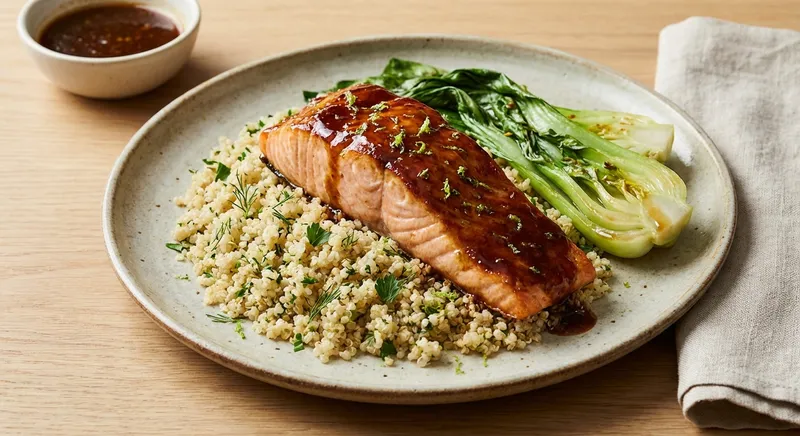
Silky steamed salmon glazed with bright tamarind and lime, paired with ginger‑scented baby bok choy and herb‑studded quinoa. The dish balances tangy, savory, and umami notes with tender fish, crisp‑tender greens and fluffy quinoa finished with sesame oil and fresh cilantro for a restaurant-level finish.
Make the tamarind‑lime glaze: In a small bowl whisk together tamarind paste, fresh lime juice, grated ginger, thinly sliced garlic, sugar (if using) and a tablespoon of water (a little water loosens the paste). Taste — tamarind is sharp; the sugar balances acidity. This glaze is bright and concentrated, so you’ll use it sparingly to season the fish and to steam with.
Prep the salmon: Pat fillets dry and season skin and flesh lightly with sea salt and cracked black pepper. Score the skin with two shallow diagonal cuts (don’t cut through the flesh) to prevent the fillet from curling when it hits hot pan or steam. Spoon about 1 teaspoon of the tamarind glaze across the top of each fillet (reserve most glaze for steaming/finishing). Marinating briefly (5–10 minutes) lets the flavors sit on the surface without 'cooking' the fish with acid.
Crisp the skin: Heat a large nonstick or well-seasoned cast‑iron skillet over medium‑high heat and add the neutral oil. Place salmon skin‑side down and press gently with a spatula for 20–30 seconds to ensure full contact — this yields a uniformly crisp skin. Sear 1½–2 minutes until the skin is deeply golden (you are rendering fat and developing flavor). Do not move the fillets while searing.
Steam to finish gently: Turn the heat to medium-low. Add 3–4 tablespoons of water to the empty side of the skillet (or 1/2 cup if you are using a steamer basket) and quickly spoon 1 tablespoon of the reserved tamarind glaze into the water so the steam carries the flavor. Cover immediately with a tight lid to trap steam; cook 3–5 minutes, depending on thickness, until the salmon reaches 52–54°C (125–130°F) for medium (it will continue to carry-over cook while resting). This short steaming step finishes the interior gently and infuses the glaze aroma without drying the fish.
Rest the salmon: Transfer fillets to a warm plate and loosely tent with foil for 3 minutes. Resting lets the juices redistribute and the residual heat brings the fish to perfect doneness.
Prepare the bok choy while the salmon cooks (same pan option): Trim bok choy bases and halve lengthwise (if large). In a second large skillet or in the same pan after removing the salmon, heat 1 tsp neutral oil over medium heat, add a scant pinch of salt and the remaining 1 tsp grated ginger. Add bok choy cut‑side down and sauté 1–2 minutes to get a light char—this concentrates flavor. Add 2–3 tablespoons water, cover and steam 2–3 minutes until stems are tender but leaves remain bright. Leaving them a bit crunchy preserves texture and nutrients.
Warm and herb the quinoa: While the bok choy wilts, warm the cooked quinoa in a saucepan over low heat with 1 teaspoon butter or oil and a splash (1 tbsp) water to loosen. Stir in half the sliced scallions and most of the cilantro (reserve some for garnish), a pinch of salt, a squeeze of lime (about 1 tsp), and 1 tsp toasted sesame oil. Fluff with a fork — heating gently refreshes the grains and brings out the fragrance of the herbs.
Finish the sauce and plating drizzle: Stir remaining tamarind glaze with 1 tsp toasted sesame oil and taste—adjust with a touch more lime or salt if needed. This small drizzle will be spooned over the salmon so the tartness arrives last on the palate.
Assemble: Spoon a bed of herbed quinoa onto each plate, arrange 2 halved bok choy (or appropriate weight) alongside, and place a salmon fillet on top or beside the quinoa. Spoon a little of the tamarind‑sesame finish over the fish (not so much that it overwhelms), scatter sliced scallions, cilantro leaves and a tiny pinch of red chili flakes for heat. Finish with a light drizzle (≈½ tsp per serving) of toasted sesame oil for aroma.
Serve immediately: Serve warm so the contrast of tender fish, fragrant quinoa and crisp‑tender greens is at its best. Encourage guests to spoon the bok choy juices and tamarind glaze into the quinoa for a layered flavor experience.
610
Calories
43g
Protein
47g
Carbs
27g
Fat
7g
Fiber
How did this recipe turn out? Let others know!
to rate this recipe
By Kathryn Scott
Silky steamed salmon glazed with bright tamarind and lime, paired with ginger‑scented baby bok choy and herb‑studded quinoa. The dish balances tangy, savory, and umami notes with tender fish, crisp‑tender greens and fluffy quinoa finished with sesame oil and fresh cilantro for a restaurant-level finish.
Make the tamarind‑lime glaze: In a small bowl whisk together tamarind paste, fresh lime juice, grated ginger, thinly sliced garlic, sugar (if using) and a tablespoon of water (a little water loosens the paste). Taste — tamarind is sharp; the sugar balances acidity. This glaze is bright and concentrated, so you’ll use it sparingly to season the fish and to steam with.
Prep the salmon: Pat fillets dry and season skin and flesh lightly with sea salt and cracked black pepper. Score the skin with two shallow diagonal cuts (don’t cut through the flesh) to prevent the fillet from curling when it hits hot pan or steam. Spoon about 1 teaspoon of the tamarind glaze across the top of each fillet (reserve most glaze for steaming/finishing). Marinating briefly (5–10 minutes) lets the flavors sit on the surface without 'cooking' the fish with acid.
Crisp the skin: Heat a large nonstick or well-seasoned cast‑iron skillet over medium‑high heat and add the neutral oil. Place salmon skin‑side down and press gently with a spatula for 20–30 seconds to ensure full contact — this yields a uniformly crisp skin. Sear 1½–2 minutes until the skin is deeply golden (you are rendering fat and developing flavor). Do not move the fillets while searing.
Steam to finish gently: Turn the heat to medium-low. Add 3–4 tablespoons of water to the empty side of the skillet (or 1/2 cup if you are using a steamer basket) and quickly spoon 1 tablespoon of the reserved tamarind glaze into the water so the steam carries the flavor. Cover immediately with a tight lid to trap steam; cook 3–5 minutes, depending on thickness, until the salmon reaches 52–54°C (125–130°F) for medium (it will continue to carry-over cook while resting). This short steaming step finishes the interior gently and infuses the glaze aroma without drying the fish.
Rest the salmon: Transfer fillets to a warm plate and loosely tent with foil for 3 minutes. Resting lets the juices redistribute and the residual heat brings the fish to perfect doneness.
Prepare the bok choy while the salmon cooks (same pan option): Trim bok choy bases and halve lengthwise (if large). In a second large skillet or in the same pan after removing the salmon, heat 1 tsp neutral oil over medium heat, add a scant pinch of salt and the remaining 1 tsp grated ginger. Add bok choy cut‑side down and sauté 1–2 minutes to get a light char—this concentrates flavor. Add 2–3 tablespoons water, cover and steam 2–3 minutes until stems are tender but leaves remain bright. Leaving them a bit crunchy preserves texture and nutrients.
Warm and herb the quinoa: While the bok choy wilts, warm the cooked quinoa in a saucepan over low heat with 1 teaspoon butter or oil and a splash (1 tbsp) water to loosen. Stir in half the sliced scallions and most of the cilantro (reserve some for garnish), a pinch of salt, a squeeze of lime (about 1 tsp), and 1 tsp toasted sesame oil. Fluff with a fork — heating gently refreshes the grains and brings out the fragrance of the herbs.
Finish the sauce and plating drizzle: Stir remaining tamarind glaze with 1 tsp toasted sesame oil and taste—adjust with a touch more lime or salt if needed. This small drizzle will be spooned over the salmon so the tartness arrives last on the palate.
Assemble: Spoon a bed of herbed quinoa onto each plate, arrange 2 halved bok choy (or appropriate weight) alongside, and place a salmon fillet on top or beside the quinoa. Spoon a little of the tamarind‑sesame finish over the fish (not so much that it overwhelms), scatter sliced scallions, cilantro leaves and a tiny pinch of red chili flakes for heat. Finish with a light drizzle (≈½ tsp per serving) of toasted sesame oil for aroma.
Serve immediately: Serve warm so the contrast of tender fish, fragrant quinoa and crisp‑tender greens is at its best. Encourage guests to spoon the bok choy juices and tamarind glaze into the quinoa for a layered flavor experience.
610
Calories
43g
Protein
47g
Carbs
27g
Fat
7g
Fiber
Your Rating:
