By emensah m
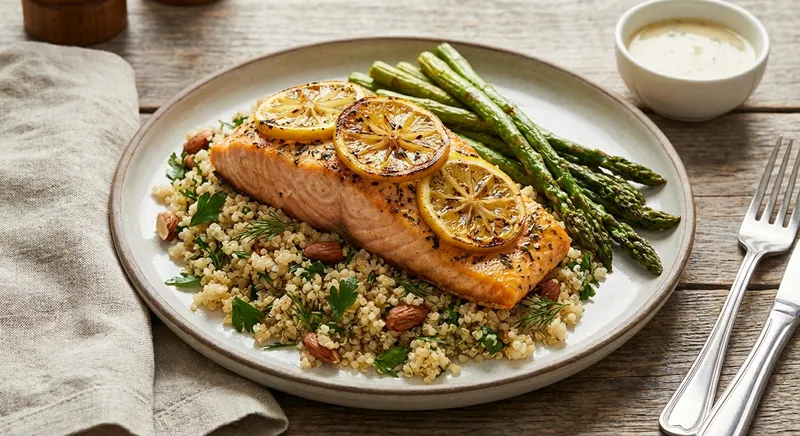
Tender, lemon-scented salmon fillets baked until flaky and bright, served over a warm, nutty quinoa pilaf studded with garlic and fresh parsley, alongside crisp-tender steamed asparagus. Bright citrus, herbal freshness and a satisfying quinoa texture make this a restaurant-quality, yet weeknight-friendly plate.
Preheat the oven to 425°F (220°C). Preheating to a high oven temperature gives the salmon a quick, even bake that seals the exterior and keeps the interior moist — it reduces overall cook time, so the fish remains tender.
Rinse the dry quinoa under cold water in a fine-mesh sieve for 30–60 seconds, rubbing the grains gently. Rinsing removes the bitter saponins that coat quinoa and ensures a clean, nutty flavor.
Heat a medium saucepan over medium heat and add 1 tablespoon olive oil. Add the minced garlic and toast for 20–30 seconds until fragrant — this 'blooming' releases aromatic oils and mellows raw sharpness. Add the rinsed quinoa and toast, stirring, for 1–2 minutes until it smells nutty; toasting deepens flavor and reduces any grassy notes.
Pour in 2 cups of low-sodium broth (or water) and add 1/2 teaspoon kosher salt. Bring to a rolling boil, then reduce heat to low, cover, and simmer gently for 12–15 minutes, or until the liquid is absorbed. Simmering on low prevents the grains from breaking and creates even cooking.
While quinoa cooks, pat the salmon fillets dry with paper towels (removing surface moisture helps the oil and seasonings stick and promotes even browning). Season both sides with 1/4 tsp kosher salt and a few grinds of black pepper. Place fillets skin-side down (if skin-on) on a foil-lined baking sheet.
Drizzle the salmon with 1/2 tablespoon olive oil, rub lightly to coat, then sprinkle the lemon zest over the tops and lay 2 thin lemon slices on each fillet. The lemon slices create gentle steaming and infuse citrus aroma; olive oil helps conduct heat and prevents sticking.
Place the salmon in the preheated oven and bake for 10–12 minutes (for 6 oz fillets). Check at 10 minutes — salmon is done when it flakes easily with a fork and the thickest part reads 125–130°F (52–54°C) on an instant-read thermometer for a moist, slightly rosy center. If you prefer fully cooked per USDA guidance, cook to 145°F (63°C). Carryover heat will continue to raise the temperature slightly while resting.
While the salmon bakes, steam the asparagus. Trim the woody ends (snap or cut off the bottom 1–1.5 inches). Bring 1/2 inch of salted water to a simmer in a wide skillet or sauté pan with a tight-fitting lid. Add the asparagus, cover, and steam for 3–5 minutes depending on thickness — you want bright green, tender-crisp stalks. Immediate steaming preserves color and nutrients; overcooking makes them mushy and dull.
When quinoa's liquid is absorbed, remove the saucepan from the heat and let it sit, covered, for 5 minutes. This resting step lets trapped steam finish cooking the grains and yields fluffy, separate quinoa instead of clumped grains.
Fluff the quinoa with a fork, then stir in the remaining 1/2 tablespoon olive oil, the lemon juice from half the lemon (~1 tbsp), the chopped parsley, remaining 1/4 tsp kosher salt, and a pinch of black pepper. Taste and adjust seasoning. The lemon brightens the pilaf while parsley adds herbaceous freshness; the oil adds silkiness and mouthfeel.
When salmon comes out of the oven, let it rest 2–3 minutes on the baking sheet. Resting lets juices redistribute so the fillet stays moist when sliced. If the asparagus finished early, briefly return it to the pan with a squeeze of lemon juice and a sprinkle of parsley to rewarm and finish the seasoning.
Plate by making a bed of quinoa pilaf, topping with a salmon fillet, and arranging steamed asparagus alongside. Spoon any juices that collected on the baking sheet over the salmon and finish with a grind of black pepper, the remaining lemon slices for garnish, and an extra sprinkle of parsley. Serve immediately.
840
Calories
49g
Protein
65g
Carbs
41g
Fat
10g
Fiber
How did this recipe turn out? Let others know!
to rate this recipe
By emensah m
Tender, lemon-scented salmon fillets baked until flaky and bright, served over a warm, nutty quinoa pilaf studded with garlic and fresh parsley, alongside crisp-tender steamed asparagus. Bright citrus, herbal freshness and a satisfying quinoa texture make this a restaurant-quality, yet weeknight-friendly plate.
Preheat the oven to 425°F (220°C). Preheating to a high oven temperature gives the salmon a quick, even bake that seals the exterior and keeps the interior moist — it reduces overall cook time, so the fish remains tender.
Rinse the dry quinoa under cold water in a fine-mesh sieve for 30–60 seconds, rubbing the grains gently. Rinsing removes the bitter saponins that coat quinoa and ensures a clean, nutty flavor.
Heat a medium saucepan over medium heat and add 1 tablespoon olive oil. Add the minced garlic and toast for 20–30 seconds until fragrant — this 'blooming' releases aromatic oils and mellows raw sharpness. Add the rinsed quinoa and toast, stirring, for 1–2 minutes until it smells nutty; toasting deepens flavor and reduces any grassy notes.
Pour in 2 cups of low-sodium broth (or water) and add 1/2 teaspoon kosher salt. Bring to a rolling boil, then reduce heat to low, cover, and simmer gently for 12–15 minutes, or until the liquid is absorbed. Simmering on low prevents the grains from breaking and creates even cooking.
While quinoa cooks, pat the salmon fillets dry with paper towels (removing surface moisture helps the oil and seasonings stick and promotes even browning). Season both sides with 1/4 tsp kosher salt and a few grinds of black pepper. Place fillets skin-side down (if skin-on) on a foil-lined baking sheet.
Drizzle the salmon with 1/2 tablespoon olive oil, rub lightly to coat, then sprinkle the lemon zest over the tops and lay 2 thin lemon slices on each fillet. The lemon slices create gentle steaming and infuse citrus aroma; olive oil helps conduct heat and prevents sticking.
Place the salmon in the preheated oven and bake for 10–12 minutes (for 6 oz fillets). Check at 10 minutes — salmon is done when it flakes easily with a fork and the thickest part reads 125–130°F (52–54°C) on an instant-read thermometer for a moist, slightly rosy center. If you prefer fully cooked per USDA guidance, cook to 145°F (63°C). Carryover heat will continue to raise the temperature slightly while resting.
While the salmon bakes, steam the asparagus. Trim the woody ends (snap or cut off the bottom 1–1.5 inches). Bring 1/2 inch of salted water to a simmer in a wide skillet or sauté pan with a tight-fitting lid. Add the asparagus, cover, and steam for 3–5 minutes depending on thickness — you want bright green, tender-crisp stalks. Immediate steaming preserves color and nutrients; overcooking makes them mushy and dull.
When quinoa's liquid is absorbed, remove the saucepan from the heat and let it sit, covered, for 5 minutes. This resting step lets trapped steam finish cooking the grains and yields fluffy, separate quinoa instead of clumped grains.
Fluff the quinoa with a fork, then stir in the remaining 1/2 tablespoon olive oil, the lemon juice from half the lemon (~1 tbsp), the chopped parsley, remaining 1/4 tsp kosher salt, and a pinch of black pepper. Taste and adjust seasoning. The lemon brightens the pilaf while parsley adds herbaceous freshness; the oil adds silkiness and mouthfeel.
When salmon comes out of the oven, let it rest 2–3 minutes on the baking sheet. Resting lets juices redistribute so the fillet stays moist when sliced. If the asparagus finished early, briefly return it to the pan with a squeeze of lemon juice and a sprinkle of parsley to rewarm and finish the seasoning.
Plate by making a bed of quinoa pilaf, topping with a salmon fillet, and arranging steamed asparagus alongside. Spoon any juices that collected on the baking sheet over the salmon and finish with a grind of black pepper, the remaining lemon slices for garnish, and an extra sprinkle of parsley. Serve immediately.
840
Calories
49g
Protein
65g
Carbs
41g
Fat
10g
Fiber
Your Rating:
