By emensah m
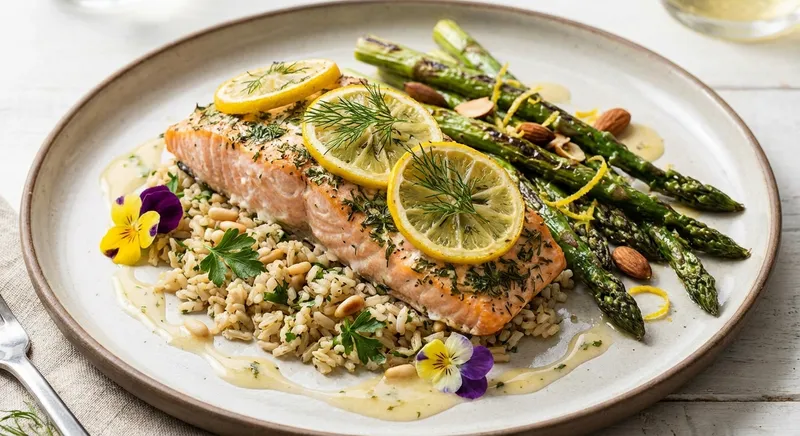
Bright, tender salmon fillets baked with fresh lemon and dill alongside fragrant herbed brown rice and crisp-tender roasted asparagus. The lemon’s acidity and dill’s herbaceousness lift the rich salmon, while quick skillet‑tossed brown rice soaks up garlic, lemon zest and herbs for a restaurant-quality plate that’s fresh, balanced and easy to execute.
Preheat and prep: Position an oven rack in the center of the oven and preheat to 400°F (200°C). Line a rimmed baking sheet with foil or parchment for easy cleanup. Why: 400°F gives the salmon a chance to develop color without overcooking the interior; a rimmed sheet keeps juices contained and the lining prevents sticking and eases cleanup.
Pat the salmon fillets dry with paper towels and season both sides lightly with 1/2 tsp kosher salt and 1/4 tsp black pepper. Why: drying the surface removes excess moisture so the exterior can roast and develop a lightly caramelized surface rather than steaming.
Make the lemon-dill dressing: In a small bowl whisk together 2 tsp (about 10 ml) of the olive oil, the juice of half the lemon (about 1 tbsp), the minced garlic, 1 tbsp chopped dill and a pinch of salt and pepper. Reserve 1/2 tsp lemon zest for the rice. Why: whisking the dressing disperses the garlic and dill and gives the salmon a concentrated flavor coating; a short marination time brightens the fish without chemically 'cooking' it the way a longer acid marinade would.
Brush the dressing over the top of each fillet (and under the skin if skin-on) and let sit at room temperature for 10 minutes while you prep the rest. Why: bringing the fish closer to room temperature and allowing the dressing to sit ensures more even cooking and better penetration of flavor.
Trim the asparagus: hold each spear and bend near the bottom to snap off the woody end, or trim the bottom 1–1½ inches. Place on a second small baking sheet (or space on the same sheet if there’s room), toss with the remaining 2 tsp olive oil, 1/4 tsp kosher salt, 1/4 tsp black pepper and a pinch of lemon zest. Arrange in a single layer so they roast rather than steam. Why: trimming removes fibrous bits; single layer roast produces caramelized tips and concentrated flavor.
Roast the salmon and asparagus: Place salmon fillets on the prepared sheet (skin-side down if applicable) and lay a thin lemon slice on each fillet if using. Put both trays in the preheated 400°F oven and roast for 10–12 minutes (for 5-oz fillets) until the thickest part of the salmon reaches 125–130°F (52–54°C) on an instant-read thermometer for medium doneness. The asparagus should be bright green with tender stems and slightly charred tips (about 10–12 min). Why: the set time and internal temp target give a moist, flaky fish — pulling at 125–130°F allows for carryover to reach the commonly preferred 130–135°F without drying.
Rest the salmon: remove the salmon from the oven and let rest for 3–4 minutes. Resting redistributes juices and yields a silkier texture. While the fish rests, finish the rice and plate.
Warm and herb the rice: Heat a medium nonstick skillet over medium heat. If using the optional butter, melt it now; otherwise add a quick spray or small splash (about 1 tsp) of the olive oil reserved. Add the minced garlic and sauté 20–30 seconds — just until fragrant; don’t let it brown. Why: gently cooking the garlic blooms its aroma without turning bitter. Add the cooked brown rice (about 1.5 cups), break up any large clumps, and toss to combine. Add the reserved lemon zest, the remaining chopped dill, a squeeze of the remaining lemon (to taste), and a tablespoon of water if the rice seems dry. Heat through, seasoning to taste with the remaining salt and pepper. Why: heating the rice with lemon and dill transfers those fresh flavors into the grain while a splash of water steams it lightly so it’s fluffy rather than dry.
Plate: Spoon a bed of herbed brown rice onto each plate, place a salmon fillet on top, and arrange roasted asparagus alongside. Spoon any pan juices (from the salmon) over the fish and garnish with the remaining fresh dill and a twist of lemon. Serve immediately. Why: plating warm rice first holds heat and gives a foundation; spooning juices back over the fish adds concentrated flavor and gloss.
555
Calories
35g
Protein
40g
Carbs
27g
Fat
5g
Fiber
How did this recipe turn out? Let others know!
to rate this recipe
By emensah m
Bright, tender salmon fillets baked with fresh lemon and dill alongside fragrant herbed brown rice and crisp-tender roasted asparagus. The lemon’s acidity and dill’s herbaceousness lift the rich salmon, while quick skillet‑tossed brown rice soaks up garlic, lemon zest and herbs for a restaurant-quality plate that’s fresh, balanced and easy to execute.
Preheat and prep: Position an oven rack in the center of the oven and preheat to 400°F (200°C). Line a rimmed baking sheet with foil or parchment for easy cleanup. Why: 400°F gives the salmon a chance to develop color without overcooking the interior; a rimmed sheet keeps juices contained and the lining prevents sticking and eases cleanup.
Pat the salmon fillets dry with paper towels and season both sides lightly with 1/2 tsp kosher salt and 1/4 tsp black pepper. Why: drying the surface removes excess moisture so the exterior can roast and develop a lightly caramelized surface rather than steaming.
Make the lemon-dill dressing: In a small bowl whisk together 2 tsp (about 10 ml) of the olive oil, the juice of half the lemon (about 1 tbsp), the minced garlic, 1 tbsp chopped dill and a pinch of salt and pepper. Reserve 1/2 tsp lemon zest for the rice. Why: whisking the dressing disperses the garlic and dill and gives the salmon a concentrated flavor coating; a short marination time brightens the fish without chemically 'cooking' it the way a longer acid marinade would.
Brush the dressing over the top of each fillet (and under the skin if skin-on) and let sit at room temperature for 10 minutes while you prep the rest. Why: bringing the fish closer to room temperature and allowing the dressing to sit ensures more even cooking and better penetration of flavor.
Trim the asparagus: hold each spear and bend near the bottom to snap off the woody end, or trim the bottom 1–1½ inches. Place on a second small baking sheet (or space on the same sheet if there’s room), toss with the remaining 2 tsp olive oil, 1/4 tsp kosher salt, 1/4 tsp black pepper and a pinch of lemon zest. Arrange in a single layer so they roast rather than steam. Why: trimming removes fibrous bits; single layer roast produces caramelized tips and concentrated flavor.
Roast the salmon and asparagus: Place salmon fillets on the prepared sheet (skin-side down if applicable) and lay a thin lemon slice on each fillet if using. Put both trays in the preheated 400°F oven and roast for 10–12 minutes (for 5-oz fillets) until the thickest part of the salmon reaches 125–130°F (52–54°C) on an instant-read thermometer for medium doneness. The asparagus should be bright green with tender stems and slightly charred tips (about 10–12 min). Why: the set time and internal temp target give a moist, flaky fish — pulling at 125–130°F allows for carryover to reach the commonly preferred 130–135°F without drying.
Rest the salmon: remove the salmon from the oven and let rest for 3–4 minutes. Resting redistributes juices and yields a silkier texture. While the fish rests, finish the rice and plate.
Warm and herb the rice: Heat a medium nonstick skillet over medium heat. If using the optional butter, melt it now; otherwise add a quick spray or small splash (about 1 tsp) of the olive oil reserved. Add the minced garlic and sauté 20–30 seconds — just until fragrant; don’t let it brown. Why: gently cooking the garlic blooms its aroma without turning bitter. Add the cooked brown rice (about 1.5 cups), break up any large clumps, and toss to combine. Add the reserved lemon zest, the remaining chopped dill, a squeeze of the remaining lemon (to taste), and a tablespoon of water if the rice seems dry. Heat through, seasoning to taste with the remaining salt and pepper. Why: heating the rice with lemon and dill transfers those fresh flavors into the grain while a splash of water steams it lightly so it’s fluffy rather than dry.
Plate: Spoon a bed of herbed brown rice onto each plate, place a salmon fillet on top, and arrange roasted asparagus alongside. Spoon any pan juices (from the salmon) over the fish and garnish with the remaining fresh dill and a twist of lemon. Serve immediately. Why: plating warm rice first holds heat and gives a foundation; spooning juices back over the fish adds concentrated flavor and gloss.
555
Calories
35g
Protein
40g
Carbs
27g
Fat
5g
Fiber
Your Rating:
