By emensah m
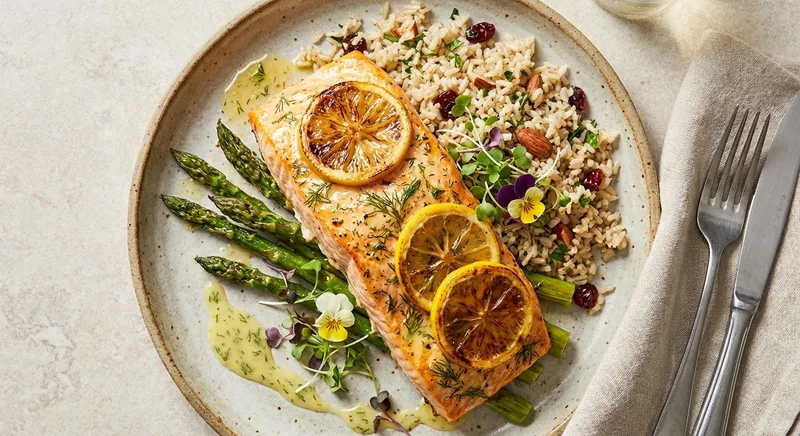
Bright, tender lemon-baked salmon with a golden exterior, served alongside perfectly roasted asparagus and nutty brown rice. Zesty lemon, garlic, and fresh parsley lift the rich salmon while a touch of olive oil crisps the asparagus — a restaurant-quality plate that’s simple, elegant, and balanced.
Preheat oven to 400°F (205°C). Place a rack in the center of the oven. Preheating to this temperature gives the salmon a chance to brown lightly and the asparagus to roast quickly without overcooking the fillet.
Bring the salmon to room temperature (about 10 minutes on the counter) and pat it dry with paper towels. Drying the surface removes excess moisture so the fillet can develop a light crust and the lemon-garlic seasoning will adhere better.
Make the lemon-garlic dressing: in a small bowl combine 1 tbsp olive oil, zest of the lemon (reserve a tiny pinch of zest for garnish), juice of the lemon, minced garlic, 1/4 tsp salt, and 1/8 tsp black pepper. Whisk until combined. The acid and oil will not emulsify into a thick sauce here; the lemon juice brightens the salmon while the oil carries flavor and helps roast the asparagus.
Marinate the salmon: place the fillet skin-side down on a small rimmed baking sheet or ovenproof skillet lined with parchment. Spoon about two-thirds of the lemon-garlic dressing over the top of the salmon, spreading it to coat. Let it sit for 5–8 minutes — this gives the lemon a moment to slightly 'cook' the surface and infuse flavor without changing the texture of the center.
Prepare the asparagus: if asparagus spears are thick, snap or trim the tough woody ends (about 1–1.5 inch trimmed). Toss the spears in the remaining dressing (or brush) so each spear has a light film of oil and lemon — this helps them roast evenly and caramelize. Arrange the asparagus in a single layer on the same sheet pan at least 1–1½ inches away from the salmon so air can circulate; overcrowding steams the vegetables rather than roasting them.
Roast in the oven: slide the pan into the preheated oven and roast for 10–12 minutes, depending on fillet thickness and asparagus size. Check the salmon at 10 minutes. Why this time and temperature? 400°F is hot enough to give the exterior a slight sear and color while cooking the salmon through gently; it keeps the flesh moist and silky instead of drying it out.
Check doneness precisely: use an instant-read thermometer inserted into the thickest part of the salmon — remove at 120–125°F (49–52°C) if you prefer medium-rare (it will rise to ~125–130°F while resting) or 130–135°F (54–57°C) for medium. Alternatively, check by flaking the thickest part with a fork — it should flake easily but still look slightly translucent in the center. Overcooking is the most common mistake; pull the fish a few degrees early and let carryover heat finish it.
Finish and rest: if you like, add 1 tsp of butter on top of the hot fillet as it comes out of the oven — it melts into the lemon juices and adds a silky mouthfeel. Let the salmon rest for 3–4 minutes to re-distribute juices; resting keeps each bite moist.
Warm the rice: while the salmon rests (or in a covered small saucepan), gently warm the 3/4 cup cooked brown rice with a sprinkle of water and a pinch of salt over low heat for 2–3 minutes, fluffing with a fork. Warming rice separately keeps it from cooling the salmon on the plate and allows the rice to absorb a bit of the lemon seasoning if desired.
Plate with purpose: mound the warmed brown rice slightly off-center, fan the roasted asparagus beside it, and gently lift the salmon onto the rice or beside the asparagus, skin-side down. Spoon any pan juices over the fillet and sprinkle with chopped parsley and the reserved lemon zest. A final crack of black pepper and a small lemon wedge on the side brightens the dish at the table.
Serve immediately. The contrast of hot fish, crisp-tender asparagus, and warm nutty rice is at its best straight from the oven.
702
Calories
42g
Protein
46g
Carbs
39g
Fat
7g
Fiber
How did this recipe turn out? Let others know!
to rate this recipe
By emensah m
Bright, tender lemon-baked salmon with a golden exterior, served alongside perfectly roasted asparagus and nutty brown rice. Zesty lemon, garlic, and fresh parsley lift the rich salmon while a touch of olive oil crisps the asparagus — a restaurant-quality plate that’s simple, elegant, and balanced.
Preheat oven to 400°F (205°C). Place a rack in the center of the oven. Preheating to this temperature gives the salmon a chance to brown lightly and the asparagus to roast quickly without overcooking the fillet.
Bring the salmon to room temperature (about 10 minutes on the counter) and pat it dry with paper towels. Drying the surface removes excess moisture so the fillet can develop a light crust and the lemon-garlic seasoning will adhere better.
Make the lemon-garlic dressing: in a small bowl combine 1 tbsp olive oil, zest of the lemon (reserve a tiny pinch of zest for garnish), juice of the lemon, minced garlic, 1/4 tsp salt, and 1/8 tsp black pepper. Whisk until combined. The acid and oil will not emulsify into a thick sauce here; the lemon juice brightens the salmon while the oil carries flavor and helps roast the asparagus.
Marinate the salmon: place the fillet skin-side down on a small rimmed baking sheet or ovenproof skillet lined with parchment. Spoon about two-thirds of the lemon-garlic dressing over the top of the salmon, spreading it to coat. Let it sit for 5–8 minutes — this gives the lemon a moment to slightly 'cook' the surface and infuse flavor without changing the texture of the center.
Prepare the asparagus: if asparagus spears are thick, snap or trim the tough woody ends (about 1–1.5 inch trimmed). Toss the spears in the remaining dressing (or brush) so each spear has a light film of oil and lemon — this helps them roast evenly and caramelize. Arrange the asparagus in a single layer on the same sheet pan at least 1–1½ inches away from the salmon so air can circulate; overcrowding steams the vegetables rather than roasting them.
Roast in the oven: slide the pan into the preheated oven and roast for 10–12 minutes, depending on fillet thickness and asparagus size. Check the salmon at 10 minutes. Why this time and temperature? 400°F is hot enough to give the exterior a slight sear and color while cooking the salmon through gently; it keeps the flesh moist and silky instead of drying it out.
Check doneness precisely: use an instant-read thermometer inserted into the thickest part of the salmon — remove at 120–125°F (49–52°C) if you prefer medium-rare (it will rise to ~125–130°F while resting) or 130–135°F (54–57°C) for medium. Alternatively, check by flaking the thickest part with a fork — it should flake easily but still look slightly translucent in the center. Overcooking is the most common mistake; pull the fish a few degrees early and let carryover heat finish it.
Finish and rest: if you like, add 1 tsp of butter on top of the hot fillet as it comes out of the oven — it melts into the lemon juices and adds a silky mouthfeel. Let the salmon rest for 3–4 minutes to re-distribute juices; resting keeps each bite moist.
Warm the rice: while the salmon rests (or in a covered small saucepan), gently warm the 3/4 cup cooked brown rice with a sprinkle of water and a pinch of salt over low heat for 2–3 minutes, fluffing with a fork. Warming rice separately keeps it from cooling the salmon on the plate and allows the rice to absorb a bit of the lemon seasoning if desired.
Plate with purpose: mound the warmed brown rice slightly off-center, fan the roasted asparagus beside it, and gently lift the salmon onto the rice or beside the asparagus, skin-side down. Spoon any pan juices over the fillet and sprinkle with chopped parsley and the reserved lemon zest. A final crack of black pepper and a small lemon wedge on the side brightens the dish at the table.
Serve immediately. The contrast of hot fish, crisp-tender asparagus, and warm nutty rice is at its best straight from the oven.
702
Calories
42g
Protein
46g
Carbs
39g
Fat
7g
Fiber
Your Rating:
