By emensah m
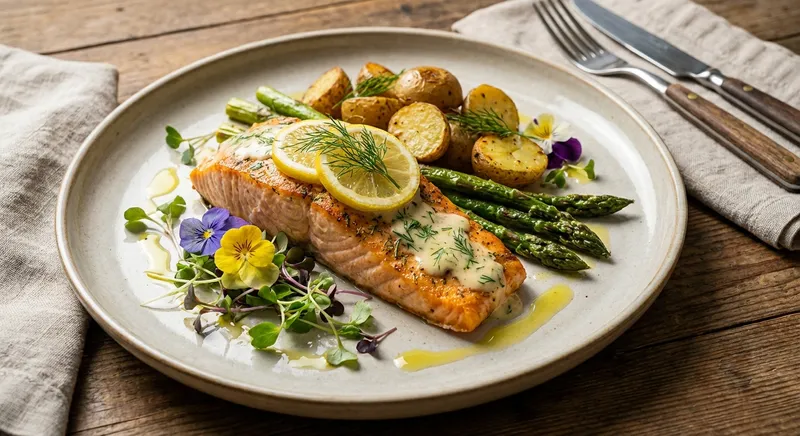
Tender, flaky salmon fillets roasted with bright lemon and fresh dill, served alongside golden, crisped new potatoes and charred asparagus. The dish balances rich, buttery salmon fat with zesty citrus and fragrant herbs — simple enough for a weeknight but plated like a restaurant entrée.
Read the recipe and preheat the oven to 220°C / 425°F. Bring a medium pot of salted water to a boil for the potatoes. Preheating gives the oven time to reach a high heat so the potatoes roast rather than steam — that high initial heat is what creates golden, crisp edges.
Prep the potatoes: halve (or quarter if larger) the new potatoes so pieces are roughly uniform. Place them in the boiling water and simmer for 8–10 minutes until just tender when pierced with a knife (parboil). Parboiling shortens oven time and roughens the surface so they crisp up beautifully when roasted.
While the potatoes boil, trim the woody ends from the asparagus (bend near the base; it will snap where the tender part begins). Mince the garlic, finely chop the dill (reserve a small pinch for garnish), and zest the lemon — keep the lemon halved for juice later. Preparing everything in advance keeps the roast process smooth and prevents overcooking the salmon.
Drain the potatoes and let them sit in the colander for a minute to steam off excess moisture — drier surfaces brown better. Toss the potatoes in a bowl with 1 tbsp olive oil, half the minced garlic, 1/2 tsp salt and a few grinds of black pepper, plus a little lemon zest (about 1 tsp). Spread them cut-side down on a rimmed baking sheet lined with parchment or lightly oiled. Roast in the preheated oven for 20 minutes, turning once halfway through. Roasting at 220°C builds color and a nutty crust on the potatoes.
While potatoes begin to roast, finish the salmon: pat fillets dry with paper towel (removing surface moisture helps the skin crisp and promotes even browning). Season both sides with 1/4 tsp salt and black pepper. In a small bowl, combine the remaining 1 tbsp olive oil, remaining garlic, lemon juice (about 1 tbsp), and most of the chopped dill (reserve a little for garnish). This bright olive oil dressing will keep the salmon moist and carry the herb and citrus flavors deep into the flesh.
If your fillets have skin and you prefer crisp skin: heat a heavy ovenproof skillet (cast-iron if you have one) over medium-high heat until shimmering. Add a light swipe of oil and place salmon skin-side down. Press gently with a spatula for 20 seconds to keep the skin flat. Sear 2–3 minutes until the skin is deeply golden and releases easily. Searing develops the Maillard crust which adds flavor and texture. If you don’t want to sear, you can place the salmon directly on the baking sheet later.
After the potatoes have roasted 20 minutes, remove the pan. Nestle the asparagus spears alongside them (toss asparagus with a drizzle of olive oil, a pinch of salt and pepper). Place the seared salmon (skin-side down) on the baking sheet or transfer the skillet to the oven. Spoon half the lemon-dill oil over each fillet. Return the tray to the oven and roast everything for 8–12 minutes more: asparagus should be tender-crisp with some char, potatoes deeply golden, and salmon should reach an internal temperature of 52–55°C (125–131°F) for medium-rare to medium. Cooking salmon to this range keeps it moist and flaky; it will carryover cook a couple degrees after you remove it.
Finish and rest: remove the tray from the oven. If using, dot the salmon with 1/2 tbsp butter (melted by the residual heat) for an extra glossy finish and richer mouthfeel. Let the salmon rest 3 minutes — resting lets juices redistribute and prevents the center from drying out. Toss the roasted potatoes and asparagus with the remaining lemon zest, the reserved dill, and a quick squeeze of lemon if you like extra brightness.
Plate: divide potatoes and asparagus between two plates, place a salmon fillet on top, and spoon any juices from the pan over the fish. Garnish with extra dill and lemon wedges. Serve immediately. Presentation with height and a sprig of dill makes it feel restaurant-quality.
664
Calories
42g
Protein
43g
Carbs
37g
Fat
7.6g
Fiber
How did this recipe turn out? Let others know!
to rate this recipe
By emensah m
Tender, flaky salmon fillets roasted with bright lemon and fresh dill, served alongside golden, crisped new potatoes and charred asparagus. The dish balances rich, buttery salmon fat with zesty citrus and fragrant herbs — simple enough for a weeknight but plated like a restaurant entrée.
Read the recipe and preheat the oven to 220°C / 425°F. Bring a medium pot of salted water to a boil for the potatoes. Preheating gives the oven time to reach a high heat so the potatoes roast rather than steam — that high initial heat is what creates golden, crisp edges.
Prep the potatoes: halve (or quarter if larger) the new potatoes so pieces are roughly uniform. Place them in the boiling water and simmer for 8–10 minutes until just tender when pierced with a knife (parboil). Parboiling shortens oven time and roughens the surface so they crisp up beautifully when roasted.
While the potatoes boil, trim the woody ends from the asparagus (bend near the base; it will snap where the tender part begins). Mince the garlic, finely chop the dill (reserve a small pinch for garnish), and zest the lemon — keep the lemon halved for juice later. Preparing everything in advance keeps the roast process smooth and prevents overcooking the salmon.
Drain the potatoes and let them sit in the colander for a minute to steam off excess moisture — drier surfaces brown better. Toss the potatoes in a bowl with 1 tbsp olive oil, half the minced garlic, 1/2 tsp salt and a few grinds of black pepper, plus a little lemon zest (about 1 tsp). Spread them cut-side down on a rimmed baking sheet lined with parchment or lightly oiled. Roast in the preheated oven for 20 minutes, turning once halfway through. Roasting at 220°C builds color and a nutty crust on the potatoes.
While potatoes begin to roast, finish the salmon: pat fillets dry with paper towel (removing surface moisture helps the skin crisp and promotes even browning). Season both sides with 1/4 tsp salt and black pepper. In a small bowl, combine the remaining 1 tbsp olive oil, remaining garlic, lemon juice (about 1 tbsp), and most of the chopped dill (reserve a little for garnish). This bright olive oil dressing will keep the salmon moist and carry the herb and citrus flavors deep into the flesh.
If your fillets have skin and you prefer crisp skin: heat a heavy ovenproof skillet (cast-iron if you have one) over medium-high heat until shimmering. Add a light swipe of oil and place salmon skin-side down. Press gently with a spatula for 20 seconds to keep the skin flat. Sear 2–3 minutes until the skin is deeply golden and releases easily. Searing develops the Maillard crust which adds flavor and texture. If you don’t want to sear, you can place the salmon directly on the baking sheet later.
After the potatoes have roasted 20 minutes, remove the pan. Nestle the asparagus spears alongside them (toss asparagus with a drizzle of olive oil, a pinch of salt and pepper). Place the seared salmon (skin-side down) on the baking sheet or transfer the skillet to the oven. Spoon half the lemon-dill oil over each fillet. Return the tray to the oven and roast everything for 8–12 minutes more: asparagus should be tender-crisp with some char, potatoes deeply golden, and salmon should reach an internal temperature of 52–55°C (125–131°F) for medium-rare to medium. Cooking salmon to this range keeps it moist and flaky; it will carryover cook a couple degrees after you remove it.
Finish and rest: remove the tray from the oven. If using, dot the salmon with 1/2 tbsp butter (melted by the residual heat) for an extra glossy finish and richer mouthfeel. Let the salmon rest 3 minutes — resting lets juices redistribute and prevents the center from drying out. Toss the roasted potatoes and asparagus with the remaining lemon zest, the reserved dill, and a quick squeeze of lemon if you like extra brightness.
Plate: divide potatoes and asparagus between two plates, place a salmon fillet on top, and spoon any juices from the pan over the fish. Garnish with extra dill and lemon wedges. Serve immediately. Presentation with height and a sprig of dill makes it feel restaurant-quality.
664
Calories
42g
Protein
43g
Carbs
37g
Fat
7.6g
Fiber
Your Rating:
