By Jackson Rosell
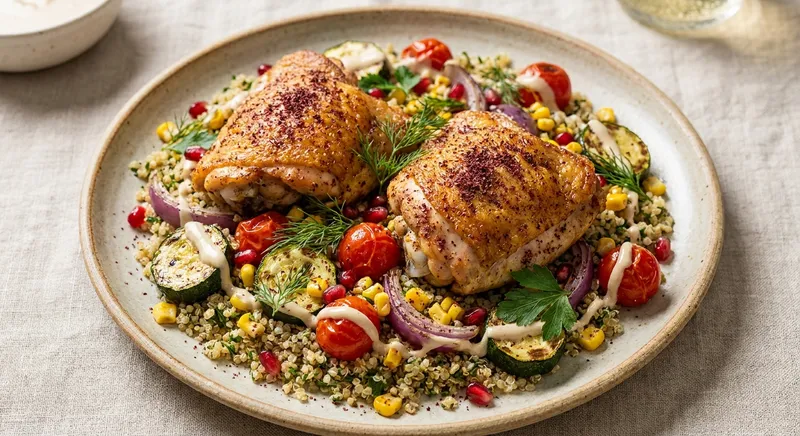
Juicy, bone‑in chicken thighs are rubbed with bright, citrusy sumac and roasted until the skin is deeply golden and crisp. Served over fluffy, herbed quinoa and a mix of charred zucchini and red pepper, the dish is finished with a silky tahini‑lemon drizzle and a scattering of parsley and mint — a Mediterranean‑inspired plate with smoky, tangy and nutty layers that feels both rustic and restaurant‑polished.
Prep the chicken: Pat the chicken thighs very dry with paper towels (dry skin crisps much better than damp skin). Place on a tray and rub each thigh with 1 tsp olive oil, 1/2 tsp ground sumac and a generous pinch of salt and cracked pepper. The oil helps the sumac adhere and the sumac provides citrusy brightness that cuts the richness of the skin. If you have time, cover and refrigerate for 30–60 minutes (or up to overnight) to let flavors penetrate; bring to room temperature 20 minutes before cooking.
Preheat and prepare your roasting station: Preheat the oven to 220°C / 425°F. Set a rack on a rimmed baking sheet (or use a shallow roasting pan) and lightly oil the rack or sheet. Roasting on a rack improves air circulation so skin crisps on all sides and the thighs roast evenly rather than steaming in their juices.
Toast and rinse the quinoa: Put the dry quinoa into a fine mesh sieve and rinse under cold water for 30 seconds, rubbing the grains with your fingers to remove the natural bitter coating (saponin). Drain well. In a medium saucepan over medium heat, add the drained quinoa and toast, stirring, for 1–2 minutes until it smells nutty—this step deepens the flavor and produces a more complex grain base.
Cook the quinoa: Add 680 ml low‑sodium stock (or water) and a pinch of salt to the toasted quinoa. Bring to a simmer, cover tightly, lower heat to the smallest flame and cook for 12–15 minutes until the liquid is absorbed. Turn off the heat and let rest, covered, for 5 minutes. Fluff with a fork—resting lets the grains steam into a light, fluffy texture rather than becoming gluey.
Sear the chicken for color (optional but recommended): Heat a large ovenproof skillet over medium‑high heat until hot. Add the thighs skin‑side down—do not move them for 4–5 minutes. The goal is to render some fat and develop deep golden color; this Maillard reaction creates savory depth that roasting alone won’t fully achieve. If you prefer not to sear, you can place thighs directly on the rack and roast, but the color and flavor will be lighter.
Roast the chicken: Transfer seared skillet (or the prepared rack/sheet pan) to the oven and roast at 220°C / 425°F for 20–25 minutes, or until an instant‑read thermometer in the thickest part (not touching bone) reads 74°C / 165°F. High heat ensures the skin keeps crisp and the heat penetrates the bone‑in piece efficiently. Remove to a cutting board and let rest for 8–10 minutes so the juices redistribute; slicing immediately will cause them to run out.
Char the vegetables while chicken roasts: Toss zucchini and red pepper with 4 tbsp olive oil, a pinch of salt and a grind of pepper. Arrange on a separate sheet pan in a single layer with space between pieces for direct contact and even browning. Roast alongside the chicken (or on the top rack) for 12–18 minutes, turning once halfway through, until edges are deeply browned and some pieces have blackened spots — these charred bits add smoky flavor and texture contrast.
Make the tahini‑lemon drizzle: In a bowl whisk together 4 tbsp tahini, juice of 2 lemons (about 60 ml), 4 tsp water to start, the grated garlic (if using), and a pinch of salt. Tahini can seize and thicken when acid is added; the trick is to whisk in cold water a little at a time until it loosens into a glossy, pourable sauce. Taste — it should be bright, nutty and slightly tangy. If it tastes bitter, a tiny pinch of sugar or an extra splash of lemon can balance it.
Finish and plate: Fluff the quinoa and fold in 3 tbsp chopped parsley and most of the mint (reserve a few leaves for garnish). Season to taste with salt and a squeeze of lemon if desired. Spoon the quinoa onto warm plates, arrange a chicken thigh on top, and scatter the charred vegetables alongside. Drizzle the tahini‑lemon sauce over the chicken and vegetables, sprinkle the remaining parsley and mint, and dust with a final pinch of sumac for color and brightness.
Rest, serve, and enjoy: Let the plated dish rest for 2–3 minutes so the tahini melds and the quinoa cools slightly. Serve with extra lemon wedges on the side for people who want more acidity. The contrast of crispy skin, nutty tahini, and bright herbs is what makes this dish sing.
974
Calories
49g
Protein
53g
Carbs
62g
Fat
9g
Fiber
How did this recipe turn out? Let others know!
to rate this recipe
By Jackson Rosell
Juicy, bone‑in chicken thighs are rubbed with bright, citrusy sumac and roasted until the skin is deeply golden and crisp. Served over fluffy, herbed quinoa and a mix of charred zucchini and red pepper, the dish is finished with a silky tahini‑lemon drizzle and a scattering of parsley and mint — a Mediterranean‑inspired plate with smoky, tangy and nutty layers that feels both rustic and restaurant‑polished.
Prep the chicken: Pat the chicken thighs very dry with paper towels (dry skin crisps much better than damp skin). Place on a tray and rub each thigh with 1 tsp olive oil, 1/2 tsp ground sumac and a generous pinch of salt and cracked pepper. The oil helps the sumac adhere and the sumac provides citrusy brightness that cuts the richness of the skin. If you have time, cover and refrigerate for 30–60 minutes (or up to overnight) to let flavors penetrate; bring to room temperature 20 minutes before cooking.
Preheat and prepare your roasting station: Preheat the oven to 220°C / 425°F. Set a rack on a rimmed baking sheet (or use a shallow roasting pan) and lightly oil the rack or sheet. Roasting on a rack improves air circulation so skin crisps on all sides and the thighs roast evenly rather than steaming in their juices.
Toast and rinse the quinoa: Put the dry quinoa into a fine mesh sieve and rinse under cold water for 30 seconds, rubbing the grains with your fingers to remove the natural bitter coating (saponin). Drain well. In a medium saucepan over medium heat, add the drained quinoa and toast, stirring, for 1–2 minutes until it smells nutty—this step deepens the flavor and produces a more complex grain base.
Cook the quinoa: Add 680 ml low‑sodium stock (or water) and a pinch of salt to the toasted quinoa. Bring to a simmer, cover tightly, lower heat to the smallest flame and cook for 12–15 minutes until the liquid is absorbed. Turn off the heat and let rest, covered, for 5 minutes. Fluff with a fork—resting lets the grains steam into a light, fluffy texture rather than becoming gluey.
Sear the chicken for color (optional but recommended): Heat a large ovenproof skillet over medium‑high heat until hot. Add the thighs skin‑side down—do not move them for 4–5 minutes. The goal is to render some fat and develop deep golden color; this Maillard reaction creates savory depth that roasting alone won’t fully achieve. If you prefer not to sear, you can place thighs directly on the rack and roast, but the color and flavor will be lighter.
Roast the chicken: Transfer seared skillet (or the prepared rack/sheet pan) to the oven and roast at 220°C / 425°F for 20–25 minutes, or until an instant‑read thermometer in the thickest part (not touching bone) reads 74°C / 165°F. High heat ensures the skin keeps crisp and the heat penetrates the bone‑in piece efficiently. Remove to a cutting board and let rest for 8–10 minutes so the juices redistribute; slicing immediately will cause them to run out.
Char the vegetables while chicken roasts: Toss zucchini and red pepper with 4 tbsp olive oil, a pinch of salt and a grind of pepper. Arrange on a separate sheet pan in a single layer with space between pieces for direct contact and even browning. Roast alongside the chicken (or on the top rack) for 12–18 minutes, turning once halfway through, until edges are deeply browned and some pieces have blackened spots — these charred bits add smoky flavor and texture contrast.
Make the tahini‑lemon drizzle: In a bowl whisk together 4 tbsp tahini, juice of 2 lemons (about 60 ml), 4 tsp water to start, the grated garlic (if using), and a pinch of salt. Tahini can seize and thicken when acid is added; the trick is to whisk in cold water a little at a time until it loosens into a glossy, pourable sauce. Taste — it should be bright, nutty and slightly tangy. If it tastes bitter, a tiny pinch of sugar or an extra splash of lemon can balance it.
Finish and plate: Fluff the quinoa and fold in 3 tbsp chopped parsley and most of the mint (reserve a few leaves for garnish). Season to taste with salt and a squeeze of lemon if desired. Spoon the quinoa onto warm plates, arrange a chicken thigh on top, and scatter the charred vegetables alongside. Drizzle the tahini‑lemon sauce over the chicken and vegetables, sprinkle the remaining parsley and mint, and dust with a final pinch of sumac for color and brightness.
Rest, serve, and enjoy: Let the plated dish rest for 2–3 minutes so the tahini melds and the quinoa cools slightly. Serve with extra lemon wedges on the side for people who want more acidity. The contrast of crispy skin, nutty tahini, and bright herbs is what makes this dish sing.
974
Calories
49g
Protein
53g
Carbs
62g
Fat
9g
Fiber
Your Rating:
