By emensah m
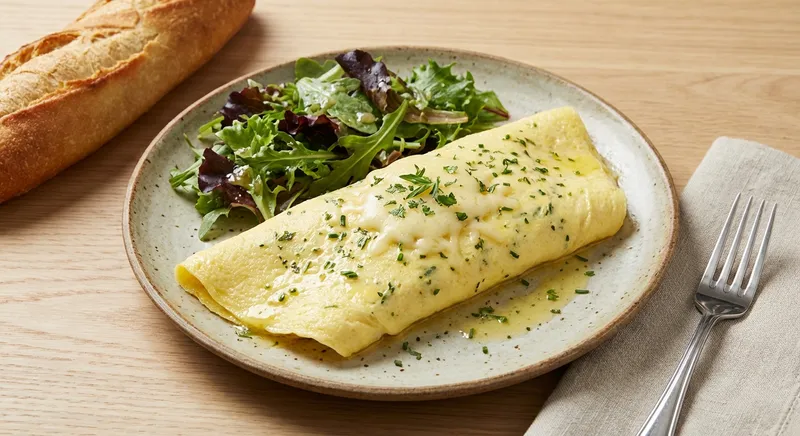
A silky, tender French-style omelette with a creamy, custardy interior and a lightly set exterior—finished with nutty Gruyère and bright chives. It’s simple but elevated: a soft texture from gentle folding and a glossy finish from butter create a restaurant-quality omelette you can make at home in minutes.
Crack the eggs into a medium mixing bowl. Add the whole milk, 1/4 tsp salt and 1/8 tsp black pepper. Whisk thoroughly until the yolk and white are completely blended and the mixture is slightly frothy—about 20–30 seconds. WHY: Thorough whisking breaks up the egg proteins and incorporates a bit of air, which helps produce a tender, uniform custard when cooked.
Grate the Gruyère and finely chop the chives; set both near the stove. WHY: Mise en place keeps the cooking flow continuous. The omelette cooks quickly, so having ingredients prepped prevents overcooking while you search for things.
Heat an 8-inch nonstick or well-seasoned carbon-steel skillet over medium-low heat. Add 1 tbsp butter and swirl until melted and foam begins to subside. WHY: Medium-low heat is crucial for a French-style omelette — it cooks the eggs gently so they stay tender rather than toughening or browning excessively.
Pour the whisked eggs into the pan and let them sit for about 6–8 seconds without touching. Then, using a silicone spatula, stir the eggs in small concentric circles, scraping the bottom and lifting as the mixture begins to thicken. Continue stirring for about 20–30 seconds until the eggs are mostly set but still a little runny and glossy. WHY: Stirring at the start ensures even curds and prevents one hot spot from overcooking. Stopping while the eggs are still slightly runny ensures a creamy interior after folding and resting.
Stop stirring and let the omelette surface smooth out for 5–8 seconds; tilt the pan so any loose egg runs to the edges. Sprinkle the grated Gruyère evenly over one half of the omelette and add the chopped chives. WHY: Adding cheese while the eggs are slightly wet lets it melt into the custard without making the omelette watery. Tilting encourages even cooking and creates the classic half-folded shape.
Run the spatula around the edge to loosen the omelette, then carefully fold the omelette in half over the cheese (or roll it if you prefer). Add the remaining 1 tbsp butter to the pan off the heat and swirl, then tilt the hot pan for the butter to coat the omelette, spooning a little over the top. WHY: Folding encloses the creamy interior; the finishing butter adds gloss, flavor, and a slightly richer mouthfeel—like many restaurant omelettes.
Slide the omelette onto a warmed plate, seam-side down. Let it rest 30 seconds to set fully, then season very lightly with a pinch of fleur de sel or an extra grind of black pepper. WHY: A short rest lets residual heat finish cooking the interior gently and allows the cheese to finish melting without overcooking the eggs.
Serve immediately, garnished with a few more snipped chives. WHY: French-style omelettes are best right away—texture and temperature are key to the experience.
315
Calories
17g
Protein
2g
Carbs
27g
Fat
0g
Fiber
How did this recipe turn out? Let others know!
to rate this recipe
By emensah m
A silky, tender French-style omelette with a creamy, custardy interior and a lightly set exterior—finished with nutty Gruyère and bright chives. It’s simple but elevated: a soft texture from gentle folding and a glossy finish from butter create a restaurant-quality omelette you can make at home in minutes.
Crack the eggs into a medium mixing bowl. Add the whole milk, 1/4 tsp salt and 1/8 tsp black pepper. Whisk thoroughly until the yolk and white are completely blended and the mixture is slightly frothy—about 20–30 seconds. WHY: Thorough whisking breaks up the egg proteins and incorporates a bit of air, which helps produce a tender, uniform custard when cooked.
Grate the Gruyère and finely chop the chives; set both near the stove. WHY: Mise en place keeps the cooking flow continuous. The omelette cooks quickly, so having ingredients prepped prevents overcooking while you search for things.
Heat an 8-inch nonstick or well-seasoned carbon-steel skillet over medium-low heat. Add 1 tbsp butter and swirl until melted and foam begins to subside. WHY: Medium-low heat is crucial for a French-style omelette — it cooks the eggs gently so they stay tender rather than toughening or browning excessively.
Pour the whisked eggs into the pan and let them sit for about 6–8 seconds without touching. Then, using a silicone spatula, stir the eggs in small concentric circles, scraping the bottom and lifting as the mixture begins to thicken. Continue stirring for about 20–30 seconds until the eggs are mostly set but still a little runny and glossy. WHY: Stirring at the start ensures even curds and prevents one hot spot from overcooking. Stopping while the eggs are still slightly runny ensures a creamy interior after folding and resting.
Stop stirring and let the omelette surface smooth out for 5–8 seconds; tilt the pan so any loose egg runs to the edges. Sprinkle the grated Gruyère evenly over one half of the omelette and add the chopped chives. WHY: Adding cheese while the eggs are slightly wet lets it melt into the custard without making the omelette watery. Tilting encourages even cooking and creates the classic half-folded shape.
Run the spatula around the edge to loosen the omelette, then carefully fold the omelette in half over the cheese (or roll it if you prefer). Add the remaining 1 tbsp butter to the pan off the heat and swirl, then tilt the hot pan for the butter to coat the omelette, spooning a little over the top. WHY: Folding encloses the creamy interior; the finishing butter adds gloss, flavor, and a slightly richer mouthfeel—like many restaurant omelettes.
Slide the omelette onto a warmed plate, seam-side down. Let it rest 30 seconds to set fully, then season very lightly with a pinch of fleur de sel or an extra grind of black pepper. WHY: A short rest lets residual heat finish cooking the interior gently and allows the cheese to finish melting without overcooking the eggs.
Serve immediately, garnished with a few more snipped chives. WHY: French-style omelettes are best right away—texture and temperature are key to the experience.
315
Calories
17g
Protein
2g
Carbs
27g
Fat
0g
Fiber
Your Rating:
